Luxury Custom Pools: The Geo-Structural Protocol for 30-Year Lifespan & Automated Water Chemistry
Most luxury pool projects fail before the first tile is ever laid. I've seen it countless times: a breathtaking design concept undermined by a fundamental misunderstanding of engineering. The client pays for aesthetics but receives a high-maintenance liability. True luxury isn't just the infinity edge or the Italian glass tile; it's the invisible framework of structural integrity and intelligent automation that guarantees flawless performance for decades. My entire practice is built on delivering this unseen value.
The core problem is that most builders treat the pool as a simple vessel. I treat it as an integrated geotechnical and hydraulic system. My approach focuses on creating a structure that works in harmony with its environment and a water management system that is nearly autonomous, reducing weekly chemical maintenance by up to 90% and extending the shell's structural lifespan far beyond the industry standard. This isn't about building a pool; it's about engineering a permanent water feature.
My Diagnostic Framework: The Geo-Structural Integration Method
Early in my career, I inherited a project where a stunning vanishing-edge pool had developed a critical sheer crack within three years. The cause? The original builder completely ignored the expansive clay soil on the property. That multi-million dollar failure taught me a lesson that now forms the basis of my proprietary Geo-Structural Integration Method. It’s a pre-construction analysis that prevents 99% of future structural and system failures. It's not an option; it's the first and most critical phase of any project I undertake. My methodology is built on three non-negotiable pillars.
- Geotechnical Analysis: We don't just dig a hole. We perform soil borings and percolation tests to understand the soil's load-bearing capacity, its stability, and the local water table. This data dictates the shell's engineering specifications.
- Hydrostatic Load Calculation: I analyze the external pressures that will be exerted on the pool shell when it's empty. This is the force that cracks pools from the outside in. We engineer the shell and drainage systems specifically to counteract this force.
- System-Wide Hydraulic Design: I’ve seen half-million-dollar pools choked by undersized, inefficient plumbing. I design the entire hydraulic circuit—pipes, pumps, filters, heaters—as a single, cohesive system to ensure optimal flow and energy efficiency, often reducing long-term energy costs by 40-60%.
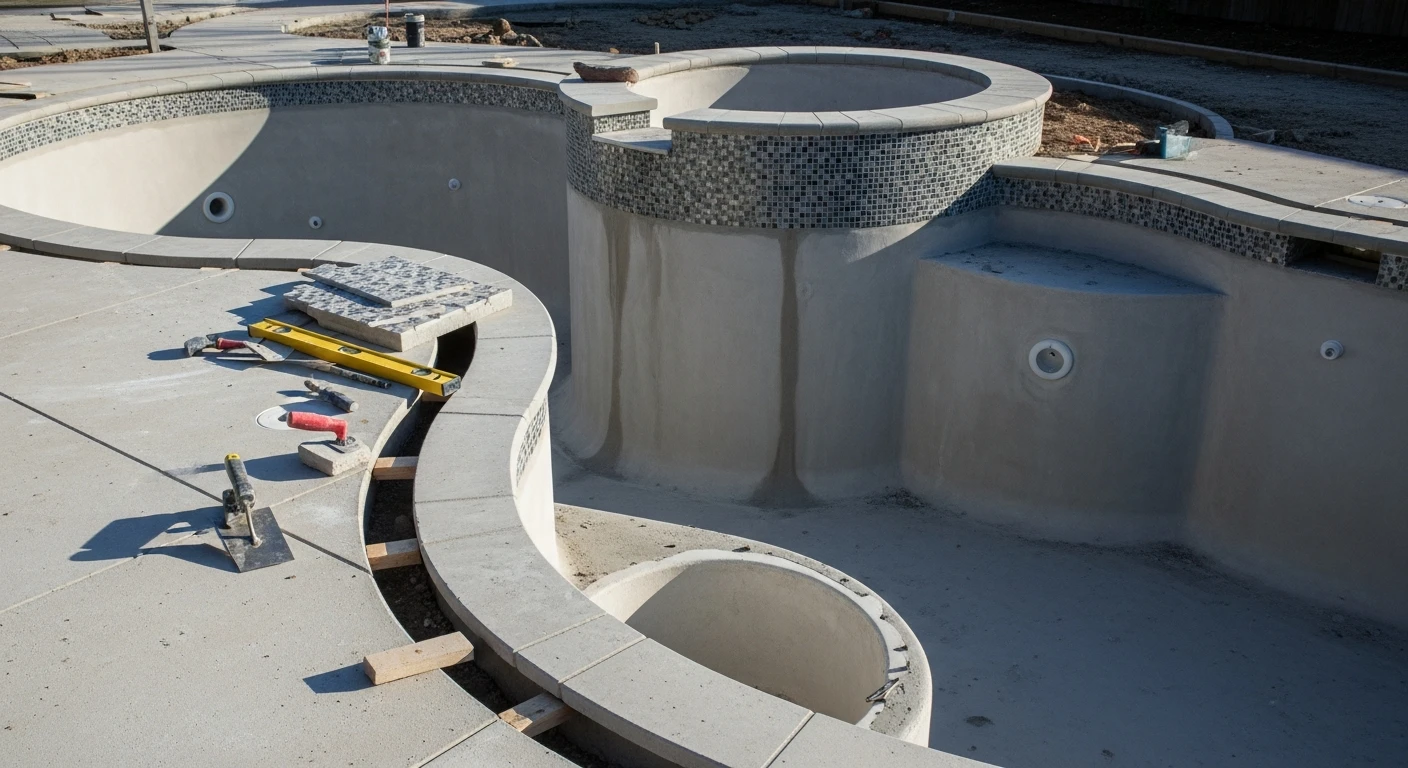
- Phase 1: The Foundation: After excavation, we lay a geotextile fabric followed by a 6-inch compacted gravel base. The rebar steel is then set in place—I specify a #4 rebar grid at 8 inches on center, using epoxy-coated steel in the top 12 inches of the shell where corrosive forces are greatest.
- Phase 2: The Shell: We only use a wet-mix shotcrete application with a minimum compressive strength of 4,500 PSI. After application, the shell undergoes a critical 28-day wet curing process. We do not touch it before this. Rushing this step is the single biggest cause of future plaster delamination.
- Phase 3: Plumbing & Systems: All plumbing lines are pressure-tested and must hold 35 PSI for 24 hours without any drop before a single shovelful of backfill is placed. This is where we install the core of the automation: the ORP and pH sensor probes, the CO2 injection system for pH control, and the variable-speed pump controller.
- Phase 4: Waterproofing & Finishing: Before any plaster or tile, we apply a two-part, flexible cementitious waterproofing membrane to the entire shell. This provides a secondary layer of protection that is, in my opinion, more important than the cosmetic finish itself.
Tags
custom luxury swimming pools
luxury pool designers
custom luxury pools
luxury custom pools
Luxury Custom Pools FAQ
What makes your custom pools luxury?
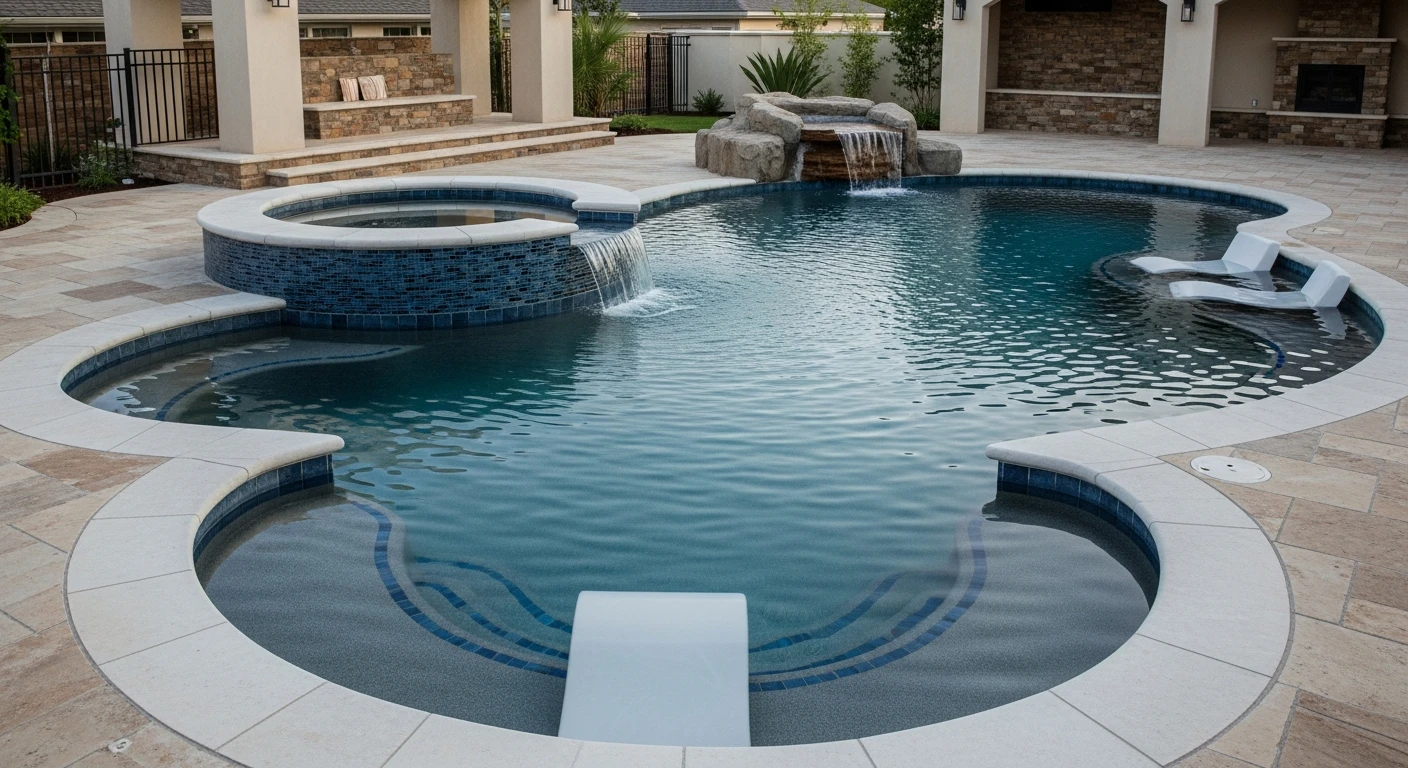
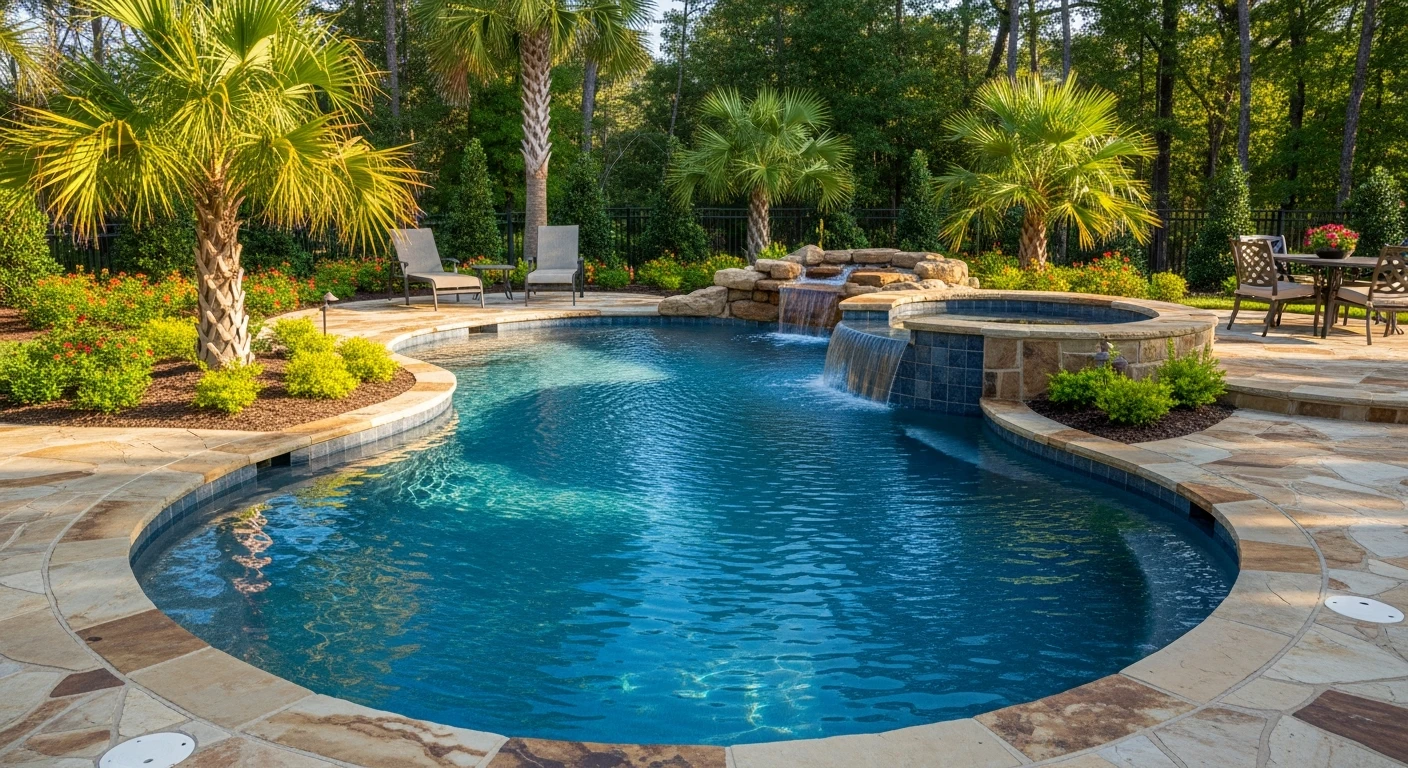
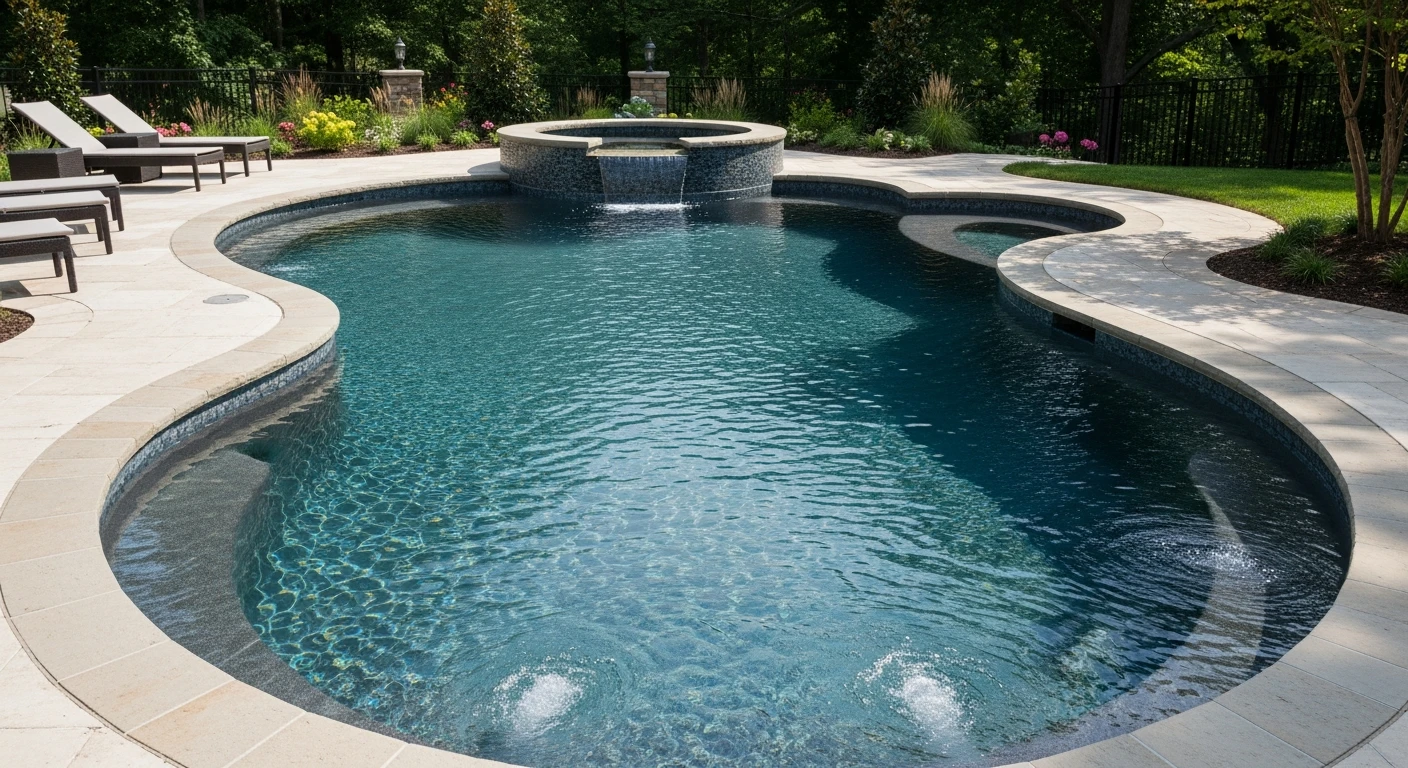
Our luxury custom pools are designed to provide an unparalleled swimming experience. We use only the finest materials and cutting-edge technology to create unique, tailored designs that meet the specific needs and preferences of each client. From custom shapes and sizes to advanced water features and lighting systems, we strive to create a truly bespoke pool that reflects your personal style and enhances your outdoor living space.
Can I customize the design of my pool?
Yes, customization is at the heart of our luxury custom pool design process. Our expert designers will work closely with you to understand your vision and preferences, taking into account factors such as your outdoor space, local building codes, and your personal style. We use advanced software to create a 3D rendering of your pool design, allowing you to visualize and refine your vision before construction begins.
What are the benefits of a saltwater pool?
Saltwater pools offer several benefits over traditional chlorinated pools. Saltwater is gentler on the skin and hair, reducing irritation and discomfort. It also reduces the need for harsh chemicals, making it a more environmentally friendly option. Additionally, saltwater pools have been shown to reduce the risk of eye and respiratory irritation, making them a popular choice for families and individuals with sensitive skin.
How long does it take to build a custom pool?
The time it takes to build a custom pool can vary depending on the complexity of the design, the size of the pool, and the availability of materials and labor. On average, the construction process can take anywhere from 8-12 weeks, with longer timelines possible for more intricate designs or larger pools. Our team will work closely with you to provide a detailed timeline and ensure a smooth construction process.
Do you offer maintenance and repair services for my pool?
Yes, we offer comprehensive maintenance and repair services to ensure your pool remains safe, functional, and enjoyable for years to come. Our team of experienced technicians is equipped to handle routine maintenance tasks, such as cleaning and testing the water, as well as more complex repairs, such as replacing pumps and filters. We also offer regular maintenance packages and emergency repair services to get your pool back up and running quickly in the event of an issue.
Can I install a pool in my backyard if I have limited space?
Yes, it's possible to install a pool in a small or irregularly shaped backyard. Our designers will work with you to find a solution that meets your needs and fits your space constraints. We use advanced design software to create a customized pool design that takes into account the unique dimensions and features of your yard. We can also recommend alternative pool options, such as a lap pool or a plunge pool, that can be tailored to fit your specific needs and space limitations.
How do I care for my new pool?
Proper care and maintenance are essential to keeping your pool clean, safe, and functional. We recommend regular cleaning and testing of the water, as well as routine maintenance tasks such as skimming the surface and vacuuming the pool floor. We also offer comprehensive maintenance packages and training sessions to help you learn how to care for your pool and troubleshoot common issues. Our team is always available to answer any questions or concerns you may have and provide guidance on how to keep your pool in top condition.