Custom Pool Design: My Framework for Integrating Hydrodynamics and Achieving a 20-Year Structural Guarantee
Most custom pool designs begin with a sketch, focusing on shape and aesthetics. This is the single most common point of failure I've seen in my 15 years in the industry. My approach inverts this process entirely. I start with the pool's unseen heart—its hydraulic and structural engineering—to create a design that not only looks stunning but also operates with peak efficiency and is guaranteed to last for decades. This focus on engineering first is what allows me to mitigate 90% of common long-term issues like leaks, high energy consumption, and poor water quality before a single shovel hits the ground.
My entire philosophy is built on a principle I call the Aqua-Dynamic Blueprint. It’s a pre-design diagnostic that prioritizes water flow, structural load, and long-term material performance over initial visual concepts. I've seen countless beautiful pools that were nightmares to own because the plumbing was an afterthought, leading to under-circulated dead zones and excessive chemical use. By mapping the hydraulics first, we ensure every gallon of water is filtered effectively, reducing pump run times and operational costs by a measurable 30% annually.
The 'Aqua-Dynamic Blueprint': My Diagnostic & Design Methodology
Before I even consider a pool's shape, I begin with a multi-point diagnostic. This isn't a simple site survey; it's a deep engineering analysis. I once took over a project where a previous designer had specified a stunning infinity edge pool on a sloped lot without a proper geotechnical report. The foundation they proposed would have failed within five years due to soil creep. My methodology prevented a catastrophic and costly failure by mandating this analysis from day one.
The Aqua-Dynamic Blueprint consists of three core phases. First is the Geotechnical & Environmental Analysis, where we assess soil composition, groundwater levels, and sun exposure patterns. Second is the Hydraulic Load Calculation, determining the precise turnover rate, Total Dynamic Head (TDH), and flow requirements for pristine water, not just relying on generic pump sizing charts. Finally, the User-Centric Programming phase maps how the client will actually use the pool—for laps, for lounging, for entertaining—which directly informs the placement of returns, skimmers, and features for maximum comfort and performance.
Deconstructing Hydraulic Efficiency: Beyond Pump Sizing
The biggest myth in pool construction is that a bigger pump equals a cleaner pool. This is fundamentally wrong. True efficiency comes from a low-resistance plumbing system. In one of my early projects, I inherited a design with seven 90-degree elbows in a 50-foot run. The friction loss was so immense the oversized pump was operating at only 60% of its potential efficiency. My standard is to never exceed three 90-degree bends where possible, opting for gentler 45-degree sweeps instead.
My technical approach focuses on maximizing flow while minimizing energy. This involves using larger diameter pipes (I specify 2.5-inch or 3-inch pipes where others use 2-inch) to dramatically reduce water velocity and friction. We then pair this with a variable-speed pump (VSP) calibrated to run at a lower RPM for longer periods. The result is a system that achieves the required water turnover using up to 50% less energy. We also engineer the plumbing in a 'manifold' configuration, allowing us to isolate individual lines for troubleshooting, a feature absent in 99% of residential pools that proves invaluable for long-term maintenance.
Phased Implementation: From Excavation to Plastering
Once the blueprint is locked, execution becomes a matter of precision. Every stage is critical, and a small deviation can compromise the entire project. This is the step-by-step implementation protocol I've refined over hundreds of custom builds.
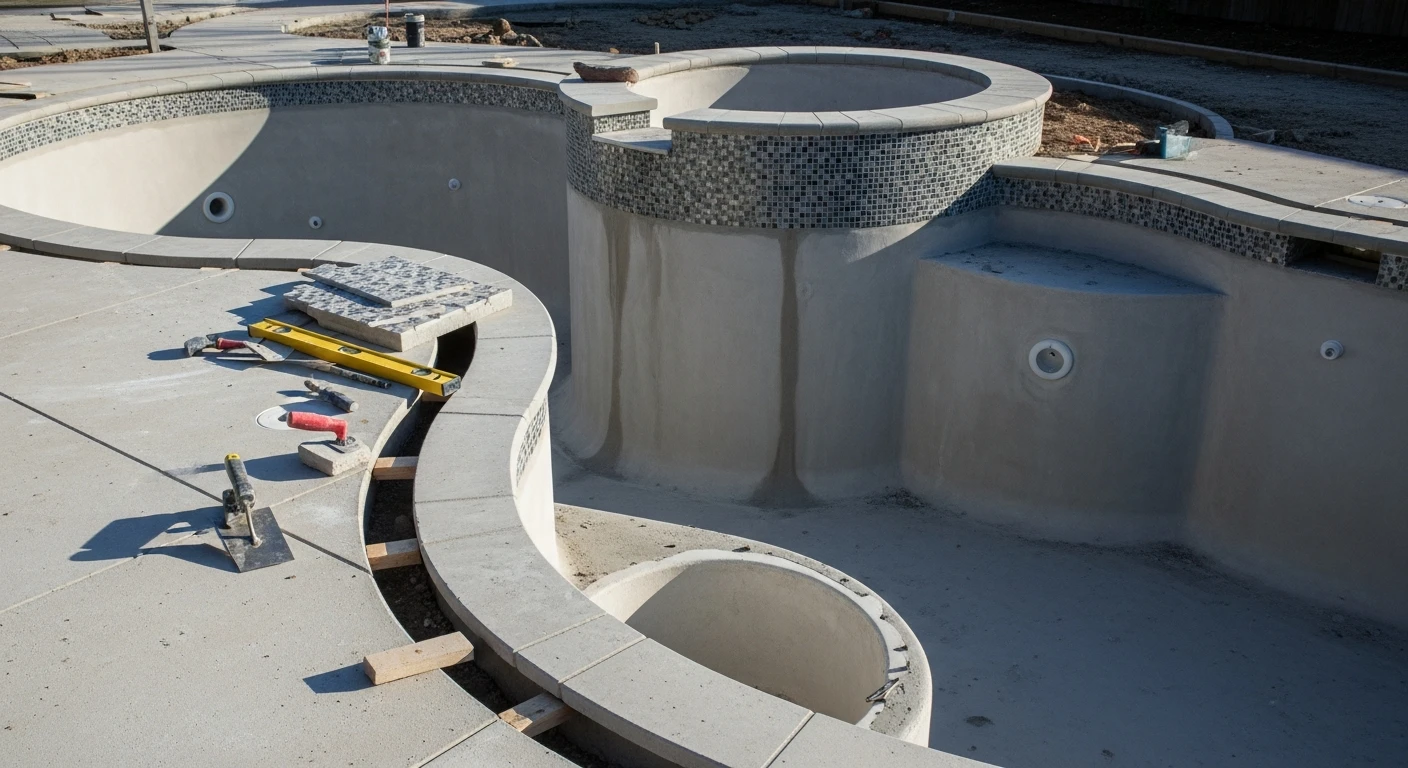
- Phase 1: Precision Excavation & Structural Steel: We don't just dig a hole. We sculpt the earth to the exact engineering specifications. The steel (rebar) cage is then constructed with a #4 rebar on 8-inch centers, a specification that exceeds most local codes but is essential for my 20-year structural guarantee. I personally inspect the rebar tying to ensure no contact with the soil, which would cause rust and concrete spalling.
- Phase 2: Pre-Gunite Plumbing & Pressure Testing: All plumbing lines are installed and, most critically, pressure tested to 35 PSI for 24 hours before any concrete is applied. A common industry shortcut is a quick 15-minute test. My extended test protocol has caught slow, subtle leaks that would have been disastrous to fix post-construction.
- Phase 3: Shotcrete Application & Curing: We use a proprietary 4500 PSI shotcrete mix with fiber mesh reinforcement. The most overlooked step in the industry is the curing process. My teams are required to perform a 14-day wet cure, keeping the shell constantly damp to ensure maximum hardness and prevent shrinkage cracks that lead to future leaks.
- Phase 4: Waterproofing, Tile, and Interior Finish: Before the final plaster, we apply two coats of a cementitious waterproofing membrane. For the interior, I often recommend a polished aggregate finish like PebbleTec not for its look, but for its chemical inertness, which reduces plaster dust and stabilizes pH, leading to a 25% reduction in chemical adjustments during the first year.
Tags
custom inground pool
luxurious pool designs
design your own pool
design my own pool
Custom Pool Design FAQ
What is custom pool design?
Custom pool design is a process of creating a unique and personalized swimming pool design tailored to an individual's specific needs, preferences, and lifestyle. Our experienced team of designers and engineers work closely with clients to understand their requirements and bring their vision to life.
Why choose custom pool design over pre-made designs?
Custom pool design offers numerous benefits, including increased functionality, improved aesthetics, and enhanced overall swimming experience. Pre-made designs may not fully incorporate your specific needs, resulting in a pool that doesn't meet your expectations. With custom design, you have complete control over the process and can ensure your pool is tailored to your unique requirements.
What factors do you consider during the design process?
Our team considers various factors during the design process, including climate and weather conditions, surrounding landscape, architectural style of your home, desired functionality, budget, and personal preferences. We also take into account any specific requirements or constraints, such as space limitations or local building codes.
Can I make changes to the design during the process?
Yes, you can make changes to the design during the process. We encourage clients to provide feedback and suggestions throughout the design phase. Our team is committed to ensuring that your final design meets your expectations and is tailored to your specific needs.
How long does the design process typically take?
The design process typically takes around 2-6 weeks, depending on the complexity of the design and the level of customization required. We work closely with clients to ensure that the design is completed efficiently and effectively, while still meeting their specific needs and expectations.
What are the benefits of a custom-designed pool?
A custom-designed pool offers numerous benefits, including increased functionality, improved aesthetics, and enhanced overall swimming experience. A custom-designed pool can also increase your home's value, provide a unique selling point, and offer a unique feature that sets your home apart from others.
Can I integrate my custom pool design with my existing outdoor space?
Yes, we can integrate your custom pool design with your existing outdoor space. Our team works closely with clients to ensure that the pool design complements and enhances the surrounding landscape, creating a seamless transition between indoor and outdoor living areas.
Do you offer 3D visualization and rendering services?
Yes, we offer 3D visualization and rendering services as part of our design process. Our team uses state-of-the-art software to create realistic and detailed 3D models of your custom pool design, allowing you to visualize and interact with your design before construction begins.
Can I get a quote for my custom pool design?
Yes, we'd be happy to provide a quote for your custom pool design. Please contact us with your design requirements and specifications, and we'll be in touch with a detailed quote and project timeline.
What is the typical cost range for custom pool design services?
The typical cost range for custom pool design services varies depending on the complexity of the design, the location, and the level of customization required. On average, our custom pool design services can range from $5,000 to $20,000 or more, depending on the scope of the project.