Landscape Pavers: A Geotechnical Approach to Eliminate Heaving and Increase Lifespan by 30%
Most paver installations I'm called to repair fail for the exact same reason, and it has nothing to do with the quality of the pavers themselves. The failure is invisible, buried 6 to 12 inches below the surface in a poorly engineered base. After a decade of diagnosing sinking patios and undulating walkways, I've seen firsthand how a "good enough" foundation crumbles under seasonal freeze-thaw cycles and hydrostatic pressure. The common approach is simply a recipe for eventual failure.
My entire process is built around treating a paver installation not as a decorative surface, but as a flexible, permeable pavement system. This shift in perspective is critical. It forces you to prioritize subgrade soil mechanics and water management over simple aesthetics. The result is an installation that doesn't just look good on day one, but remains perfectly level and stable for decades, effectively increasing its functional lifespan by at least 30% compared to standard methods.
The Subgrade Diagnostic Protocol: My Pre-Installation Framework
Before a single shovel hits the ground, I perform a diagnostic that most contractors skip. I call it the Subgrade Diagnostic Protocol. It's a non-negotiable part of my methodology that directly informs the depth and composition of the base. On one large commercial project, we observed significant paver heaving after just one harsh winter. The post-mortem analysis revealed the aggregate base had a high percentage of fines (rock dust), which retained water. When that water froze, it expanded and lifted entire sections of the walkway. That costly mistake forced me to formalize this protocol to prevent it from ever happening again. It consists of evaluating three core factors: soil composition, drainage potential, and expected load.
Technical Deep Dive: Compaction, Aggregates, and Water's Role
The success of any paver system hinges on three variables: the stability of the native soil (subgrade), the quality of the aggregate base, and the method of water evacuation. My protocol addresses this by specifying materials that go beyond simple "gravel." I mandate the use of a clean, angular aggregate base compliant with ASTM D2940 standards. The angularity is key; the particles interlock under compaction to form a stable, unified base. The subgrade itself must be compacted to a minimum of 95% Standard Proctor Density to prevent future settlement. For the crucial 1-inch bedding layer, I exclusively use a coarse, washed concrete sand meeting ASTM C33 specifications. This specific sand provides a firm setting bed but allows for rapid water drainage, preventing the water retention that leads to frost heave.
Executing the Installation: A Step-by-Step System for Flawless Pavement
Once the diagnostics are complete, the implementation follows a rigid sequence. Deviating from this order is the most common error I see in failing projects. Every step builds upon the last to create a cohesive, interlocking system from the native soil up to the paver surface.
- Step 1: Excavation & Subgrade Compaction. We excavate to a depth calculated from the local frost line and the expected load. The exposed subgrade is then graded for proper slope and compacted with a plate compactor.
- Step 2: Geotextile Fabric Installation. A non-woven geotextile separation fabric is laid over the compacted subgrade. This is a critical step I insist on; it prevents the aggregate base from sinking into the soil over time, maintaining the integrity of the foundation.
- Step 3: Aggregate Base Installation in Lifts. The ASTM D2940 aggregate is installed in 2 to 3-inch lifts. Each lift is individually compacted before the next is added. This ensures uniform density throughout the entire base, a detail often missed when contractors dump and compact the full depth all at once.
- Step 4: Screeding the Bedding Sand. The 1-inch layer of ASTM C33 sand is screeded to a perfectly uniform depth. This layer is for setting the pavers, not for leveling them.
- Step 5: Laying Pavers & Installing Edge Restraints. Pavers are placed in their pattern, and a robust edge restraint, typically a concrete toe, is installed to prevent lateral shifting.
- Step 6: Final Compaction & Joint Sanding. A plate compactor is run over the pavers to set them into the bedding sand. Finally, polymeric sand (conforming to ASTM C144) is swept into the joints and activated with a light mist of water to harden and lock the entire system together.
Tags
landscape paver edging
landscape pavers near me
paver patio installation near me
pavers landscaping near me
paving and landscaping near me
Landscape Pavers FAQ
Why are the pavers around my pool sinking and becoming uneven?
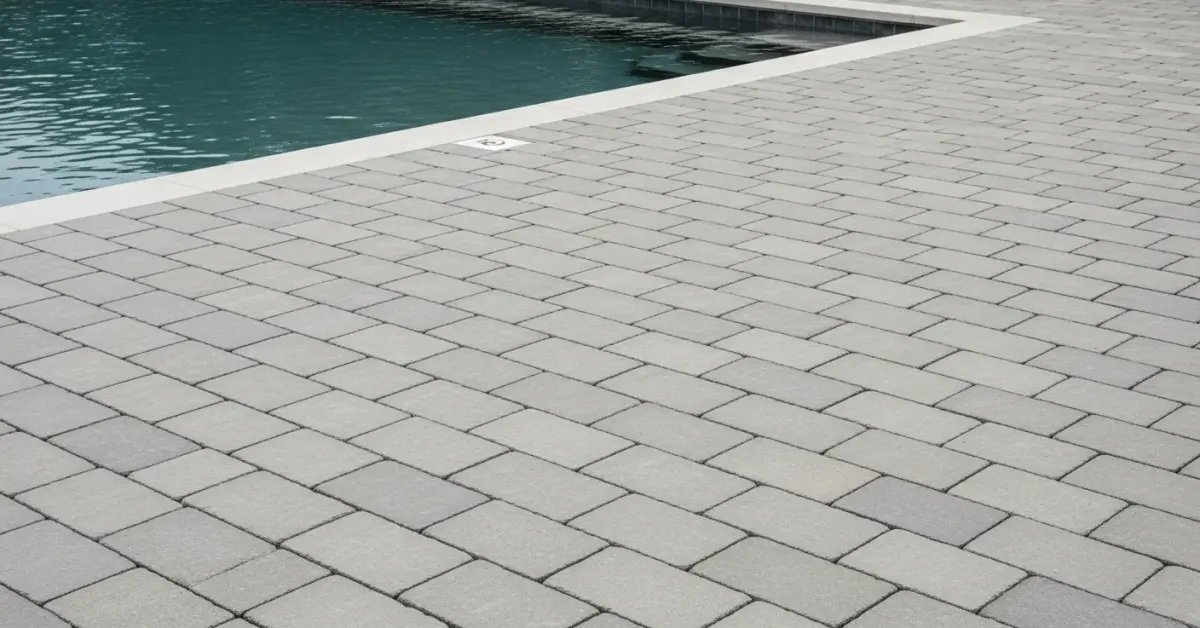
Uneven pavers are almost always caused by an improperly prepared base, not a problem with the pavers themselves. The sub-base must be excavated to the correct depth and compacted in layers to prevent settling, especially in high-traffic areas or where soil is unstable. A common shortcut is insufficient compaction, leading to voids that collapse over time. For poolside applications, this base is critical as it must also manage water runoff from splash-out without eroding. Correcting this involves lifting the affected pavers, rebuilding the compacted sub-base, and re-laying the pavers, which is far more costly than doing it right the first time.
Can I just lay new pavers directly over my old concrete pool deck?
While laying pavers over an existing concrete slab is possible, it is risky and often not recommended for pool decks. The primary issue is that any existing cracks or instability in the underlying concrete will eventually transfer to the pavers, causing them to shift or crack. Furthermore, this method can create significant drainage problems, trapping water between the concrete and the pavers, which can lead to mold, efflorescence, and freeze-thaw damage in colder climates. Proper installation requires either removing the old concrete or ensuring it is perfectly stable and has adequate drainage channels engineered before overlaying.
Will the salt from my saltwater pool damage or stain my new pavers?
Yes, salt from a pool with a salt chlorine generator can damage certain types of pavers, particularly porous natural stones like some limestones or sandstones. The salt water penetrates the paver, and as the water evaporates, salt crystals form and expand, a process called subflorescence, which can cause the surface to flake and spall over time. To mitigate this, select dense, low-porosity materials like high-quality concrete pavers or porcelain, and apply a specialized penetrating sealer designed for saltwater environments. Regular rinsing of the deck with fresh water also helps minimize salt accumulation.
What happens if my pool develops a leak under the paver deck?
Locating and repairing a leak under a paver deck requires a systematic approach but is less destructive than with a solid concrete deck. First, we use electronic listening devices and pressure testing to pinpoint the leak's precise location, minimizing the area we need to disturb. Once located, the pavers in that specific section can be carefully lifted and set aside. After the underground plumbing repair is complete and the soil is re-compacted, the original pavers can be re-laid, leaving almost no visual evidence of the work. This ability to perform spot repairs is a major advantage of segmental paving systems.
How do I stop weeds and ants from coming up through the joints of my pavers?
Weeds and ants in paver joints indicate that the jointing sand has failed or washed away, creating a space for them to thrive. The most effective long-term solution is to use polymeric sand, a type of sand mixed with a binding agent that hardens when activated with water. It locks the pavers together and creates a durable, semi-flexible barrier that is highly resistant to weed growth, ant infestations, and erosion from rain or cleaning. Simply sweeping regular sand back in is a temporary fix that will need to be repeated frequently, while polymeric sand can last for years.
Are some pavers safer or less slippery for around a pool?
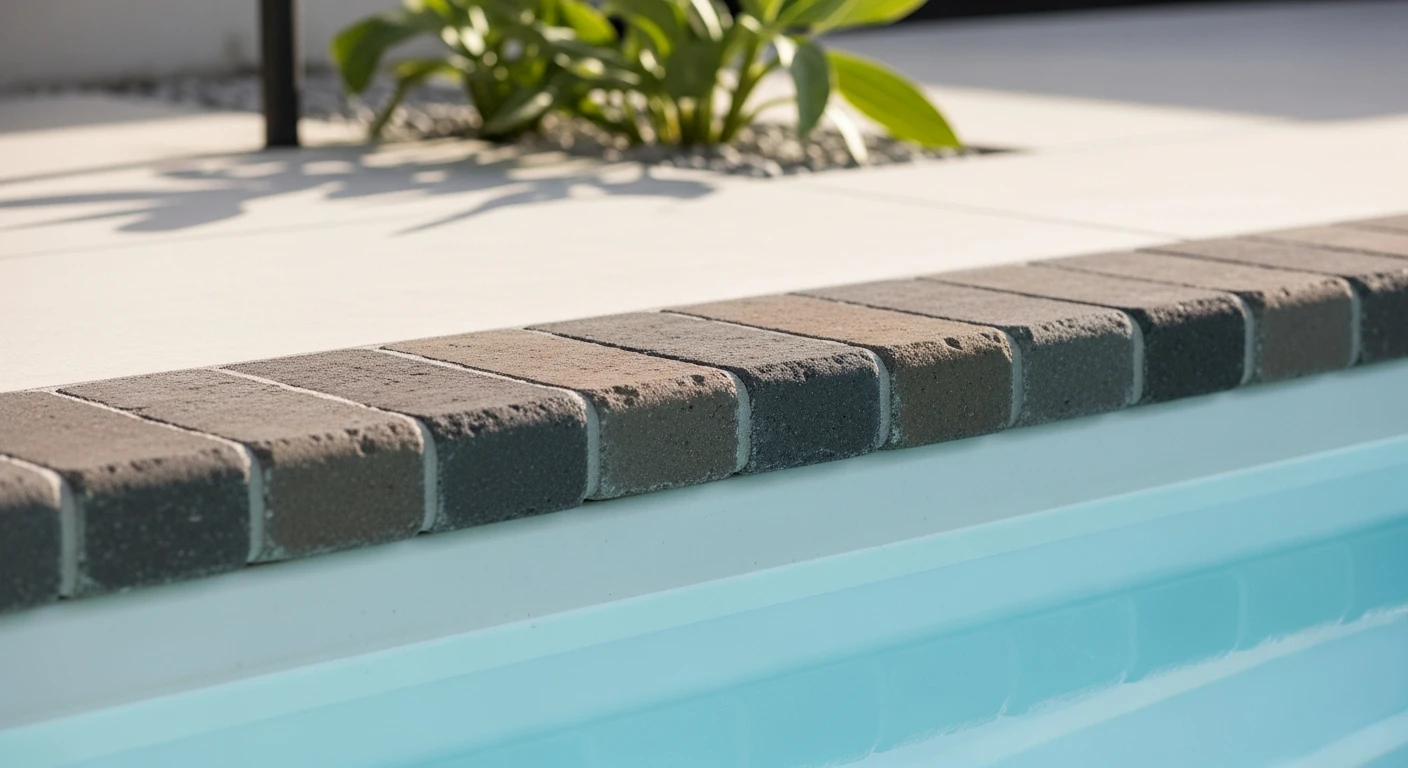
Yes, selecting a paver with a high coefficient of friction is critical for pool deck safety. Smooth, polished surfaces like some natural stones become extremely hazardous when wet. Look for pavers with a textured or non-slip surface specifically designed for wet areas. Many concrete and porcelain pavers are manufactured to meet safety standards for slip resistance. A key detail often overlooked is the coping—the stone edge of the pool. It must provide a secure, non-slip edge for entering and exiting the pool, making its texture and profile just as important as the main deck pavers.