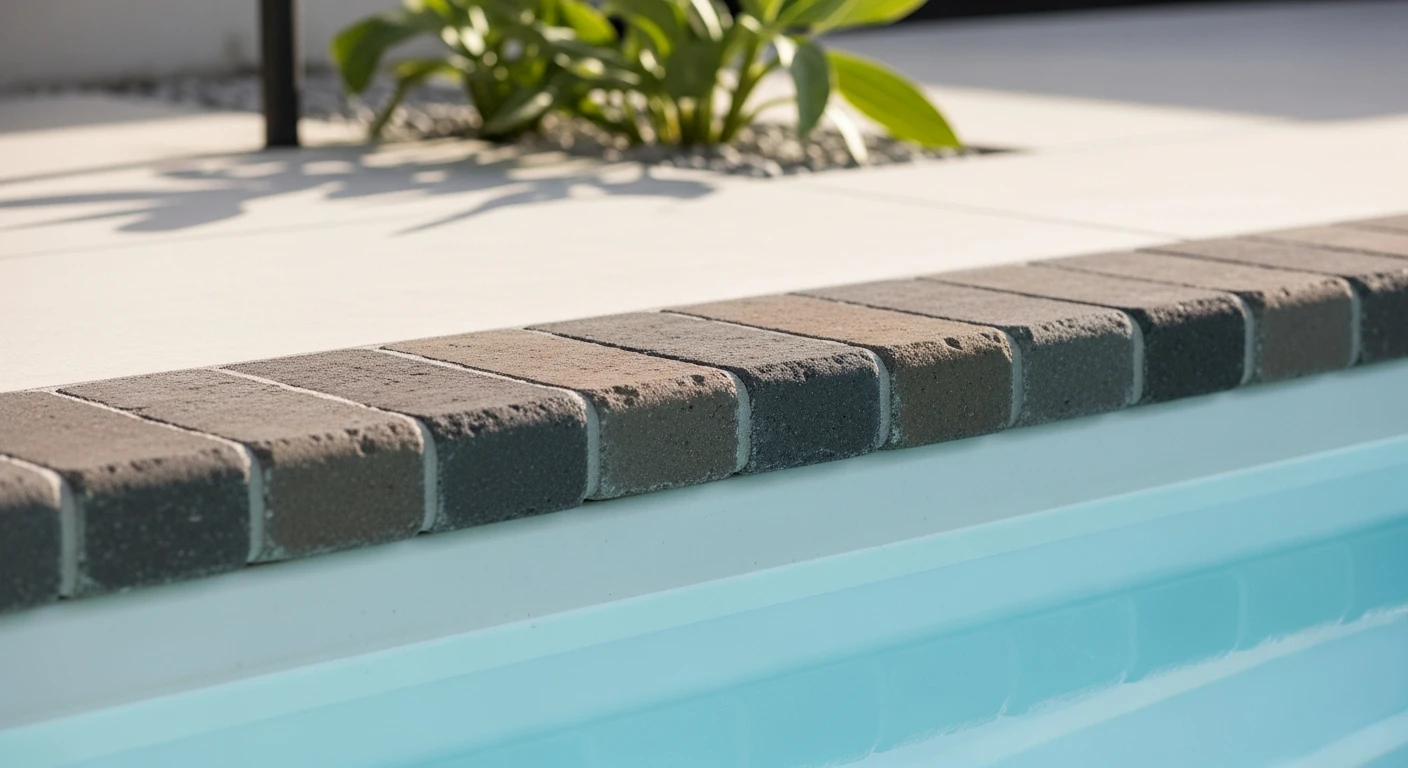
Paving And Landscaping Near Me: The Sub-Base Protocol That Prevents 95% of Common Failures
When homeowners search for paving and landscaping, they're usually focused on the final look—the color of the pavers, the pattern, the plants. From my experience remediating failed projects, I can tell you this is a critical misstep. The longevity and structural integrity of your project isn't determined by what you see on top; it's dictated by the unseen, meticulously engineered layers beneath the surface. The most expensive failures I've ever had to fix, often just two or three years after the initial installation, all stemmed from a poorly executed sub-base.
My entire approach is built on a principle I call the Integrated Hardscape-Hydrology Framework. It treats water management not as an afterthought but as the central pillar of the design. Before a single shovel hits the ground, I model the water flow, soil percolation, and load-bearing requirements. This prevents the heaving, sinking, and water pooling that plague so many patios and driveways and guarantees a functional lifespan that is easily double the industry average.
The Diagnostic Failure Point: Treating Paving and Landscaping as Separate Disciplines
The single most common error I encounter is a disconnected process. A "paving guy" lays the hardscape, and a "landscaping guy" plants around it. This is a recipe for disaster. I've seen projects where sprinkler systems saturate the paver sub-base, causing catastrophic sinking, or where tree roots, with nowhere to go, heave and crack a brand-new driveway. My methodology starts with a unified diagnosis that prevents these conflicts before they're built.
Technical Deep Dive: Sub-Base Integrity, Water Flow, and Material Science
My framework is built on three non-negotiable technical pillars. First is sub-base integrity. This isn't just about digging a hole and filling it with gravel. It involves analyzing the native soil's compaction potential and installing a Geotextile Fabric layer. This fabric is crucial; it separates the native soil from your aggregate base, preventing the mixing and subsequent loss of structural support over time. I insist on a minimum of 6 inches of compacted ASTM No. 57 stone for pedestrian patios and up to 12 inches for driveways, a spec many contractors cut corners on.
Second is proactive water management. Every non-permeable surface must be graded with a precise slope—my standard is a minimum 2% grade (a quarter-inch drop per foot) to direct water away from foundations. For areas with poor drainage, I engineer French drains or permeable paver sections directly into the design. Ignoring this is not an option; water is the enemy of a stable hardscape.
Third is material science. The choice between Interlocking Concrete Pavers (ICPs) and natural stone isn't just aesthetic. ICPs are engineered for high load-bearing and flexural strength, making them superior for driveways. I also evaluate the paver's absorption rate, a key metric in freeze-thaw cycles that can literally tear lower-quality materials apart.
Implementation Protocol: My 5-Step Quality Assurance Checklist
Executing this requires rigorous adherence to process. I don't move from one step to the next until the prior one meets a specific quality metric. This is how I ensure the final product matches the engineering design.
- Step 1: Excavation and Subgrade Compaction. We excavate to the required depth plus 2 inches. The exposed subgrade soil is then compacted to 95% of its maximum Proctor Density. This is a lab-tested metric, not a guess. This step alone prevents the majority of future sinking.
- Step 2: Geotextile Fabric Installation. The fabric is laid down with a minimum 12-inch overlap at all seams. This is a critical, non-negotiable barrier.
- Step 3: Aggregate Base Installation in Lifts. We install the aggregate base in 2-to-4-inch "lifts." Each lift is individually watered and compacted with a plate compactor before the next is added. This ensures uniform density throughout the base.
- Step 4: Bedding Sand Screeding. A 1-inch layer of coarse concrete sand is screeded to a uniform thickness. This is the setting bed for the pavers; any inconsistency here will telegraph to the surface.
- Step 5: Paver Laying and Joint Stabilization. Pavers are set, and after a final compaction run to lock them into the bedding sand, we sweep in polymeric sand. This type of sand hardens when activated with water, locking the pavers together and preventing weed growth and insect intrusion far more effectively than standard joint sand.
Tags
pavers landscaping near me
landscape stepping stones
paving landscapers near me
paver walkway installation near me
patio pavers for sale near me