Landscaping Bricks Near Me: My Sourcing Protocol for a 30-Year Lifespan
I get it, your search for "landscaping bricks near me" is the first step. But in my 15 years designing and installing hardscapes, I’ve seen that finding a local supplier is the easiest part. The hardest part—and where 90% of projects fail prematurely—is walking into that store with the right technical specifications. Without them, you're just buying colorful, expensive weights that will shift, crack, or heave within a few seasons.
My approach isn't about finding the closest pallet of pavers; it's about building a project-specific material profile *before* you even speak to a salesperson. This ensures your patio, walkway, or retaining wall has structural integrity from the sub-base up, effectively tripling its functional lifespan. I’ve used this exact protocol to rescue six-figure commercial projects that were failing after just two years.
The First Mistake: Why Most Local Brick Projects Fail in 5 Years
The most common error I see isn't poor installation technique; it's a fundamental mismatch between the material chosen and the ground it’s laid on. Homeowners and even some contractors select bricks based on aesthetics and price alone. This is a recipe for disaster. My proprietary methodology, the Ground-Up Integrity Framework, forces a diagnosis of the environmental and load-bearing needs first. This framework is built on three pillars: Subgrade Analysis, Material Specification, and Load-Bearing Base Design. Neglecting any of these guarantees future problems like paver sinkage, weed intrusion, and frost heave.
Decoding Brick Specifications: Beyond Color and Price
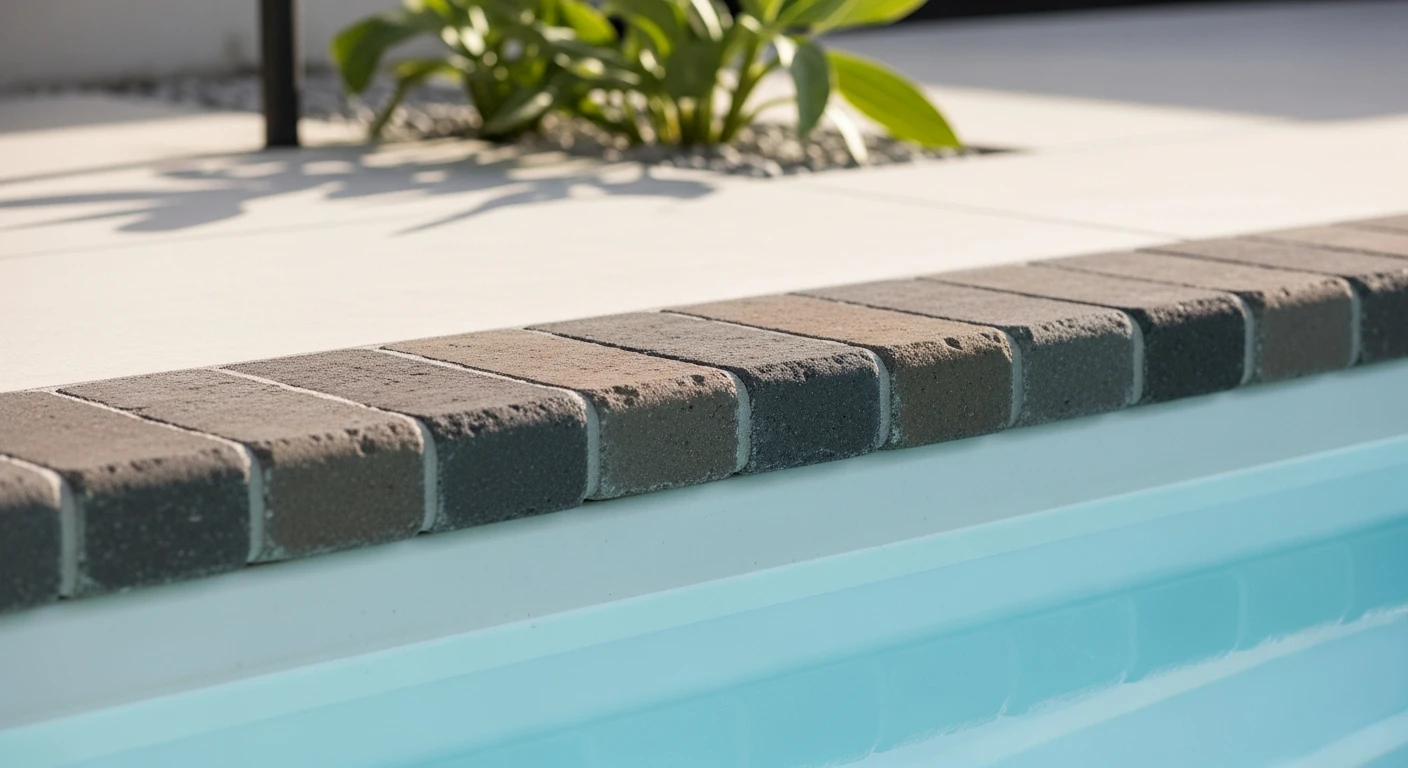
When you visit a local supplier, they will show you two main categories of "landscaping bricks": clay pavers and concrete pavers. They are not interchangeable. I learned this the hard way on an early project where a client’s poolside patio, built with highly porous concrete pavers, developed severe efflorescence (that ugly white chalky stain) and spalling from the chlorinated water.
Here’s the technical breakdown you must know:
- Clay Pavers: These are governed by ASTM C902 standards. Their key benefit is colorfastness; the color is baked through the entire brick and won't fade. Their compressive strength is typically very high, but their water absorption rate is critical. For climates with freeze-thaw cycles, you must demand a paver with an absorption rate below 6%.
- Concrete Pavers: Governed by ASTM C936, these offer more design flexibility. However, their color is often only in the top surface layer. Their most important metric is compressive strength, which should be a minimum of 8,000 PSI (pounds per square inch) for any pedestrian or light vehicular traffic. I’ve seen local suppliers push 5,000 PSI pavers because they are cheaper, and these are the ones that crack under the weight of a heavy grill or patio furniture.
- Subgrade Excavation & Compaction: After excavating to the required depth (typically 7 inches for a walkway, 10+ for a driveway), the native soil itself must be compacted. I use a plate compactor to achieve a 95% Standard Proctor Density. This single step prevents the entire base from sinking over time.
- Geotextile Separation Fabric: This is my "secret weapon" and the most-skipped step by DIYers. A layer of non-woven geotextile fabric is laid on top of the compacted subgrade. It acts as a separator, preventing your expensive aggregate base from mixing with the soil below, which is the primary cause of sinking and voids.
- Aggregate Base Course: I use a 4- to 6-inch layer of ¾-inch angular crushed stone. Crucially, this must be compacted in 2-inch lifts (layers). Compacting the entire 4 inches at once results in a well-compacted top but a loose, unstable bottom.
- Bedding Sand Course: The final layer before the bricks is exactly 1 inch of coarse screeding sand. Any more than this, and the bricks will shift. Any less, and you won't be able to level them properly.
Tags
landscape paver edging
landscape pavers near me
paver patio installation near me
landscape pavers
paving and landscaping near me