Sarasota Outdoor Cooking Island: My Framework for Resisting Salt-Air Corrosion & UV Damage
Most outdoor cooking islands built in Sarasota begin to degrade within three years. I've seen it firsthand on projects from Longboat Key to Lakewood Ranch—corrosion blooming on stainless steel, countertops staining from humidity, and structures warping. The common mistake is treating it like an indoor kitchen built outside. My entire approach is built on a single principle: preemptive material science engineered specifically for our coastal, high-UV environment. This isn't about aesthetics alone; it's about creating an asset that withstands the specific atmospheric challenges of Sarasota County, preventing a $20,000 investment from failing prematurely.The Critical Failure Point Analysis: My Coastal Durability Matrix
After seeing a high-end outdoor kitchen on Siesta Key show significant rust pitting on its 304-grade steel doors within 24 months, I developed what I call the "Coastal Durability Matrix." It's a diagnostic methodology that cross-references materials with environmental stressors. The biggest mistake I see is a "one-size-fits-all" material selection. A design that works inland in a place like Fruitville will fail catastrophically near the water. My matrix forces a focus on three core vulnerabilities: salt-air galvanic corrosion, UV-induced material degradation, and humidity-driven moisture penetration. It's not about just picking "outdoor-rated" materials; it's about picking materials rated for a marine subtropical climate.Material Science Deep Dive: The Non-Negotiables for a Sarasota Build
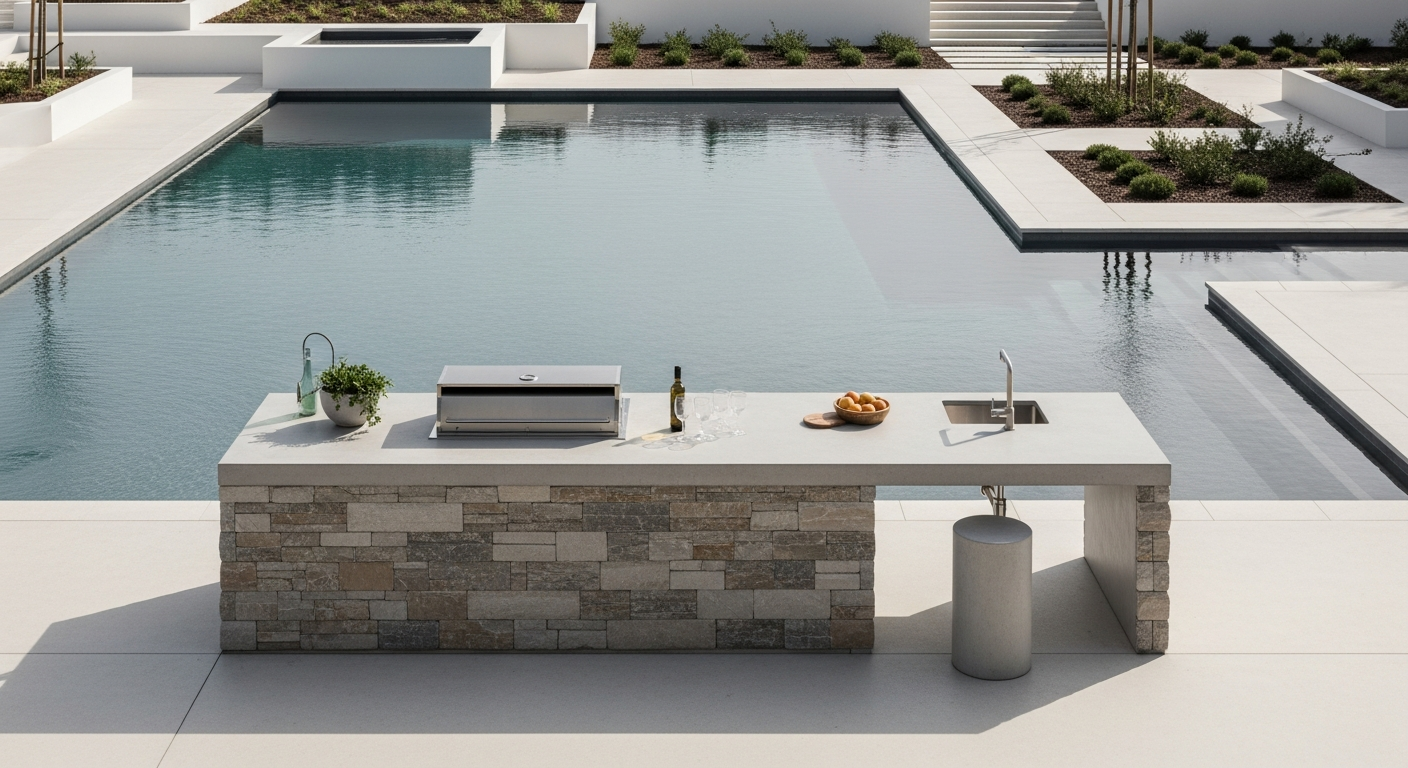
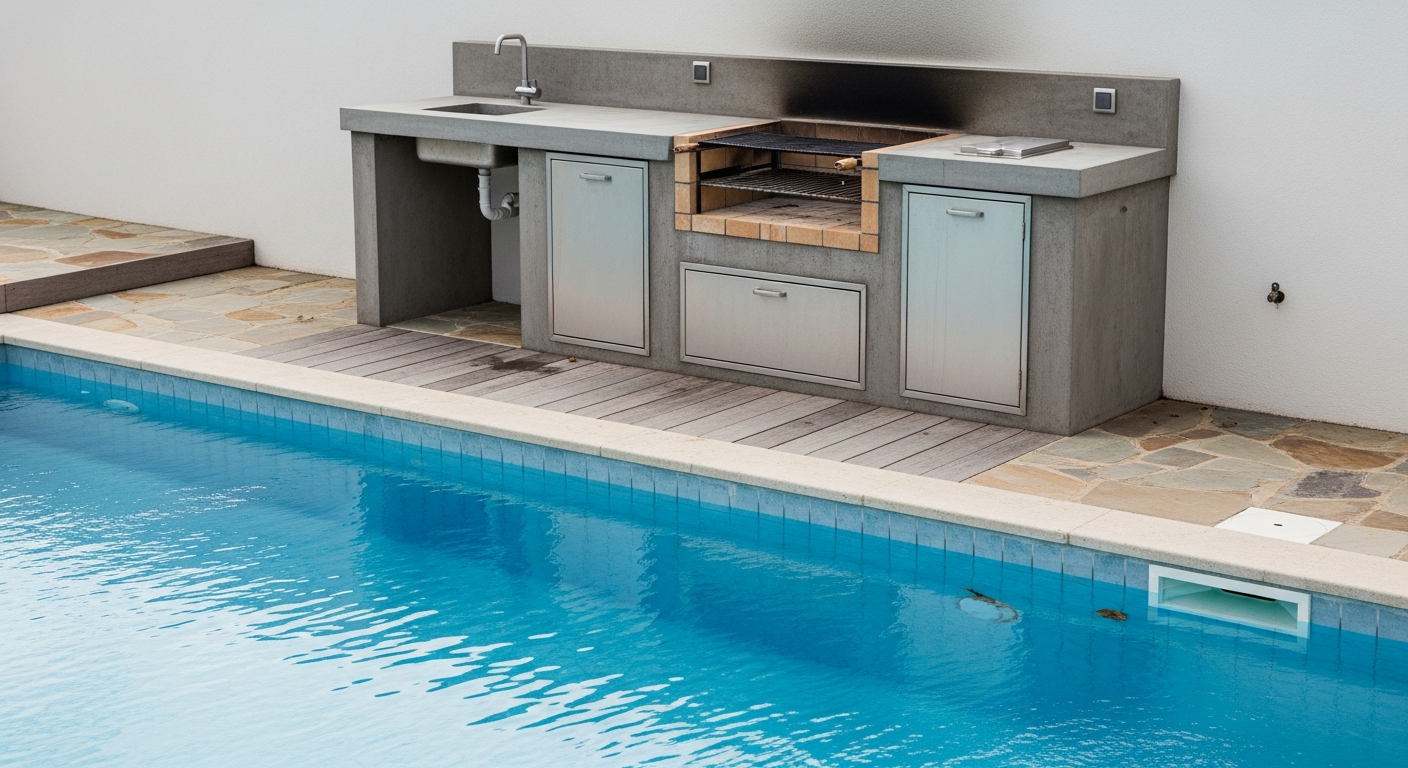
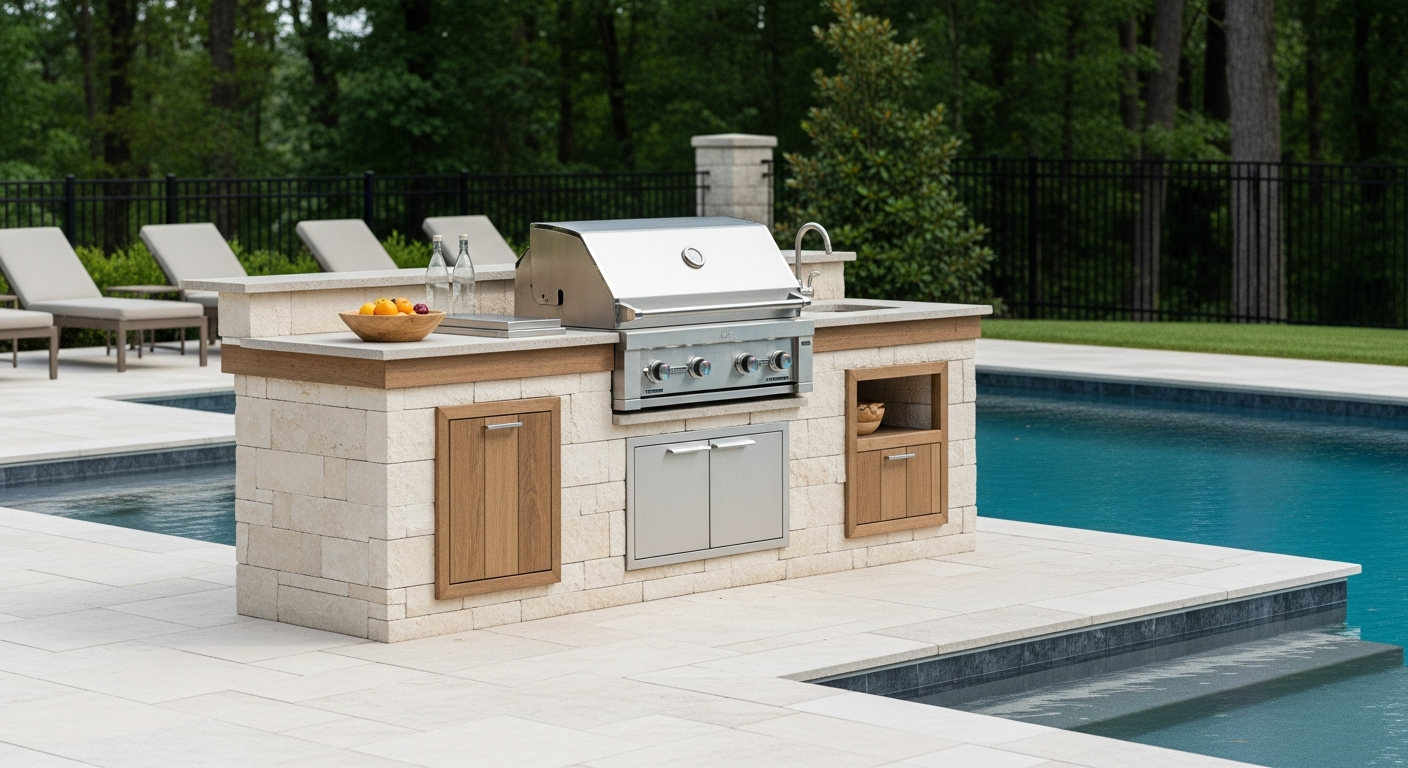
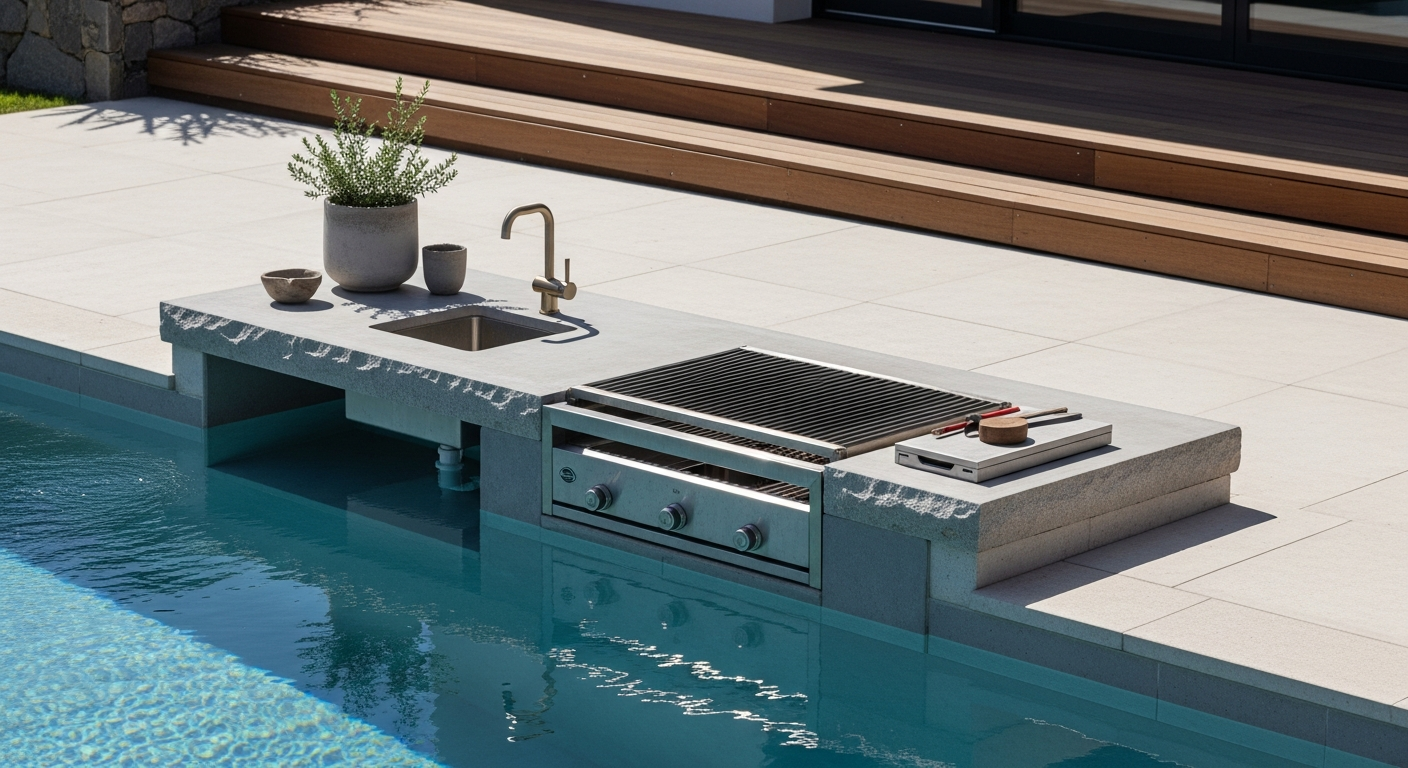
My matrix has a clear hierarchy of materials. For countertops, I steer clients away from porous granites that will inevitably stain and harbor mildew in our humidity. I specify quartzite or non-porous, UV-stable porcelain slabs. For the island's structure, poured concrete or concrete block is a common choice, but its weakness is the rebar inside, which can rust and expand. My proprietary standard is a welded, marine-grade aluminum frame (6061 alloy). It’s lightweight, impervious to rust, and won't warp. For appliances and access doors, the absolute minimum specification must be 316L marine-grade stainless steel. The "L" signifies low carbon content, offering a significant increase in corrosion resistance over the industry-standard 304 grade—a distinction that adds at least 40% to the appliance's lifespan in our salty air.Implementation Protocol: A Step-by-Step Execution Plan
Building a resilient outdoor cooking island isn't a weekend project; it's a technical construction process. My field protocol is rigid because a single weak link compromises the entire system. I insist my teams follow this sequence to the letter, especially within the high-salt zones west of the Trail.- Foundation First: Ensure the concrete pad is properly cured and sealed before any framing is installed. This prevents moisture from wicking up into the structure.
- Structural Integrity: Specify a welded aluminum frame, not a screwed-together kit. Welds are stronger and eliminate points of entry for moisture and potential galvanic corrosion between dissimilar fasteners.
- Utility Rough-In: All gas and electrical lines must be run in exterior-grade, sealed conduit. I’ve seen projects fail because an installer used interior-grade wiring, which corroded in months. This is a non-negotiable safety and durability step.
- Cladding and Countertop Installation: Every cut edge of the cement board or backer material must be waterproofed with a liquid membrane before the stone veneer or stucco is applied. For countertops, I mandate a high-performance silicone sealant, not a standard caulk.
- Appliance Integration: Check that every single appliance is certified as 316L steel. I personally inspect the specification sheets. This is the single most common area where contractors cut corners to save a few hundred dollars, and it's a fatal error.
Precision Tuning for Longevity and Performance
The final 10% of the build is what separates a good outdoor kitchen from one that lasts a decade or more. These are the details that are almost always overlooked. First, ventilation is critical. The island's cabinet cavities must have concealed, screened vents to prevent our high humidity from creating a perfect environment for mold and mildew. Second, all fasteners—every single screw, nut, and bolt—must be stainless steel (ideally 316 grade). Using zinc-plated screws is a rookie mistake I identified in a large-scale project in The Landings; they created rust streaks down the finish within a single rainy season. Finally, pre-seal all porous surfaces like natural stone veneer or unglazed tile *before* grouting. This prevents the grout from permanently staining the face of the material. Now that you've designed the core structure for material resilience, have you properly calculated the required CFM for your vent hood based on the grill's BTU output and the typical wind patterns inside your lanai?Written by

Tags
patio kitchen island
grill islands for sale
l shaped grill island
outdoor kitchen grill island
outdoor island