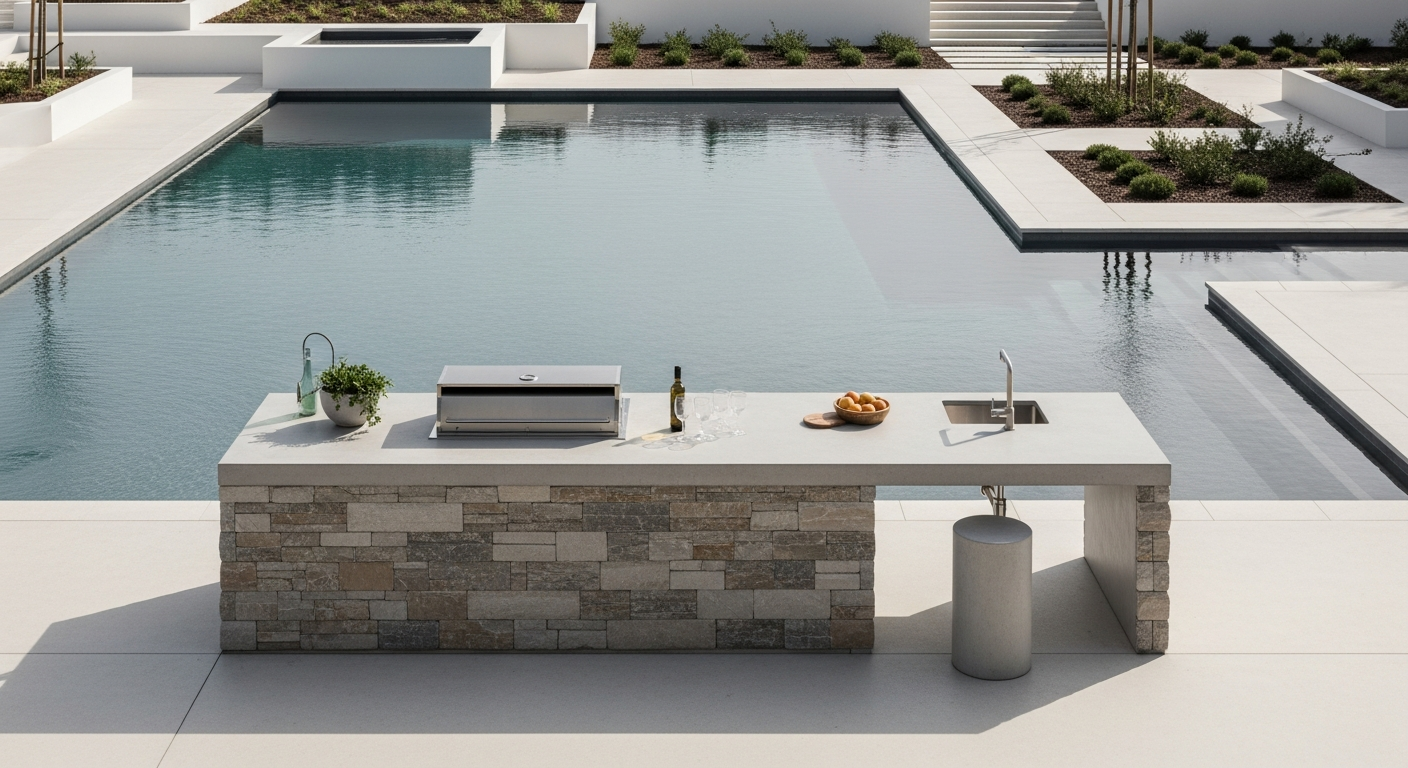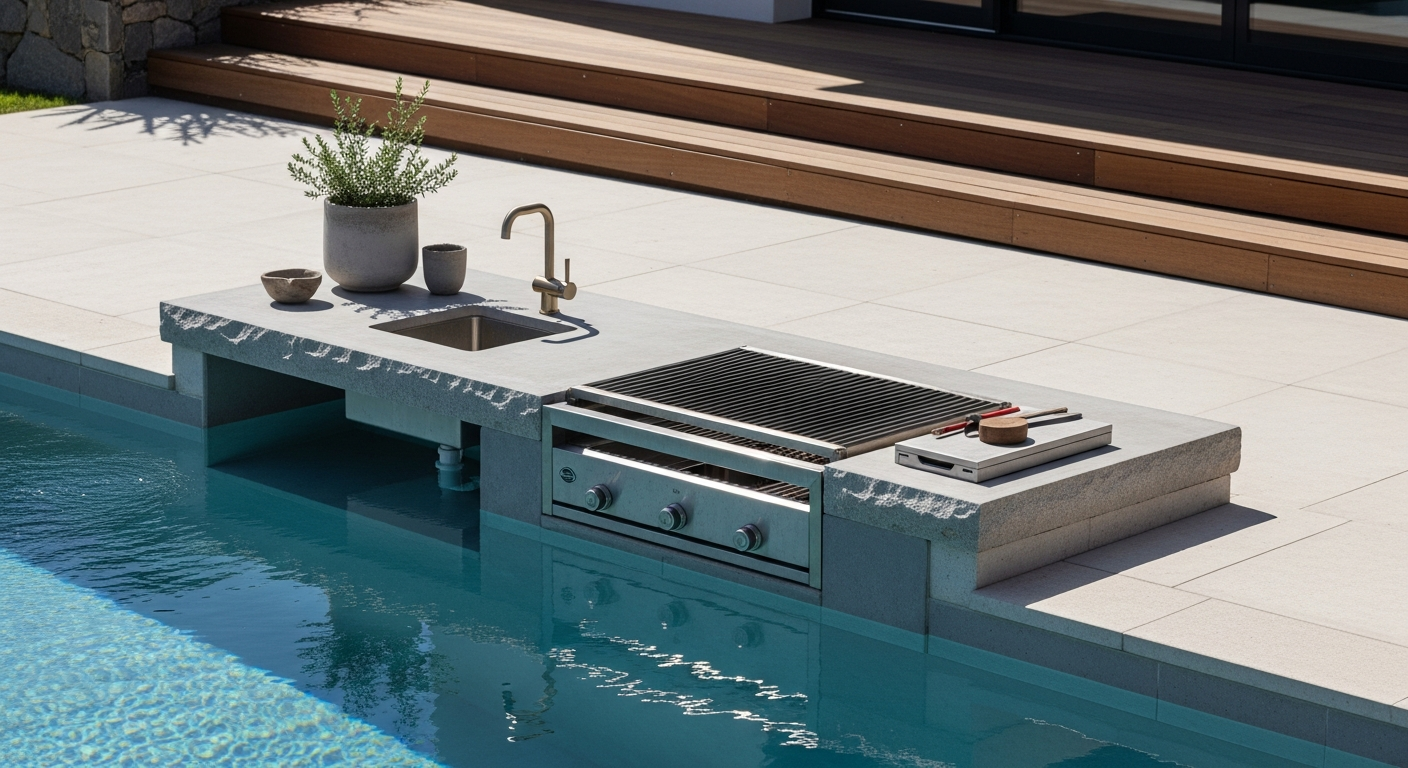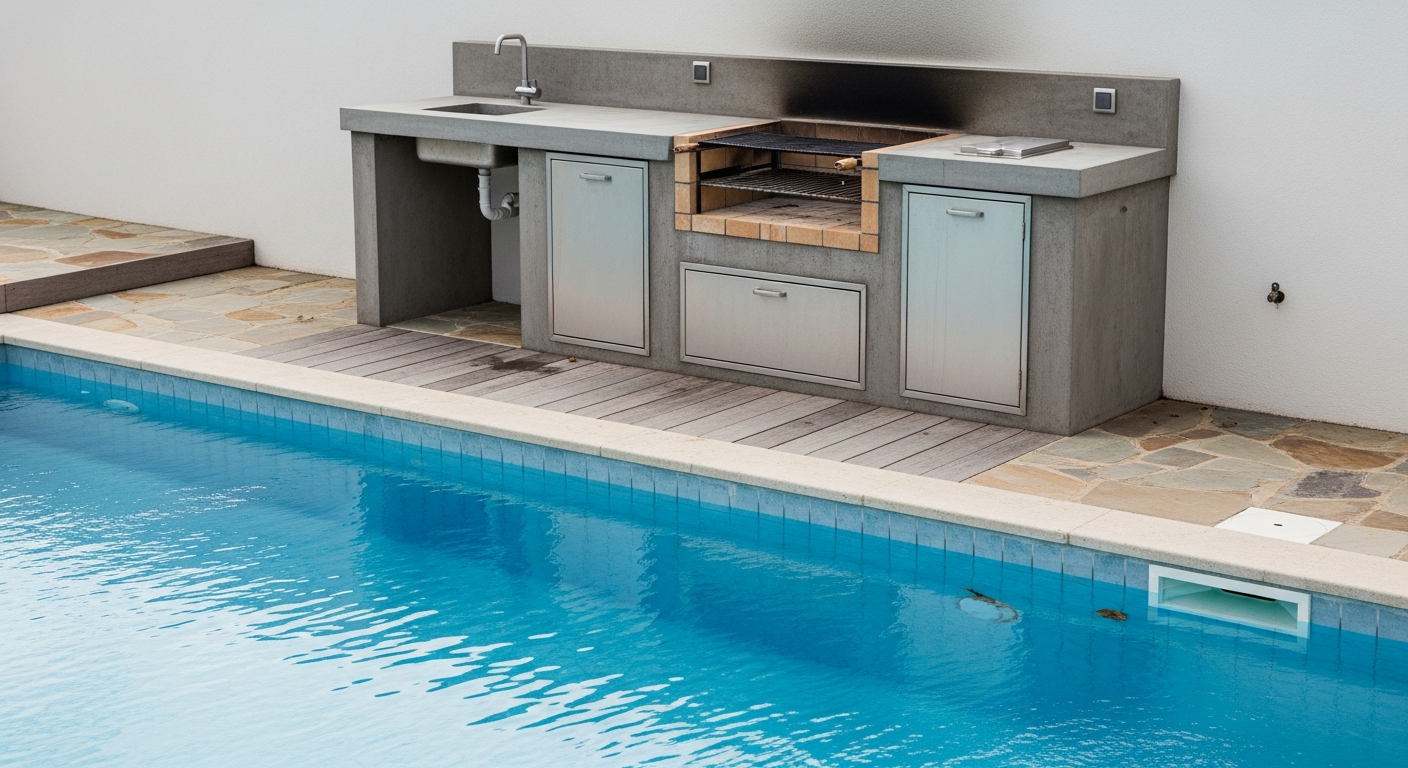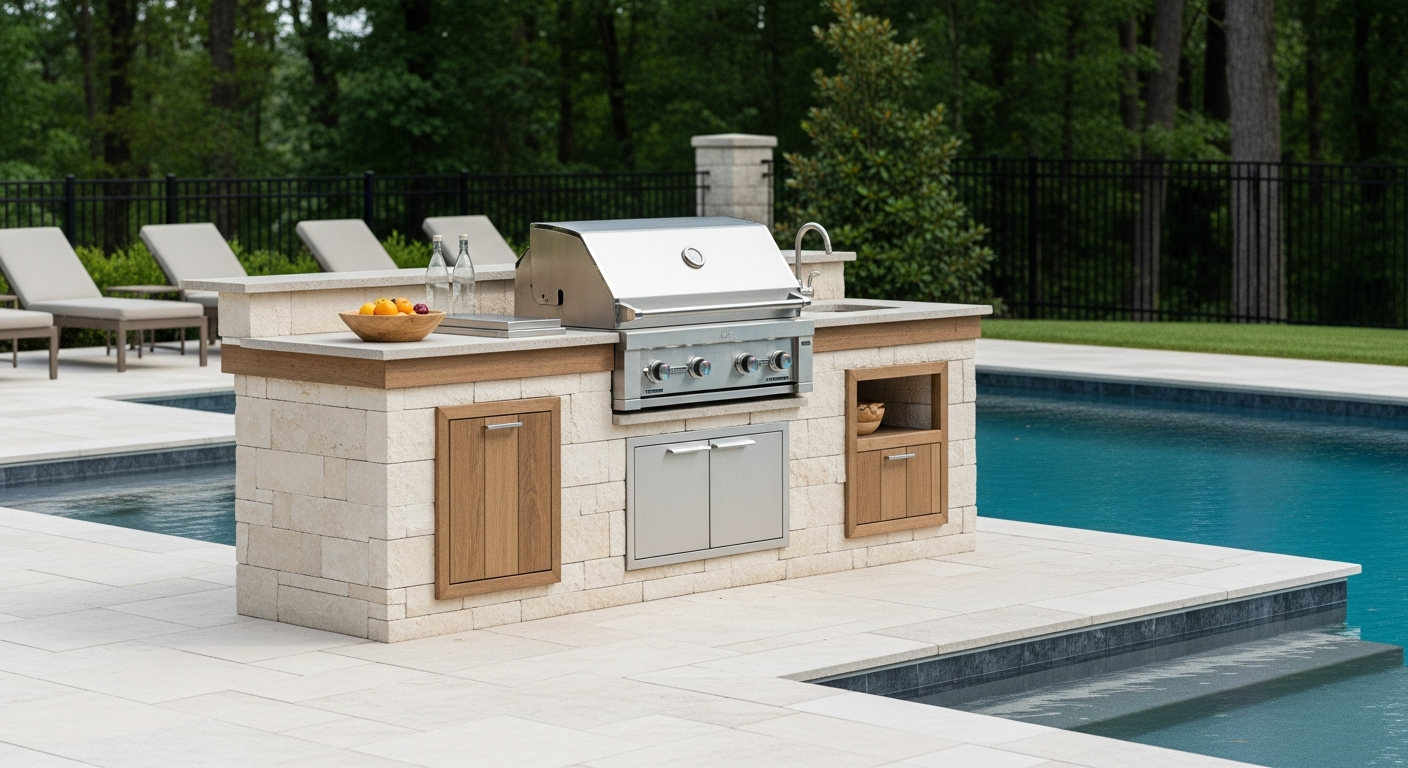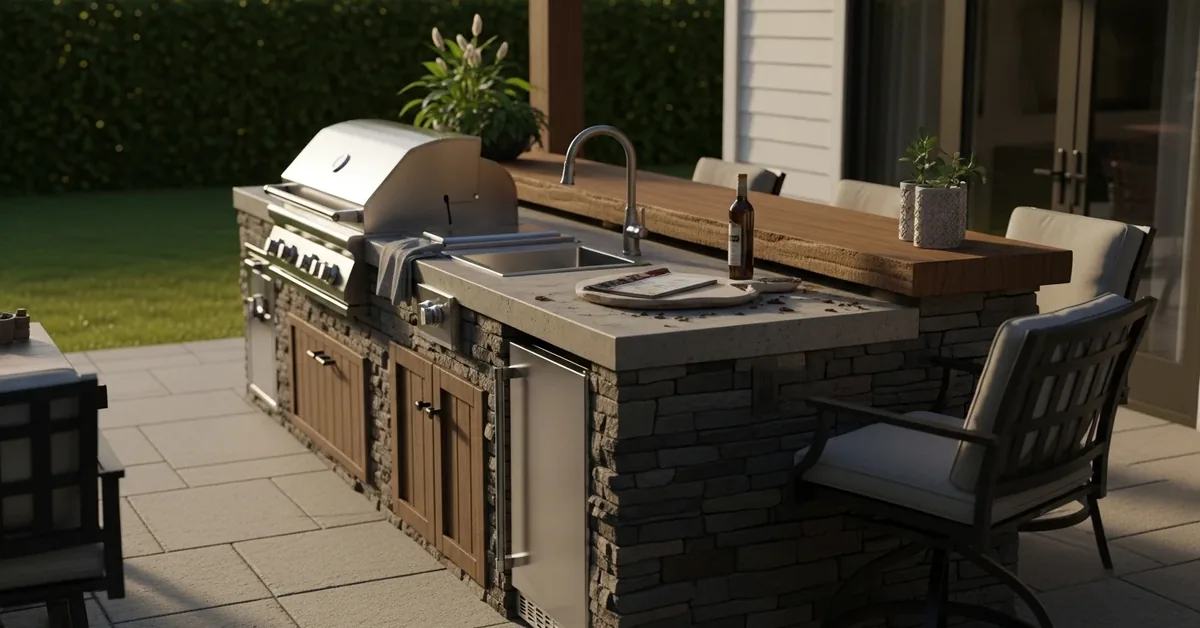
The biggest miscalculation I see with outdoor kitchen islands in Sarasota is underestimating the corrosive power of our
The biggest miscalculation I see with outdoor kitchen islands in Sarasota is underestimating the corrosive power of our coastal climate. Homeowners are often sold on aesthetics and features, but the real determinant of long-term value is the material's resistance to humidity, salt, and intense UV exposure. A standard prefabricated unit that works perfectly in a dry climate can degrade in a single Sarasota summer. My focus has always been on guiding clients toward systems that prioritize structural integrity and material science over superficial bells and whistles.
- Material Specification is Non-Negotiable: Marine-grade (316L) stainless steel for all metal components and non-porous, UV-stable countertops like Dekton or high-density porcelain are essential to prevent rust and fading.
- Hurricane Wind Load Compliance: The island must be anchored to the concrete slab to meet Florida Building Code wind load requirements, a step often overlooked with “portable” modular units.
- Ventilation for Safety: Proper ventilation for gas appliances is a strict code requirement in Sarasota County to prevent gas buildup, especially within a screened lanai.
- Permitting is Required: Any island with permanent gas or electrical connections requires a permit from the Sarasota County Planning and Development Services, a process that adds 4-6 weeks to the project timeline.
The Planning Failures That Drive Up Costs in Sarasota
The most common planning failures with prefabricated outdoor kitchen islands stem from a disconnect between the product's design and Sarasota's environmental reality. A modular outdoor grill island might look great in a showroom, but its performance on a lanai in Siesta Key is an entirely different matter. The initial savings on a cheaper unit are quickly erased by replacement costs for rusted components and warped structures.
The Most Expensive Mistake: Ignoring Salt Air Corrosion
I worked with a client in a bayfront home near Lido Key who purchased a high-end prefabricated barbeque island online. It featured 304-grade stainless steel, which is often marketed as high-quality. Within 18 months, tea-staining and pitting were visible on all the doors and the grill hood. The manufacturer's warranty was voided due to the “extreme coastal environment.” The lesson is stark: for any property west of I-75 in Sarasota, 304-grade stainless steel is insufficient. The upgrade to marine-grade 316L stainless is not a luxury; it is the baseline requirement to avoid a full replacement in under five years.
How Installation Works in Practice for Sarasota County
Installing a prefabricated outdoor kitchen island here is not a simple delivery-and-setup affair, especially when utilities are involved. The process starts with a site evaluation to ensure the lanai or patio slab can support the island's weight and that utility lines can be run safely and to code. Once a model is selected, the real work begins with the permitting process, which is a critical step for homeowner's insurance and legal compliance.
Key Selection Criteria for Sarasota Homeowners
- HOA Architectural Review Board (ARB) Approval: Before ordering, submit the island's specifications, including materials, colors, and dimensions, to your HOA. Communities like Lakewood Ranch or Palmer Ranch have stringent aesthetic guidelines that can dictate your choices.
- Licensed Gas and Electrical Contractors: Florida law requires that any natural gas or propane line connections, as well as electrical outlets, be installed by licensed professionals. Ensure your installer coordinates this or provides proof of proper subcontracting.
- Wind Load Anchoring Plan: Ask for the manufacturer's engineering specs for anchoring. The island must be mechanically fastened to the concrete slab to comply with the Florida Building Code, especially in high-velocity hurricane zones.
- Proof of Sarasota County Permit Application: Do not allow work to begin without a copy of the pulled permit. The permit number should be posted on-site, and you can verify its status online through the Sarasota County portal. This protects you from liability and ensures inspections will be performed.
Comparing Prefabricated Islands to Custom-Built Options
A prefabricated outdoor kitchen is often chosen for speed and predictable cost, but it's crucial to weigh those benefits against the limitations, especially when compared to a traditional custom-built masonry island. The right choice depends entirely on your priorities, property, and budget.
| Feature | Prefabricated/Modular Island | Custom Concrete Block Island |
|---|---|---|
| Installation Timeline | 1-3 days (after delivery and permits) | 3-6 weeks |
| Durability in Coastal Climate | Highly variable; depends on materials (316L steel is a must) | Excellent; inherently resistant to moisture and wind |
| HOA Approval Likelihood | Can be difficult if it looks “off-the-shelf” | High; can be designed to match home's exterior finishes |
| Cost | $8,000 - $25,000+ | $15,000 - $40,000+ |
When a Prefabricated Island is the Wrong Choice
If your home has unique architectural features, a curved patio space, or your HOA requires the outdoor kitchen to be finished in the exact same stucco and stone as the main house, a prefabricated outdoor kitchen island is almost always the wrong path. The lack of customization will create a visual disconnect and likely lead to a denied ARB application. In these cases, the higher initial cost of a custom build is justified for achieving architectural cohesion and compliance.
Safe Hiring and Installation Checklist
To ensure your outdoor kitchen project is a success and not a liability, a structured verification process is essential. I've seen too many projects go wrong because a homeowner made assumptions about a contractor's qualifications or the scope of work. Use this checklist before signing any contract.
- Verify the contractor's Florida license on the Department of Business and Professional Regulation (DBPR) website. They should hold a specialty license or be a general contractor.
- Confirm they carry both General Liability and Worker's Compensation insurance. Ask for the certificates and verify them with the issuing agency.
- Ensure the contract explicitly states who is responsible for pulling the Sarasota County permit for gas and electrical work. This should be the contractor.
- Check if the proposal specifies the grade of stainless steel for all components. If it just says “stainless steel,” demand clarification. It must be 316L for coastal areas.
- Review the anchoring method. The plan should detail how the island will be secured to your concrete slab to meet wind load requirements.
- Ask for references from recent projects completed within Sarasota County, preferably in a neighborhood with a similar environmental exposure to yours.
Decisions That Determine the Long-Term Outcome
The success of an outdoor kitchen island project hinges on a few critical decisions made at the very beginning. It's not about the brand of the grill or the color of the countertop; it's about the underlying structure and its suitability for our unique environment. Over the years, I've seen that the clients who are happiest long-term are those who prioritize durability over initial cost.
The Moment Most Homeowners Get It Wrong
The critical mistake happens during the material selection phase. A salesperson highlights a beautiful, powder-coated aluminum or galvanized steel frame for a prefabricated unit, touting it as “rust-resistant.” For Sarasota, this is misleading. The only truly resilient frame is welded aluminum or, ideally, a composite material that is completely inert. Any steel, unless it's marine-grade stainless, will eventually succumb to the constant humidity and salt. I advise clients to allocate the largest portion of their budget to the unseen—the frame and the fasteners—because that is what determines if the island lasts five years or twenty.
Practical Answers for Operating in Sarasota
Navigating the local regulations and practicalities of installing an outdoor kitchen island in Sarasota can be complex. Understanding these specific requirements is key to a smooth and legally compliant project.
What triggers the need for a permit in Sarasota County?
A permit is required by Sarasota County for any outdoor kitchen island that includes a permanent utility connection. This means if you are running a natural gas or liquid propane line to the grill, or installing a permanent electrical circuit for a refrigerator, outlets, or lighting, a permit is mandatory. A simple “roll-in” island with a self-contained propane tank and no electrical does not typically require a permit, but it also won't pass muster in many HOAs or offer the same functionality.
How do HOAs in communities like The Meadows or University Park view prefab islands?
HOAs in established Sarasota communities prioritize architectural harmony. Their Architectural Review Boards will scrutinize a prefabricated unit to ensure it doesn't look like an afterthought. They will require detailed submissions showing the island's materials, colors, and placement. Success often depends on choosing a high-end modular system that offers finishes—like stacked stone or stucco sides—that can closely match the home's existing exterior, rather than a generic all-metal unit.
What are the ventilation rules for a grill under a lanai roof?
The Florida Building Code has strict requirements for installing a gas appliance under a covered roof structure like a lanai. The grill must have an approved ventilation hood that exhausts to the outside, or the lanai must meet specific “openness” criteria. Installing a high-BTU grill in an enclosed space without proper ventilation is a serious fire and carbon monoxide hazard. A licensed gas contractor will verify these requirements during the permitting and inspection process.