Outdoor Kitchen White: My PFD Protocol for a 10-Year Stain-Free Finish
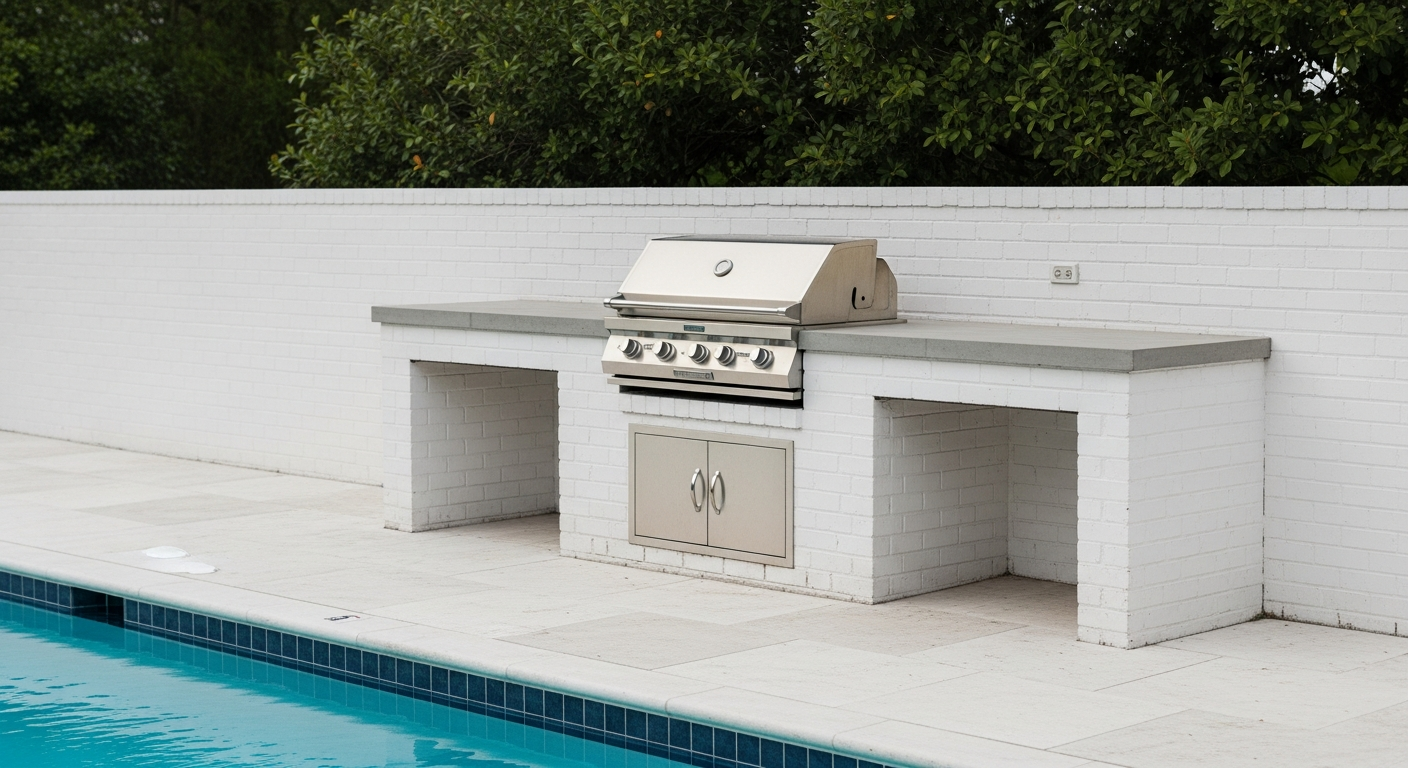
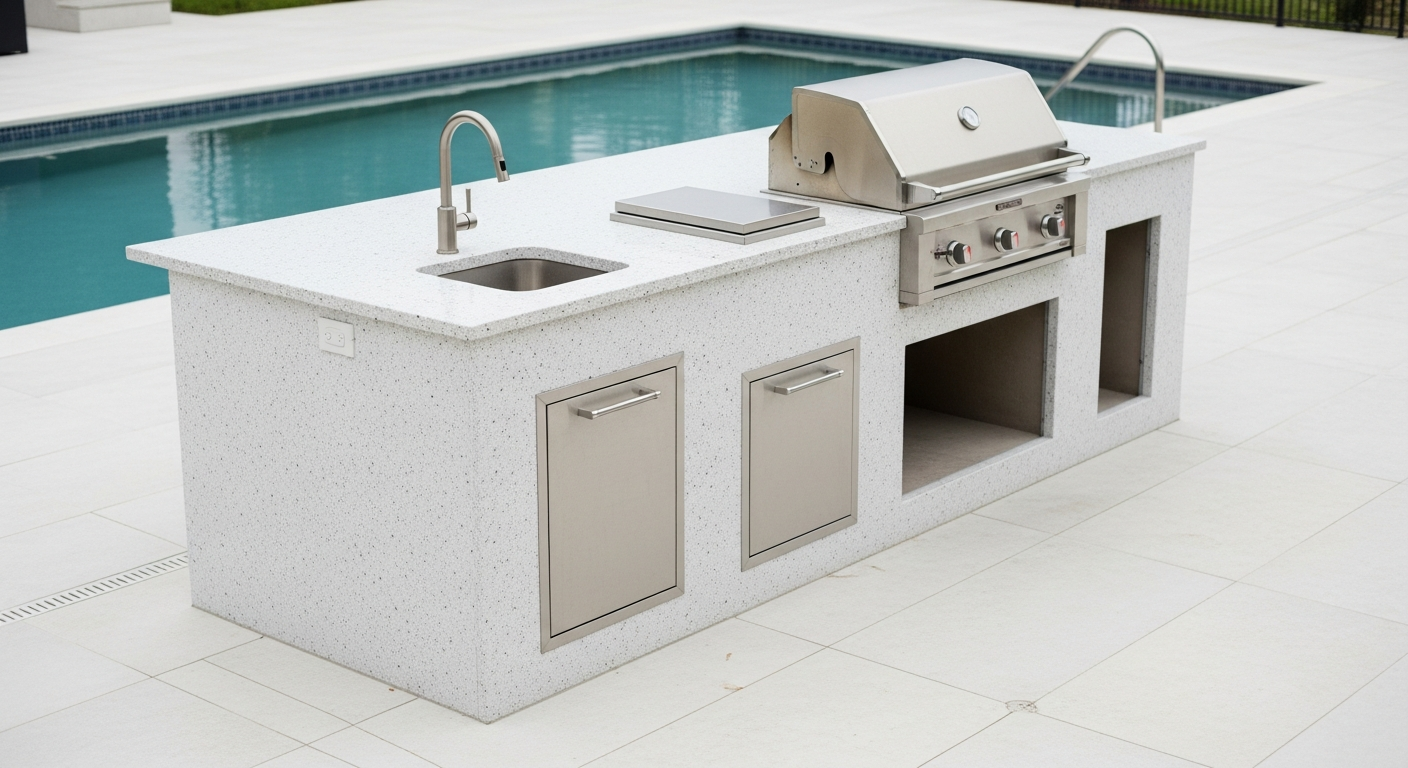
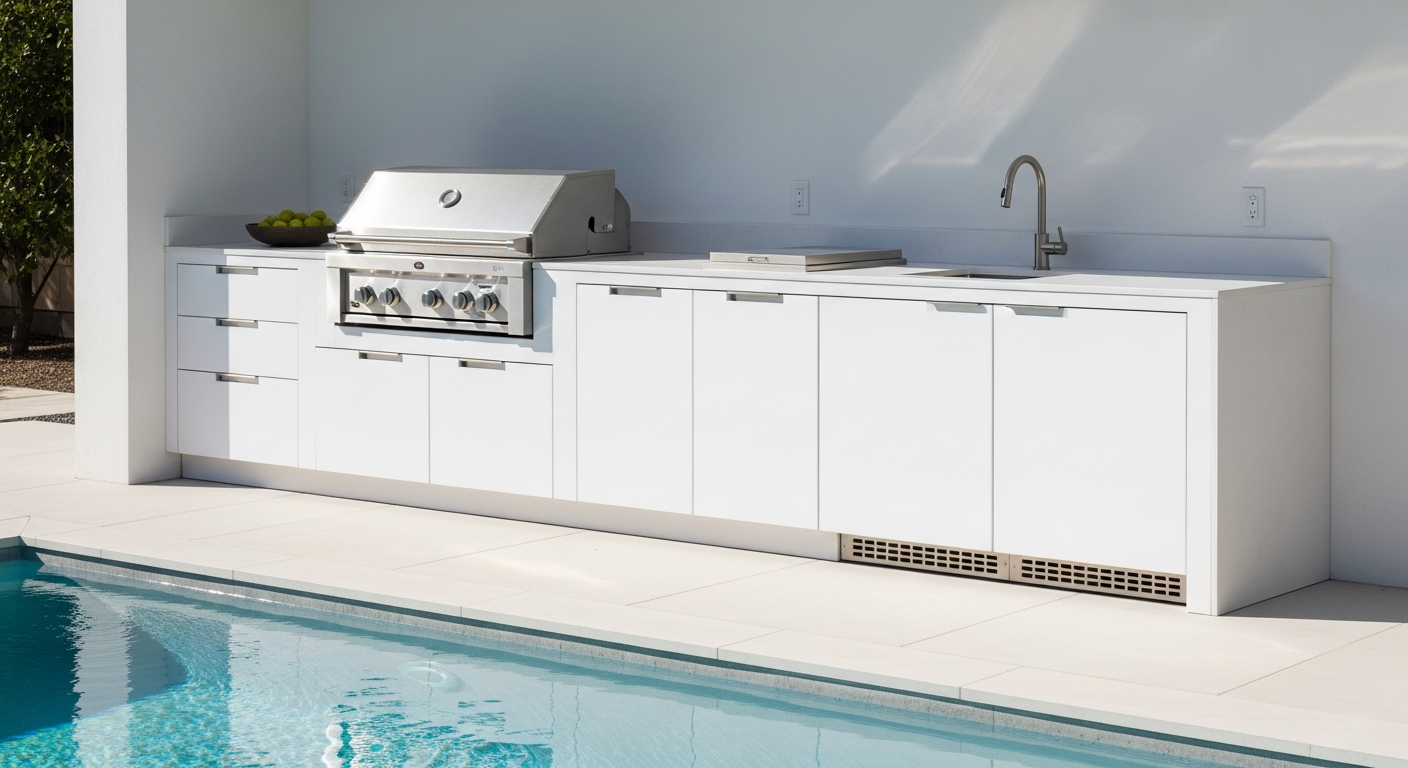
The single biggest failure point I see in white outdoor kitchen projects isn't the design; it's the material science. Most designers apply indoor logic to an outdoor environment, leading to catastrophic staining and UV degradation within 24 months. My approach bypasses this fundamental error by focusing on a system I developed, the Pristine Finish Durability (PFD) Protocol, which prioritizes non-porous, chemically inert surfaces and substrates to guarantee a brilliant white finish that resists grease, pollen, and rust.
This isn't about choosing a "good" quartz. It's about engineering a complete material stack, from the frame to the sealant, that performs under constant thermal stress and environmental assault. In one of my early, large-scale residential projects, the client chose a beautiful Italian marble. Within one season, rust spots from the grill's base and deep-set wine stains had permanently marred the surface. That costly mistake forced me to develop a methodology that front-loads material validation and eliminates these predictable failures.
The Core Diagnostic: Beyond Aesthetics to Material Integrity
The common mistake is selecting a countertop and cabinet finish based solely on its initial appearance. This overlooks two critical environmental factors: UV radiation and hydrocarbon-based staining (i.e., grease). My PFD Protocol is a diagnostic and implementation framework that addresses these from the ground up. It’s built on three core pillars: Substrate Stability, Surface Porosity, and a Proactive Maintenance Cadence. I don't just build a kitchen; I engineer a low-maintenance outdoor appliance designed to look new for a decade.
The PFD Protocol Technical Breakdown
My entire methodology hinges on understanding that an outdoor kitchen is a high-stress industrial environment disguised as a luxury feature. For the Substrate Stability pillar, I forbid the use of standard moisture-resistant MDF or even pressure-treated wood, which will inevitably warp and transfer tannins. My specification is exclusively glass-fiber reinforced concrete (GFRC) or closed-cell PVC polymer boards. These materials are inert, offer zero water absorption, and provide a dimensionally stable base that won't compromise the finish.
For the Surface Porosity pillar, we move beyond natural stone and most quartz composites, which contain resins that can yellow under intense UV exposure. The gold standard I specify is sintered stone (e.g., Dekton, Neolith). Its manufacturing process mimics natural geologic compression, resulting in a material with near-zero porosity. This means substances like red wine and grill grease sit on the surface without penetrating. For final protection, I mandate a fluoropolymer-based nano-sealant, which creates a hydrophobic barrier that repels both water and oil-based liquids, increasing the surface's stain resistance by an estimated 75%.
Implementation Framework: Building a Resilient White Outdoor Kitchen
Deploying the PFD Protocol is a precise, sequential process. I've refined these steps over dozens of projects to eliminate callbacks and ensure predictable, long-term performance. Deviating from this order invites failure.
- Phase 1: Material Vetting & Stress Testing: Before final selection, I require a sample of the proposed white surface. I personally conduct a 72-hour stain test using mustard, red wine, and high-quality olive oil. If any visible ghosting remains after cleaning with a pH-neutral solution, the material is instantly disqualified.
- Phase 2: Substrate Assembly & Hardware: The GFRC or polymer frame is assembled using only 316 marine-grade stainless steel fasteners. This is a non-negotiable point. Using a lesser grade like 304 stainless will result in rust streaks within the first year of high humidity or rain.
- Phase 3: Surface Installation & Curing: Once the sintered stone is installed, the nano-sealant is applied. The critical action here is enforcing a strict 48-hour curing period with no exposure to moisture or direct sunlight. I've seen projects fail because a contractor got impatient and hosed down the area a day early, compromising the sealant's chemical bond.
- Phase 4: Appliance Integration & Thermal Shielding: A major oversight is failing to isolate the countertop from the grill's intense heat. I mandate the installation of an insulated grill jacket and a 1/4-inch air gap. This prevents localized thermal shocking that can cause hairline fractures or discoloration in the white surface over time.
Tags
outdoor bbq island
outdoor kitchen cost
backyard kitchen
outdoor barbecue kitchen
small outdoor kitchen