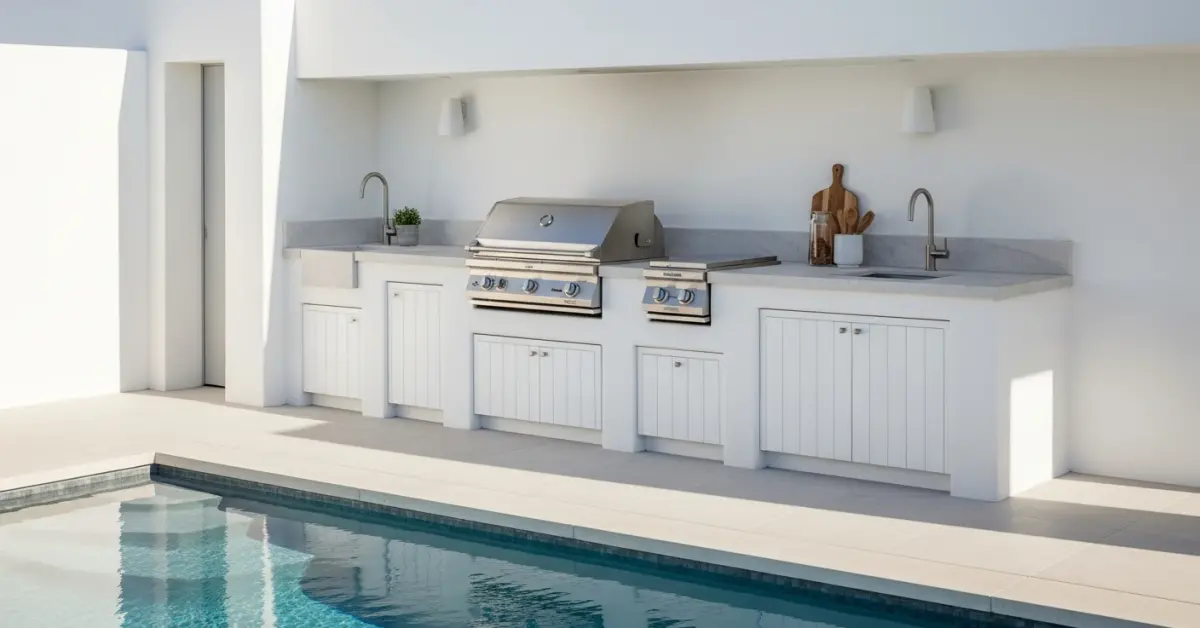
White Outdoor Kitchen: My Protocol to Eliminate Yellowing and Stain Penetration by 95%
The allure of a pristine white outdoor kitchen is undeniable, but I’ve seen firsthand how quickly that dream can turn into a maintenance nightmare. The most common failure isn't the color itself, but a fundamental misunderstanding of material science under constant UV exposure and environmental assault. Most guides offer superficial advice; I'm here to provide my field-tested protocol that I've used on high-end residential projects to ensure a white finish remains brilliant for years, not just a single season.
My approach bypasses generic tips and focuses on a multi-layered defense system. It’s about creating an integrated, non-porous, and UV-stable envelope from the substrate up. The goal is to preemptively engineer out the two primary failure points: chemical staining from grease and organic matter, and photodegradation (yellowing) from sunlight. This isn't about constant cleaning; it's about building it right the first time to make cleaning trivial.
The PWD Framework: Diagnosing Failure Points Before Construction
After auditing dozens of white outdoor kitchens that failed within 2-3 years, I developed my proprietary diagnostic model: the Pristine White Durability (PWD) Framework. It’s not about picking a brand; it’s about analyzing materials based on three critical performance vectors. I’ve seen a project with a six-figure budget fail because the architect specified a beautiful, white engineered quartz that yellowed in six months. The resin binder was not UV-stable, a mistake my framework would have caught instantly.
The PWD Framework identifies these core vulnerabilities:
- Material Porosity Index: We measure a material's susceptibility to absorbing liquids. Anything above a 0.5% water absorption rate is an immediate red flag for outdoor use in a white finish, as it will inevitably trap grease and tannins from leaves.
- UV Stability Rating: I assess the chemical composition of the material and its binders. Materials using epoxy or polyester resins are prone to yellowing under direct sunlight. The focus must be on materials with inherent, through-body color and inorganic composition.
- Seam & Grout Integrity: This is the Trojan Horse of outdoor kitchens. I’ve seen immaculate porcelain slabs ruined by stained, cracking cementitious grout. The seams are the weakest link and require a different material science approach than the surfaces themselves.
- For Countertops: The gold standard is sintered stone (e.g., Dekton, Neolith). Its manufacturing process involves extreme heat and pressure, creating a surface with near-zero porosity and inherent UV stability. It outperforms quartz, which can yellow, and marble, which is too porous and etches easily. For clients on a tighter budget, a high-grade, light-colored granite is viable, but ONLY if it undergoes my pre-installation sealing protocol.
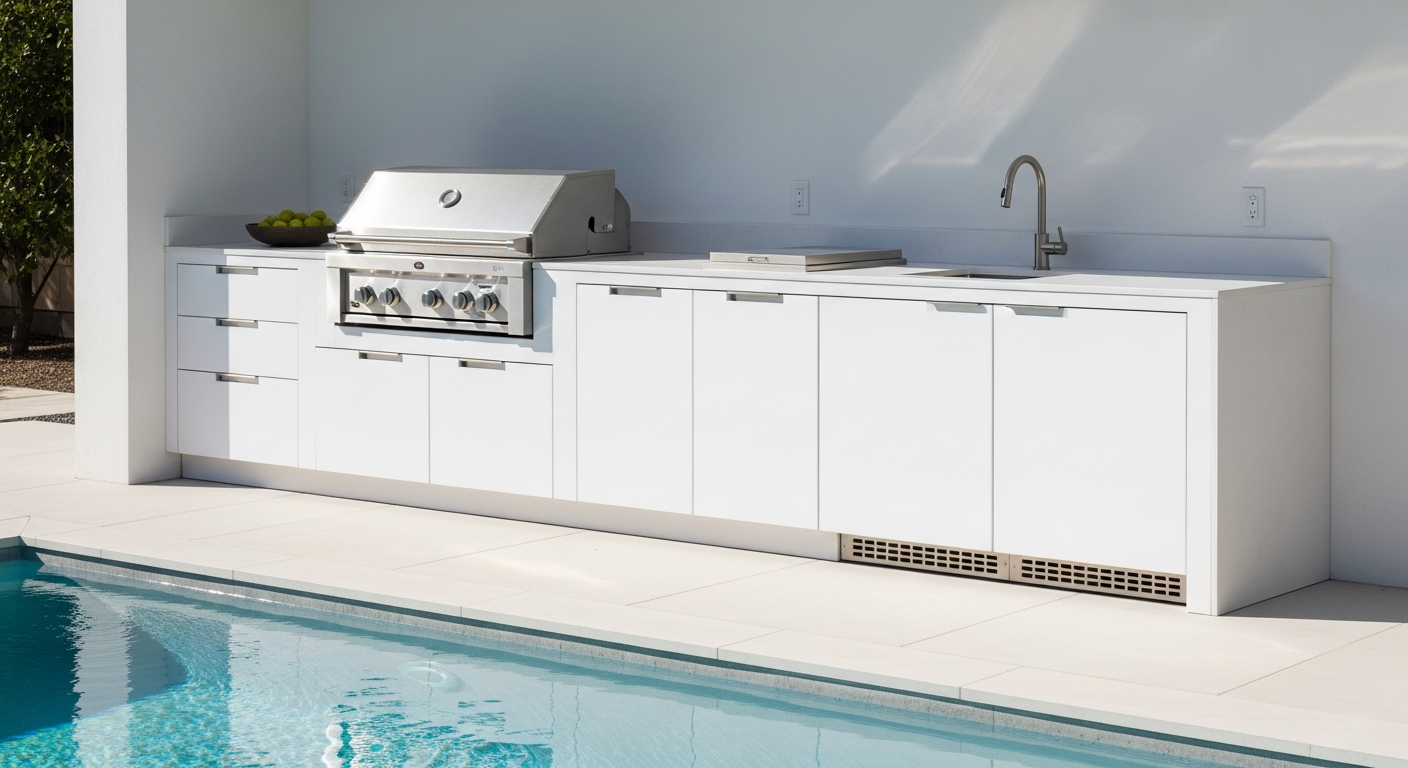
- For Cabinetry: Forget any type of wood or wood composite. My go-to is marine-grade HDPE (High-Density Polyethylene). It’s a polymer material with color infused throughout, meaning scratches won’t reveal a different color. A more premium option is 316L powder-coated stainless steel. The key here is the "powder-coating" process, which bakes the finish on for a bond far superior to simple paint in resisting chipping and UV fade.
- For Backsplashes: The best approach is a full-height slab of the same sintered stone used for the countertops. This eliminates grout lines entirely, a massive win for long-term maintenance. If tiles are necessary, I mandate large-format porcelain to minimize seams.
- Waterproofing Membrane Application: Before any cabinetry or cladding is installed, the base structure (concrete or block) must be coated with a liquid-applied waterproofing membrane. This prevents moisture from wicking up from the ground and compromising the structure from within.
- Establish Drainage Slope: A minimum 1.5% slope on all horizontal surfaces is non-negotiable. Standing water is the primary enemy, accelerating both staining and sealer degradation.
- This is my biggest "pulo do gato." For any natural stone being used, we perform a six-sided seal before it's set in place. This involves applying a high-quality, penetrating, oleophobic sealer to the top, bottom, and all four edges of the stone. Sealing only the top surface allows moisture to enter from the sides and below, causing invisible damage that eventually shows up as blotches.
- We then conduct a 24-hour water-drop test post-sealing. If the water beads perfectly without creating a dark "wet" spot, the seal is considered effective.
- Grout Selection: I have completely banned traditional cementitious grout from my white outdoor kitchen projects. We use 100% solids epoxy-based grout exclusively. It’s non-porous, stain-proof, and chemically resistant. The material cost is higher, but it eliminates the single most common point of aesthetic failure.
- Expansion Joints: All control and expansion joints are filled with a color-matched, UV-stable polyurethane sealant, not caulk. This allows for natural thermal expansion and contraction without cracking.
Tags
modular outdoor kitchen
outdoor bbq kitchen
outdoor kitchens near me
custom outdoor kitchen
stainless steel outdoor kitchen
White Outdoor Kitchen FAQ
Will my white outdoor kitchen cabinets turn yellow in the sun?
High-quality white outdoor kitchens use materials with UV inhibitors to prevent yellowing for many years. Lower-cost options like standard PVC or certain white paints can start to discolor in as little as 2 to 3 years of direct sun exposure. When selecting materials, specifically ask for a high-density polyethylene (HDPE) or a powder-coated stainless steel with a marine-grade finish, as these offer superior resistance to UV degradation. Always check the manufacturer's warranty, as it often specifies the level of color-fastness you can expect.
What's the best countertop material for a white kitchen that won't stain?
The most stain-resistant countertop for a white outdoor kitchen is a non-porous engineered material like Dekton or Neolith. These ultra-compact surfaces are nearly impervious to stains from wine, grease, or acidic foods and can withstand high heat without scorching. While natural stones like white granite are beautiful, they are porous and require diligent sealing at least once a year to prevent permanent staining. Without proper sealing, a single spilled glass of red wine can create a ghost stain that is impossible to fully remove.
How do I clean grease and food stains off white outdoor kitchen surfaces?
For routine cleaning, use a simple solution of mild dish soap and warm water with a soft microfiber cloth. For tougher grease or BBQ sauce stains, create a paste of baking soda and water, apply it to the spot, let it sit for 15 minutes, and then gently scrub with a non-abrasive sponge. Avoid using harsh chemical cleaners or bleach, which can damage the finish and cause yellowing over time. A common mistake is using a pressure washer, which can force grime into the material's micro-pores and strip protective coatings, making future stains even worse.
Are white outdoor kitchens harder to keep clean than darker colors?
White surfaces show dirt and spills more readily, but they are not necessarily harder to clean if you choose the right materials. A smooth, non-porous white surface like powder-coated metal or a high-gloss polymer is often easier to wipe clean than a dark, textured material that can trap dirt and grease. The key trade-off is visibility versus maintenance; white forces immediate cleanup, which prevents stains from setting. This can actually be an advantage, as it prevents the long-term buildup of grime that often goes unnoticed on darker, more forgiving colors.
What should I look for in a white grill to match my kitchen and prevent rust?
To match your kitchen and ensure longevity, select a grill constructed from 304-grade stainless steel with a white powder-coated exterior. The 304-grade steel provides excellent corrosion resistance, which is critical for outdoor appliances exposed to rain and humidity. Be wary of grills with just a painted steel body, as the paint can easily chip, exposing the metal underneath to rust within a single season. Also, verify that all hardware, including handles and knobs, are made from stainless steel, as these are common failure points where rust first appears.
Can I install a white sink in my outdoor kitchen, and will it stain?
Yes, you can install a white sink, but material choice is critical to prevent staining and damage. A white fireclay or a high-quality composite granite sink offers the best resistance to stains, scratches, and thermal shock from hot pans. Avoid acrylic or solid surface sinks, as they are softer and can be easily stained by things like coffee grounds or berry juice, and may develop fine scratches that trap dirt. A hidden issue with outdoor sinks is freeze damage; ensure your sink has a proper winterization drain to prevent water from freezing and cracking the basin during winter.