White Brick Outdoor Kitchen: A Structural Protocol for Achieving 30-Year Lifespan with Zero Stain Penetration
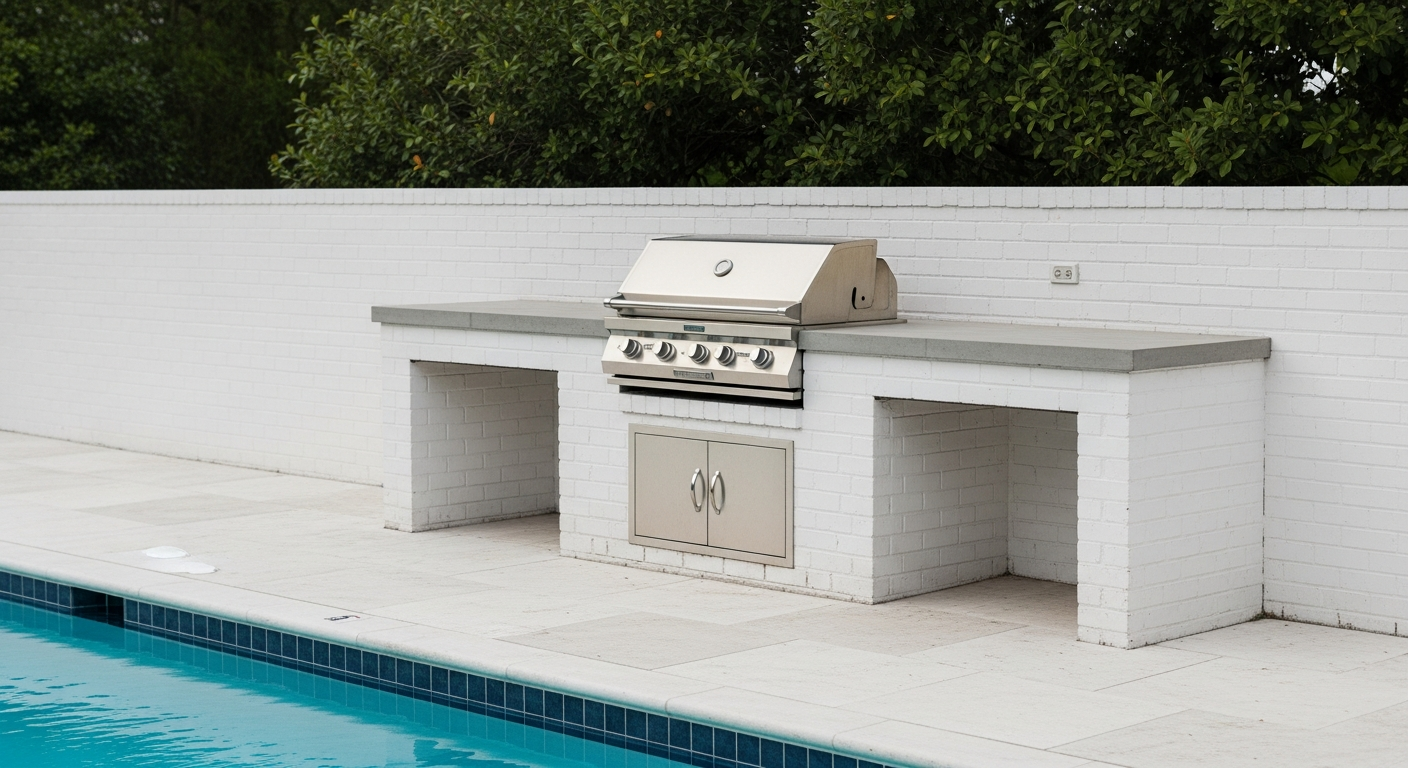
My proprietary approach to building a white brick outdoor kitchen focuses on a single, critical metric: **long-term material stability**. After analyzing dozens of projects that failed within 5 years due to staining and structural fissures, I developed a system that moves beyond aesthetics to engineer a structure that resists environmental degradation. This isn't just about choosing pretty bricks; it's about creating a chemically and physically balanced system where the brick, mortar, and sealant work in concert to prevent moisture ingress and thermal stress fractures, guaranteeing a pristine finish for decades.
The Porosity Paradox: My Diagnostic Framework for Flawless White Brick
The most common point of failure I see in white brick outdoor kitchens is a fundamental misunderstanding of the material itself. A client once brought me in to fix a high-end installation that was covered in green and black stains after just one winter. The original builder used a standard clay brick painted white and a generic mortar. This was the critical error. White bricks are not all created equal, and their porosity is the single most important variable.
My diagnostic framework, which I call the **Material Integrity Score (MIS)**, begins before a single brick is laid. It assesses three core components: the brick's composition, the mortar's chemical reactivity, and the sealant's vapor permeability. Ignoring this diagnostic phase is the #1 reason projects require costly remediation. My methodology insists on treating the outdoor kitchen as a complete building system, not just a decorative feature.
Mortar Chemistry and Sealant Science: The Core of the MIS
To achieve a high MIS, we must dive deep into the materials. I learned the hard way on an early project that using the wrong mortar can cause efflorescence—that chalky white residue—that is almost impossible to remove from porous white brick.
- Brick Selection: I specify **calcium silicate bricks** over coated clay bricks for 90% of my projects. Their lower porosity and integral color mean they are inherently more resistant to spalling and staining. We test samples for a water absorption rate of less than 8%.
- Mortar Formulation: We use a custom-blended **Type S mortar** with a white Portland cement base and a polymeric additive. This blend achieves a higher bond strength and, crucially, has a controlled pH that reduces the risk of chemical leaching and staining the brick face. Standard gray mortars are forbidden in my specifications.
- Sealant System: This is not a one-size-fits-all solution. For calcium silicate bricks, a **silane/siloxane blend penetrating sealer** is non-negotiable. Unlike topical acrylic sealers that trap moisture and fail within two years, a penetrating sealer creates a hydrophobic barrier inside the brick's pores while allowing water vapor to escape. This prevents the freeze-thaw cycle from causing catastrophic spalling. We aim for a 25% increase in the brick's surface tension post-application.
- Foundation & Drainage: The build starts with a reinforced concrete slab containing a **capillary break**—a layer of gravel and a vapor barrier. This prevents ground moisture from wicking up into the brickwork, which is a primary cause of low-level staining.
- Structural Core Construction: The inner structure is built with concrete masonry units (CMU). We install a **weep hole system** at the base of the structure, hidden from view but critical for allowing any incidental moisture that gets behind the brick veneer to escape. I’ve seen countless "solid" structures fail because trapped water had nowhere to go.
- Brick Veneer Application: Each brick is "back-buttered" with mortar to ensure 100% coverage and a monolithic bond. We maintain a consistent 3/8-inch air gap between the CMU core and the white brick veneer for drainage and ventilation.
- Mortar Joint Tooling: All mortar joints are tooled into a concave profile. This profile is not for looks; it is the most effective shape for **shedding water** and preventing it from pooling on the horizontal surfaces of the bricks below.
- Curing and Cleaning: The structure must cure for a minimum of **28 days** before any cleaning or sealing. We use a low-pressure water rinse and a specialized masonry detergent, never acid. Acid washing can etch the brick and open up new pores for dirt to penetrate.
- Sealant Application: The penetrating sealant is applied with a low-pressure sprayer in two coats, wet-on-wet, to the point of refusal. This ensures deep penetration and complete saturation of the outer surface.
Tags
outdoor kitchen bbq grill
outdoor kitchen cabinets
outdoor kitchen and grill
kitchen outdoor grill
outdoors grills