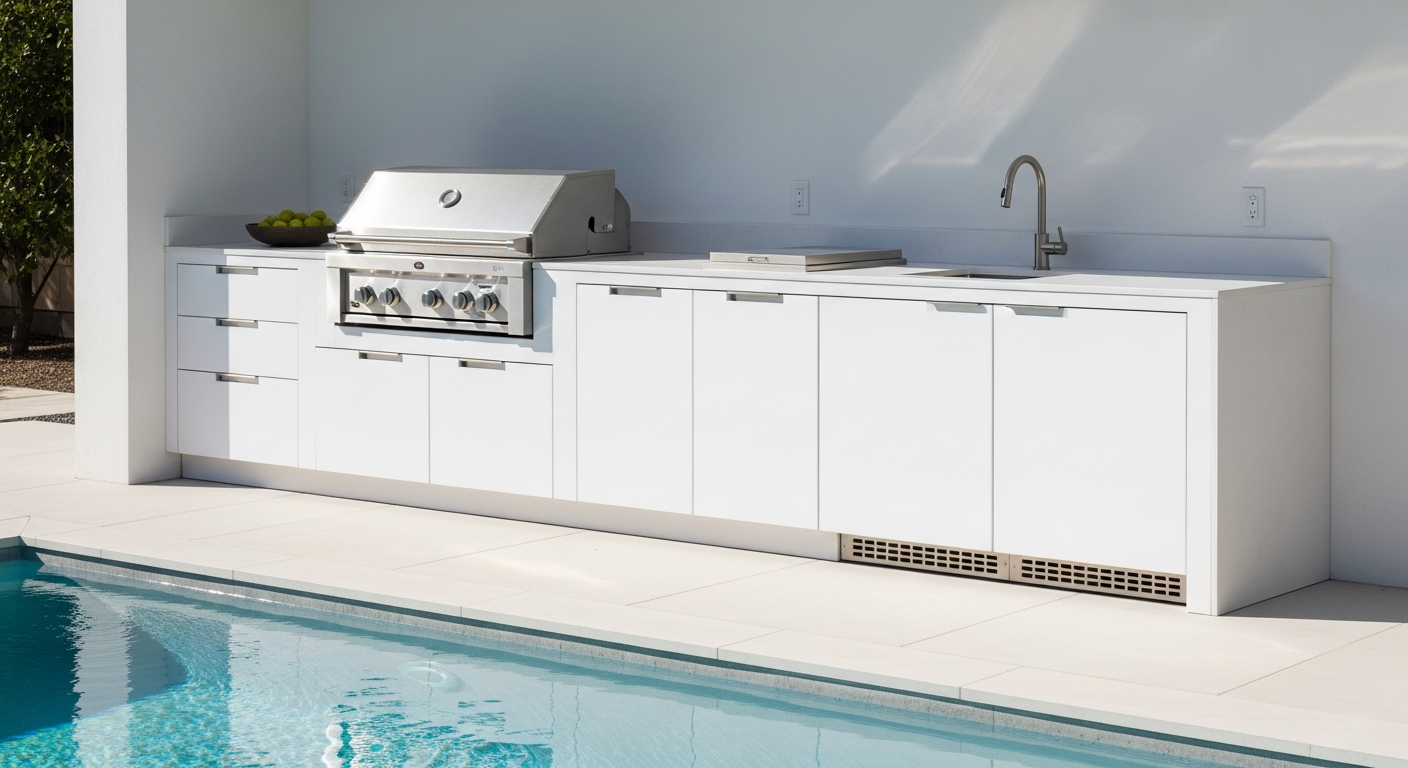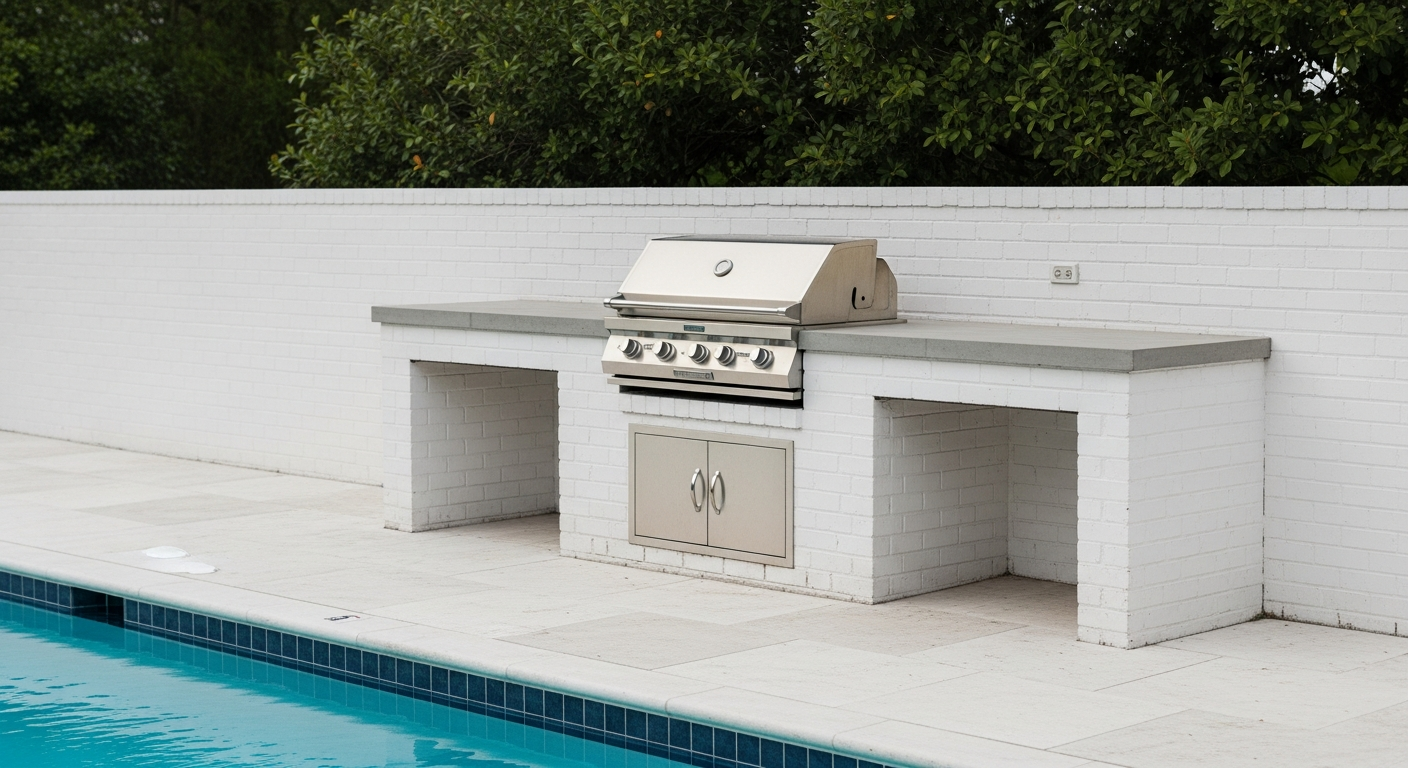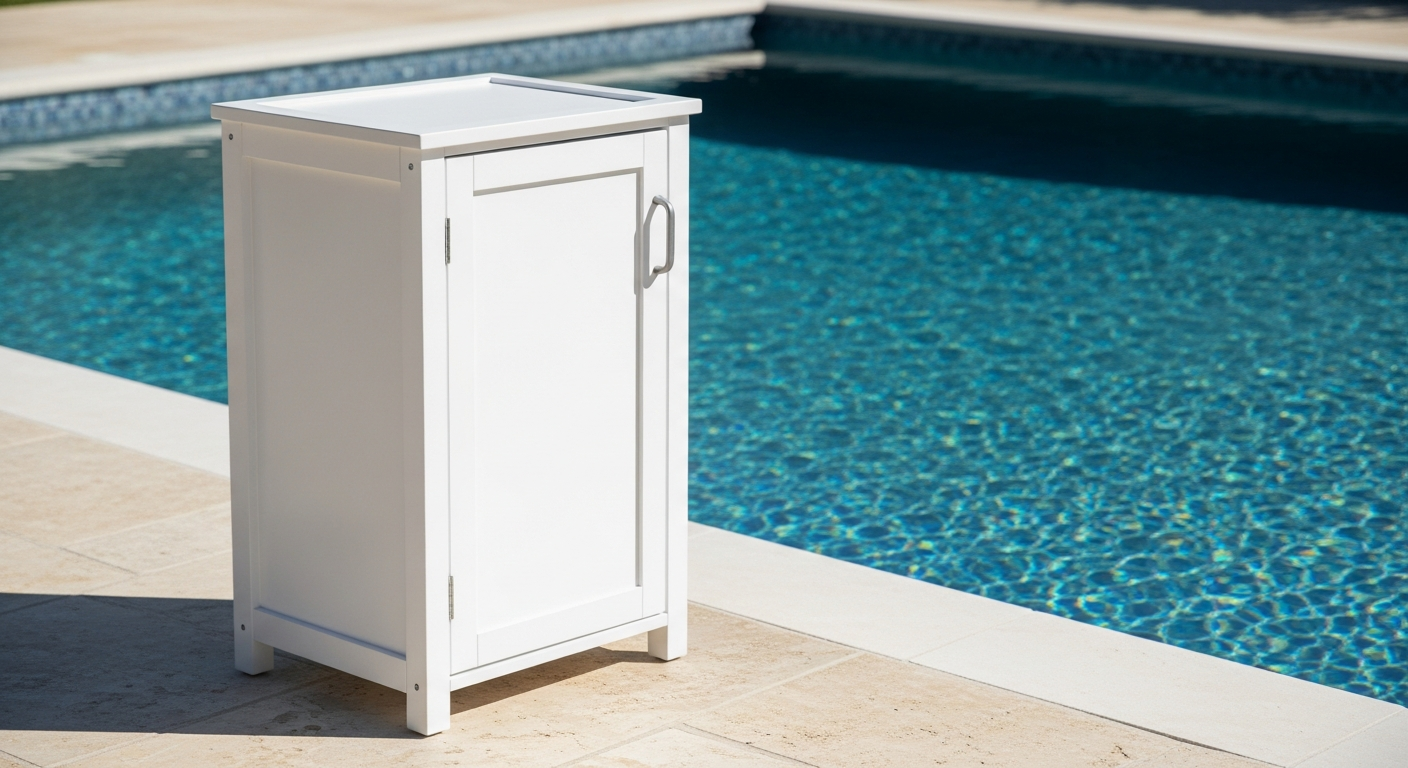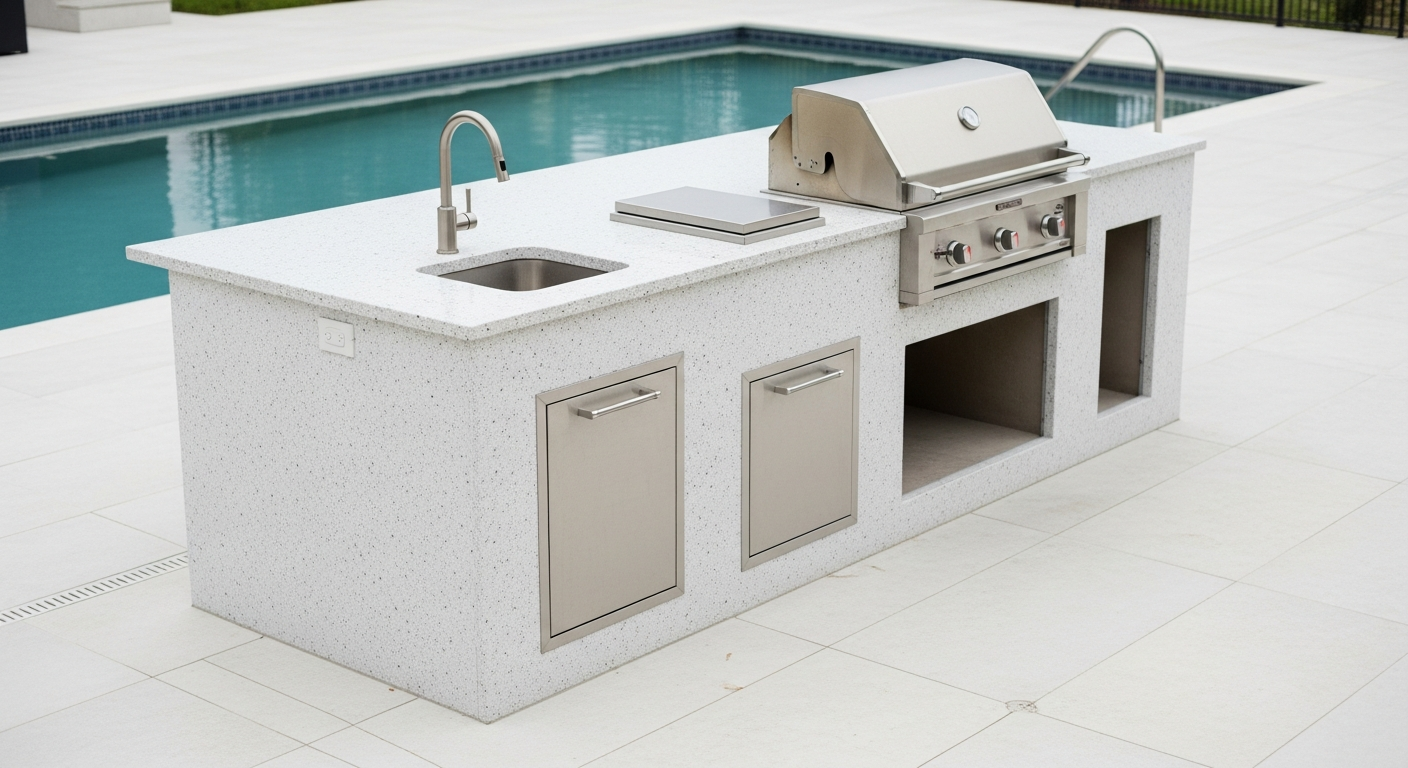
White Granite Outdoor Kitchen: A Framework for Zero-Failure Installation and 20+ Year Durability
Choosing a white granite for an outdoor kitchen is one of the highest-stakes decisions in exterior design. While the aesthetic is unparalleled, the risk of staining, yellowing from UV exposure, and sealant failure is incredibly high. I've been called in to remediate far too many projects where a pristine-looking slab turned into a maintenance nightmare within 24 months. The core issue is almost never the granite itself, but a fundamental misunderstanding of slab selection and the installation environment.
My entire approach is built on a single principle: treat the outdoor kitchen countertop not as a decorative surface, but as a high-performance building envelope. This requires a specific protocol that begins long before the slab is even cut. We're not just picking a pretty stone; we're specifying a geological material for a harsh, unforgiving application. The methodology I outline here has consistently resulted in outdoor granite installations that maintain their integrity and finish for decades, not just years.
Beyond Aesthetics: My Vetting Protocol for Outdoor-Grade White Granite
The most catastrophic error I see is selecting a white granite based on its indoor showroom appearance. An indoor environment has no UV radiation, no thermal cycling from 40°F to 100°F, and no acid rain. My proprietary methodology forces a shift in perspective, focusing on geological composition and porosity metrics over pure visuals. Many popular white granites, especially those with high levels of iron deposits (visible as small reddish-brown specks) or calcite, are an automatic disqualification for me. The iron will inevitably oxidize and "rust" when exposed to rain, and calcite is highly susceptible to etching from common outdoor substances like lemon juice or wine.
I focus on white granites with an exceptionally high quartz content and low porosity. Stones like Dallas White, Colonial White, or specific variants of River White are often on my shortlist, but I never approve a slab by name alone. Each block quarried is different. My process involves a physical audit of the actual slab intended for the project, where I'm looking for two critical red flags: excessive resin pooling on the surface (a sign of a fragile, highly-fissured stone that required heavy factory treatment) and the presence of any water-soluble minerals that could leach out over time.
The Water Absorption Test: Differentiating a Fortress from a Sponge
Before a client commits to a multi-thousand-dollar slab, I perform a simple but non-negotiable diagnostic: the on-site water absorption test. This is my "pulos do gato" for predicting long-term performance. I place a few drops of water on an unsealed corner or edge of the slab and time how long it takes for the stone to darken, indicating water absorption.
If the water is absorbed and darkens the stone in under 5 minutes, I typically reject the slab for outdoor use. That level of porosity means it will act like a sponge for oils, wine, and environmental pollutants, overwhelming even the best sealants. An ideal slab will show almost no absorption after 10-15 minutes. This field test is a practical proxy for the official ASTM C97 standard for water absorption. For outdoor applications, I never accept a granite with an absorption rating higher than 0.4%. Many beautiful stones popular for indoor use fall in the 0.5% to 0.8% range, making them completely unsuitable for this purpose.
The Installation & Sealing Matrix: My 5-Step Execution Plan
Once a slab passes the vetting process, the focus shifts to an installation system designed to isolate it from environmental stressors. A flawed installation can crack a perfect slab or cause premature sealant failure. I enforce the following sequence without deviation.
- Substrate Rigidity Mandate: The base structure must have zero deflection. I specify a concrete block or steel frame construction, topped with a concrete backer board. Plywood or other wood-based substrates are forbidden, as their expansion and contraction with humidity changes will stress the stone and lead to seam failure or cracks.
- Adhesive Specification: We never use standard tile mortar. The correct bonding agent is a UV-stable, two-part flexible epoxy. This is critical. The epoxy accommodates the microscopic thermal expansion and contraction of the granite, preventing shear stress that builds up over daily temperature cycles.
- Bilateral Sealing: This is a step almost every installer skips, and it's a primary cause of long-term failure. We seal the top surface, edges, and the underside of the slab before it is laid. Sealing the bottom prevents moisture from wicking up from the concrete substrate, which can cause mineral efflorescence and spalling over time.
- Sealant Chemistry: We exclusively use a high-solids, penetrating silane/siloxane blend sealant. This is not a topical sealer that just forms a film; it penetrates 2-4mm into the stone's pores and chemically bonds with it, creating a hydrophobic barrier from within. Two coats are applied, with the excess meticulously buffed off after each application to prevent a hazy, unattractive residue.
- Controlled Curing Period: The job is not finished when the slab is set. I mandate a 72-hour curing period where the countertop is tented and protected from direct sunlight, rain, and even morning dew. This allows the sealant to achieve a full cross-link bond, increasing its lifespan by as much as 50%.
Tags
outdoor bbq island
outdoor kitchen cost
backyard kitchen
outdoor barbecue kitchen
small outdoor kitchen