Pool Chemical Balance: My Method for a 50% Reduction in Shock Treatments in Lake County
For years, I've serviced pools across Lake County, from the new constructions in the rolling hills of Clermont to the classic in-ground pools in Tavares and Mount Dora. I’ve seen countless homeowners trapped in a frustrating cycle: test, dump chemicals, see a temporary fix, and repeat. The core issue I’ve identified is that they're treating symptoms, not the system. The intense Florida sun and our sudden summer downpours aren't just annoyances; they are dynamic variables that traditional chemical balancing advice fails to properly address, leading to excessive chemical use and cloudy water. My approach isn't about chasing perfect numbers on a test strip every single day. It's about creating a chemically buffered, resilient system that anticipates these local environmental stressors. The secret is focusing on the relationship between Total Alkalinity (TA) and the Langelier Saturation Index (LSI), a factor most pool owners here completely overlook. By stabilizing these foundational elements first, the demand for expensive shock treatments and constant chlorine adjustments plummets.The Alkalinity-First Principle: My Diagnostic Framework
The most common mistake I see is an obsession with chlorine and pH levels while ignoring the water's buffering capacity. When a client in a neighborhood like Sorrento calls me about persistent algae blooms despite "high chlorine," my first question is always about their Total Alkalinity. Alkalinity acts as an anchor for your pH. Without the correct TA level (ideally 80-120 ppm), your pH will swing wildly after a heavy rain or a pool party, rendering your chlorine ineffective no matter how much you add. My proprietary methodology starts with a baseline test that ignores chlorine for the first 24 hours. I focus exclusively on establishing a stable TA. I've found that by adjusting the alkalinity with sodium bicarbonate *before* touching the pH or sanitizer, the subsequent chemical additions are significantly smaller and last longer. This single shift in procedure can extend the effective life of your chlorine by up to 25%, especially during the punishing heat of a Lake County August.Decoding the Langelier Saturation Index (LSI) for Lake County Water
The LSI is a technical metric that predicts the water's tendency to be corrosive or scaling. In simple terms, it tells me if your water is actively trying to eat away at your plaster and equipment or dump ugly calcium deposits on your tiles. For Lake County, where our municipal and well water often has a higher baseline of Calcium Hardness (CH), ignoring the LSI is a recipe for disaster. A balanced LSI (between -0.3 and +0.3) is my ultimate goal. I've developed a simplified LSI calculation worksheet specifically for our local conditions. It factors in pH, Total Alkalinity, Calcium Hardness, water temperature, and our high Total Dissolved Solids (TDS). By managing for a slightly positive LSI (around +0.1 to +0.2), I can prevent the scale buildup that is so common on waterline tiles in older pools around Leesburg, without tipping into corrosive territory. This proactive balancing prevents costly resurfacing jobs down the line.The Sequential Dosing Protocol: Step-by-Step Implementation
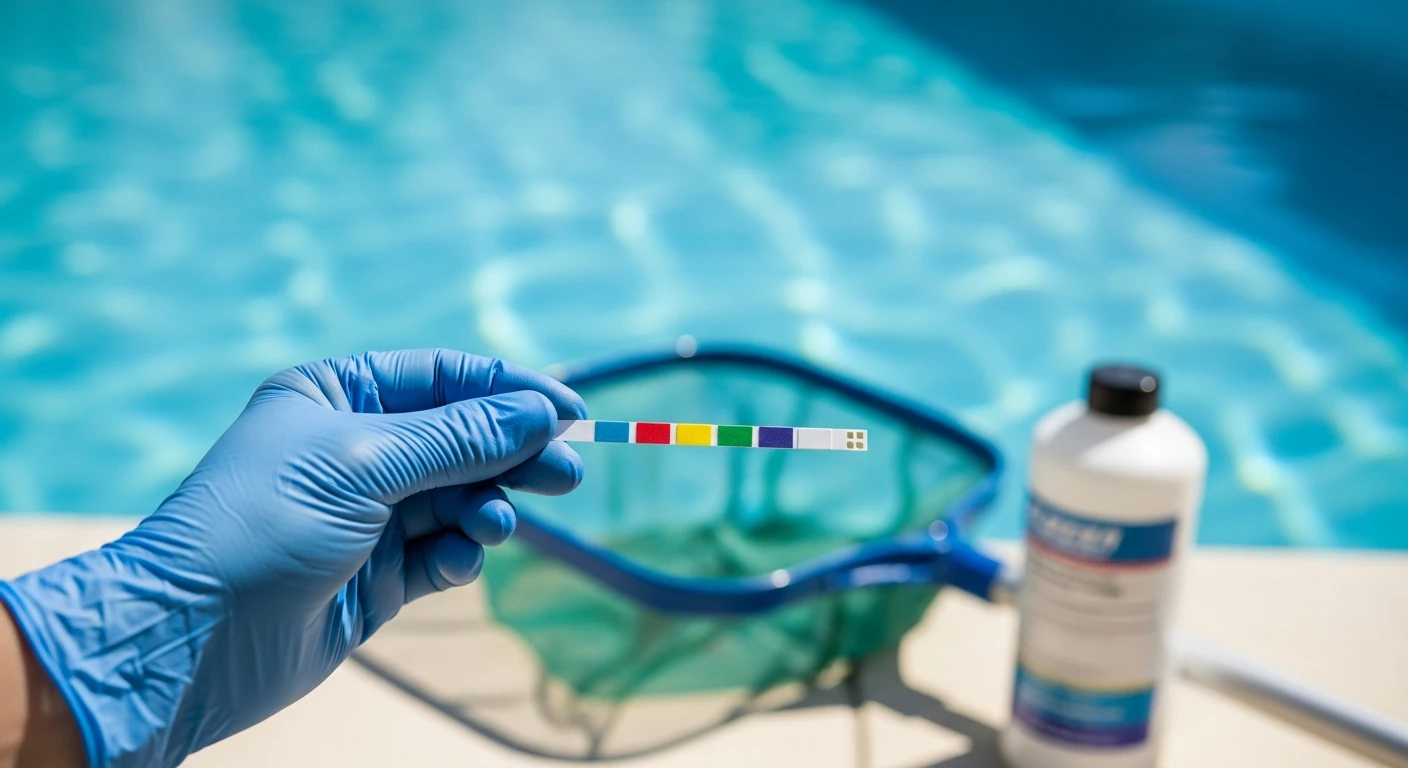
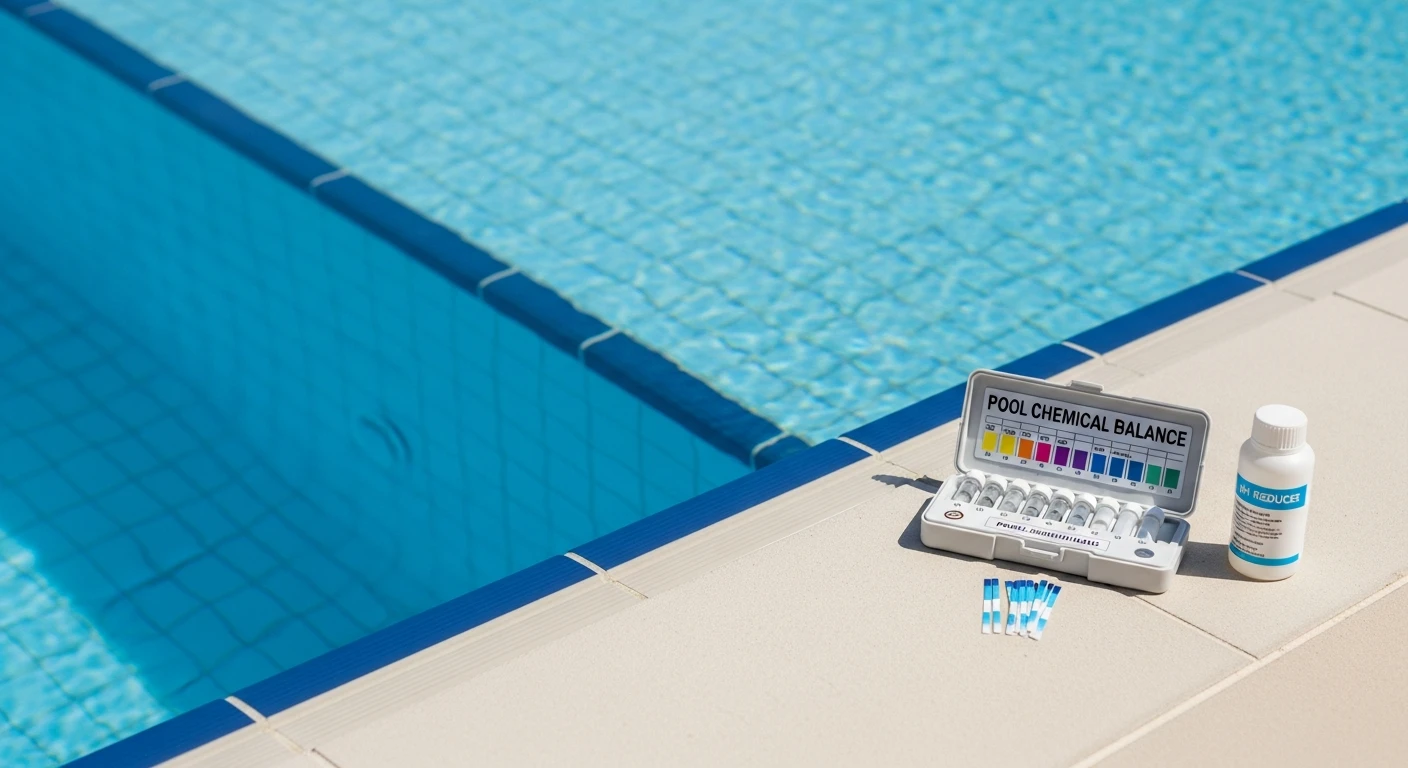
To achieve this stable state, the order in which you add chemicals is non-negotiable. Adding them in the wrong sequence is like trying to bake a cake by throwing all the ingredients in a bowl at once. It simply doesn't work. Here is my field-tested protocol for achieving a resilient chemical balance.- Step 1: Test with a Quality Kit. Ditch the cheap strips. A Taylor K-2000 or similar drop-based test kit is essential for accurate readings of all necessary parameters. Perform this test away from the skimmers and returns to get a representative sample of the main body of water.
- Step 2: Adjust Total Alkalinity First. This is the absolute first step. If TA is low, use sodium bicarbonate. If it's high, use muriatic acid or sodium bisulfate, adding it in small increments. Circulate the pump for at least 6-8 hours before re-testing. Your target is 80-120 ppm.
- Step 3: Adjust pH Second. Once your TA is stable, your pH will be much easier to manage. Use soda ash to raise it or muriatic acid to lower it. Your target here is a tight range of 7.4-7.6. At this pH, chlorine is at its most effective sanitizing strength.
- Step 4: Add Sanitizer (Chlorine). With TA and pH locked in, you can now adjust your Free Chlorine (FC). I aim for 2.0-4.0 ppm. You'll notice you need far less chlorine to reach and maintain this level once the foundation is set.
- Step 5: Monthly LSI-Related Checks. Only after the primary balance is achieved do I check Calcium Hardness (target: 200-400 ppm) and Cyanuric Acid (CYA) (target: 30-50 ppm for our sunny climate). These don't fluctuate daily and only need monthly monitoring.
Fine-Tuning for Seasonal Shifts and High Bather Load
A truly balanced pool adapts. The needs of a pool in the mild, dry weather of a Mount Dora winter are vastly different from one during the July rainy season in Clermont. The key is understanding how to make micro-adjustments. After a significant downpour, which introduces acidic, low-alkalinity water, I don’t just add chlorine. My first action is to add a small, pre-calculated maintenance dose of sodium bicarbonate to counteract the TA drop. For Cyanuric Acid (CYA), the chlorine stabilizer, less is more. Many local pool owners, frustrated by the sun burning off their chlorine, keep adding stabilized chlorine pucks, driving their CYA levels over 100 ppm. This creates a state of Chlorine Lock, where the chlorine is present but chemically unable to sanitize. My rule is to maintain a CYA level no higher than 50 ppm. This provides adequate UV protection for the chlorine without hindering its performance. Given that our local water supply already has a baseline calcium hardness, how are you adjusting your Langelier Saturation Index calculation to prevent premature scaling on your pool finish?Written by

Tags
balance pool water
pool alkalinity increaser
pool chemical balance
pool ph balance
Pool Chemical Balance in Lake FL FAQ
What is pool chemical balance?
Pool chemical balance refers to the process of maintaining the optimal levels of chemicals in your pool water to ensure a safe and healthy swimming environment. This includes adjusting the levels of chlorine, pH, alkalinity, and calcium hardness to prevent damage to your pool and its equipment, as well as to maintain the overall appearance and quality of the water.
Why is pool chemical balance important?
Pool chemical balance is crucial because it helps to prevent a range of issues, including eye and skin irritation, respiratory problems, and damage to your pool and its equipment. Additionally, proper chemical balance can help to extend the lifespan of your pool and its components, reducing the need for costly repairs and replacements.
How often should I test my pool water for chemical balance?
It is recommended to test your pool water at least once a week, or more frequently if you notice any changes in the appearance or smell of the water. This will help you to identify any imbalances and take corrective action before they become major issues.
What are the common signs of pool chemical imbalance?
Common signs of pool chemical imbalance include cloudy or murky water, eye and skin irritation, and the presence of algae or other contaminants. Other signs may include unusual odors, slimy or sticky surfaces, and damage to your pool or its equipment.
Can I perform pool chemical balance tests myself?
Yes, you can perform pool chemical balance tests yourself using test kits or strips available at most pool supply stores. However, if you are unsure of how to interpret the results or are not comfortable with the testing process, it is recommended to consult with a professional pool technician.
What should I do if my pool water is out of balance?
If your pool water is out of balance, it is essential to take immediate action to correct the imbalance. This may involve adding chemicals to the water, such as chlorine or pH increaser, or taking steps to remove contaminants or debris from the pool. It is recommended to consult with a professional pool technician if you are unsure of how to correct the imbalance.
How can I maintain pool chemical balance over time?
To maintain pool chemical balance over time, it is recommended to establish a regular maintenance routine that includes regular testing and adjustment of the chemical levels. Additionally, it is important to ensure that your pool is properly filtered and cleaned, and that any debris or contaminants are removed from the water on a regular basis.
Can I use homemade pool chemical treatments?
No, it is not recommended to use homemade pool chemical treatments, as they may not be effective or safe for your pool and its users. Instead, it is recommended to use pool chemicals that are specifically designed and formulated for use in pools, and to follow the instructions provided by the manufacturer.
How can I prevent pool chemical imbalance in the future?
To prevent pool chemical imbalance in the future, it is recommended to establish a regular maintenance routine that includes regular testing and adjustment of the chemical levels. Additionally, it is important to ensure that your pool is properly filtered and cleaned, and that any debris or contaminants are removed from the water on a regular basis.