Lake County Pool Cleaning Service: My Protocol for Reversing Chlorine Lock and Reducing Chemical Use by 30%
I see the same frustrating cycle in pools from Clermont to The Villages: the water is clear one day and cloudy or green the next, despite constant chemical additions. This isn't a simple cleaning issue. It's a symptom of a deeper problem I've specialized in diagnosing and fixing across Lake County: Chlorine Lock caused by excessive Cyanuric Acid (CYA). My entire service methodology is built around breaking this expensive cycle, not just treating the symptoms.
Most pool owners and even some services are trapped in a loop of adding more and more stabilized chlorine tablets, unknowingly making the problem worse. My approach starts with a comprehensive water analysis that goes far beyond the basic test strips. I establish a TDS (Total Dissolved Solids) and CYA baseline to determine if your chlorine is actually effective or simply being suppressed, a critical first step to restoring your pool's health and preventing the recurring algae blooms fueled by our intense Florida sun.
The Core Diagnostic: Beyond the Basic 4-Way Test Strip
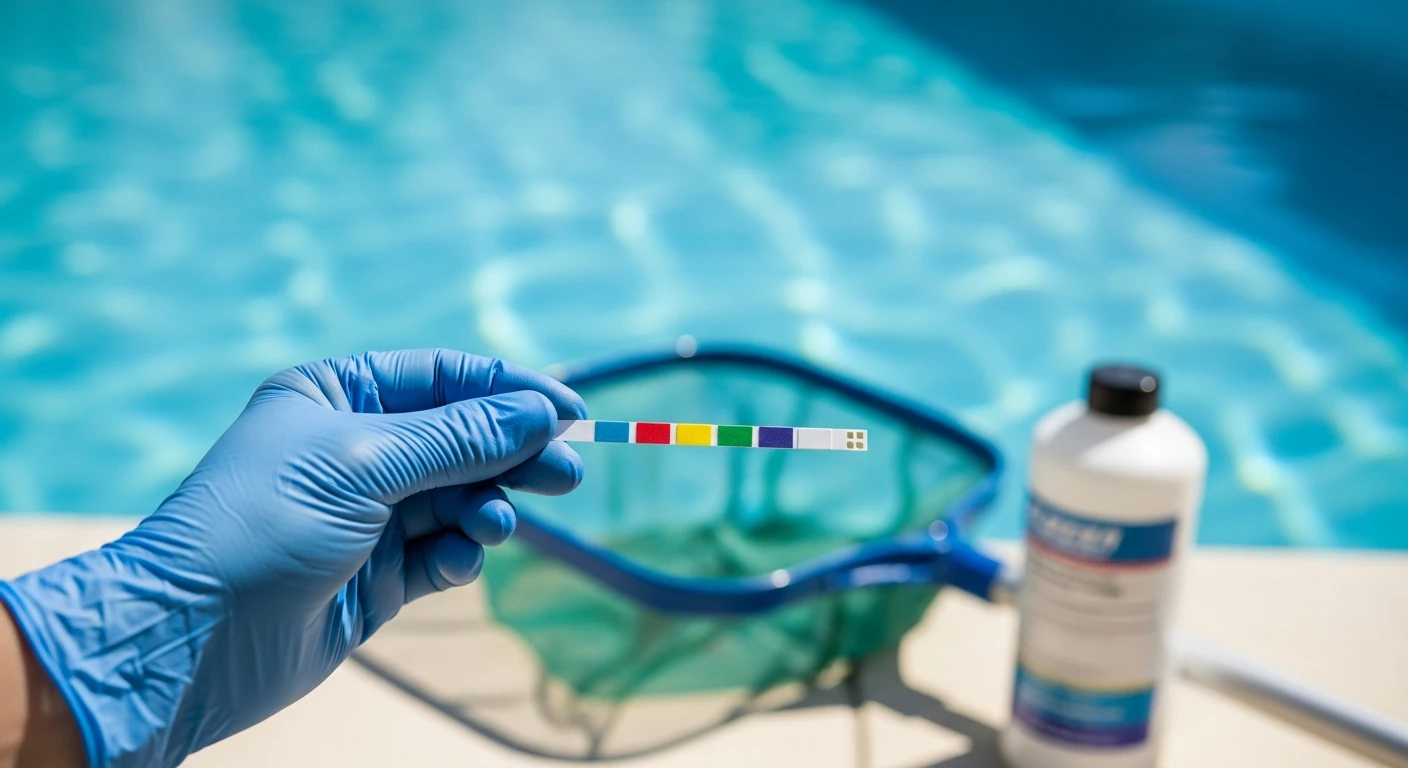
Years ago, I managed a portfolio of commercial pools in the Mount Dora area and realized that the standard pH, chlorine, alkalinity, and hardness tests were failing me. The water chemistry would look "balanced" on paper, but the pools were still experiencing algae outbreaks. That's when I developed my proprietary diagnostic method. Instead of a simple test strip, I use a digital photometer for lab-grade accuracy. My initial assessment on any Lake County pool isn't just a "dip and read"; it's a forensic analysis.
Mastering Lake County’s Specific Water Chemistry Challenges
The biggest mistake I see is treating a pool here the same way one would be treated up north. Our local conditions create unique challenges. I've pinpointed two primary culprits that most services overlook: runaway CYA and high phosphate levels. Addressing these isn't just about adding a chemical; it's about understanding the source. For example, the beautiful, lush lawns in many Clermont neighborhoods often lead to fertilizer runoff during our heavy summer rains. This runoff is loaded with phosphates, the primary food source for algae. Without specifically testing for and treating phosphates, you're fighting a losing battle. Similarly, the constant reliance on "pucks" (Trichlor tablets) in the relentless sun causes CYA to build up, effectively putting your chlorine to sleep. A CYA level above 100 ppm, which I frequently find, requires a strategic water dilution plan, not more chemicals.
My 7-Point Service Protocol for a "Swim-Ready" Guarantee
Executing a proper pool service is a sequence of precise actions. Just showing up to "shock the pool" is an amateur move that ultimately costs homeowners more. My weekly protocol is designed to proactively manage the water, not react to problems. I've refined this process after servicing hundreds of pools, from small residential spas in Leesburg to larger community pools that demand perfect clarity.
- Step 1: Initial System Audit. I don't touch the water until I've checked the equipment. I listen to the pump motor, check the filter pressure gauge for a rise of 8-10 PSI over its clean baseline, and verify the timer settings are optimized for our season.
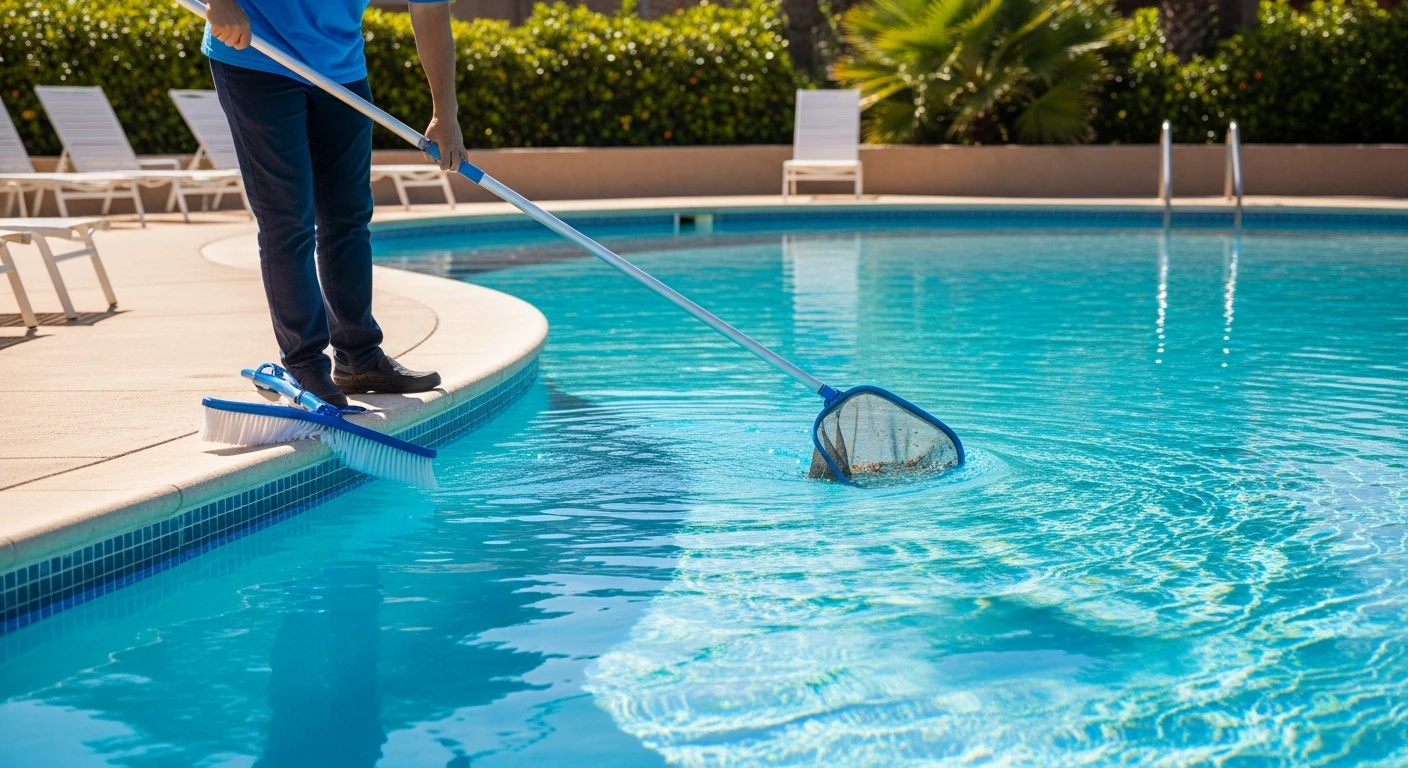
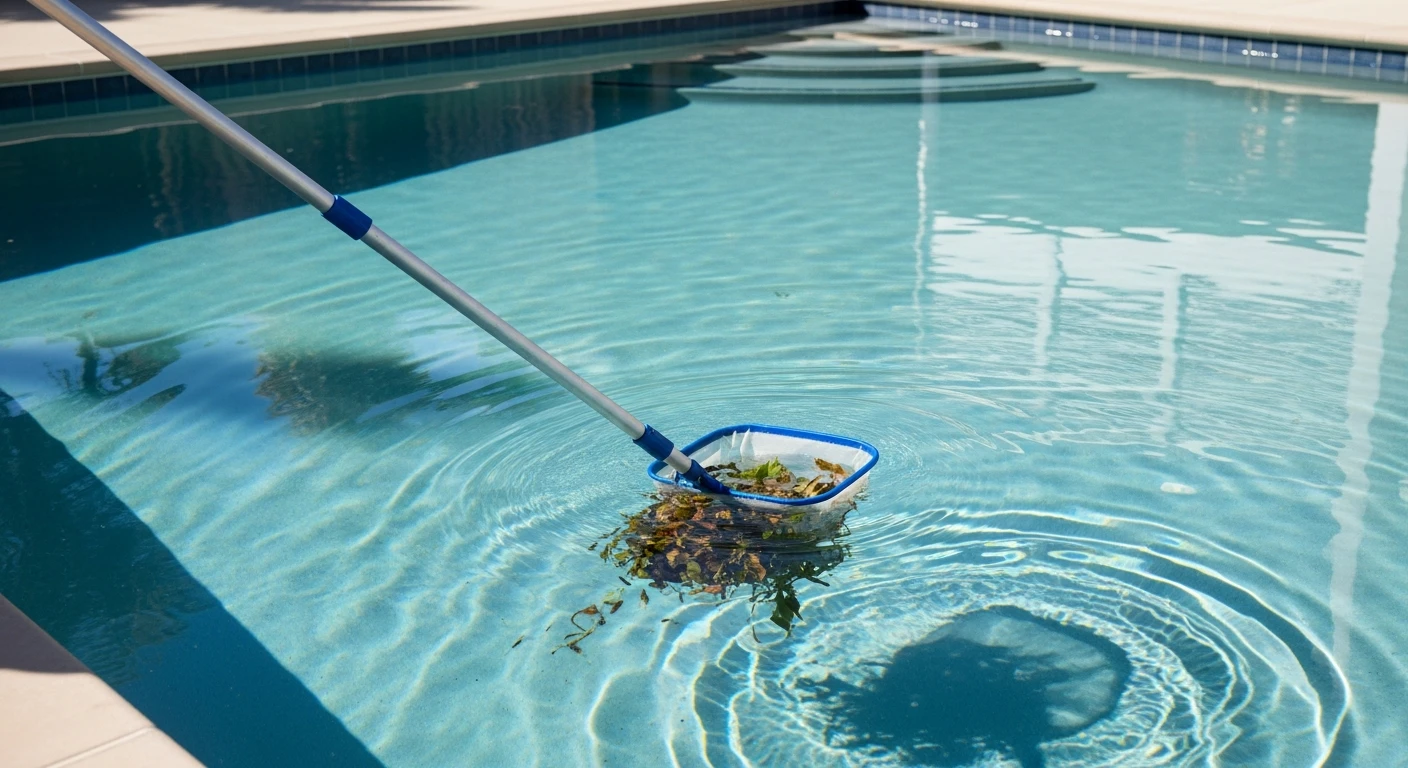
- Step 2: Surface & Deep Debris Removal. I perform a full surface skim, paying attention to local annoyances like oak tassels and lovebugs, which can clog systems quickly. This is followed by a thorough brushing of all walls, steps, and tile lines to dislodge nascent algae spores.
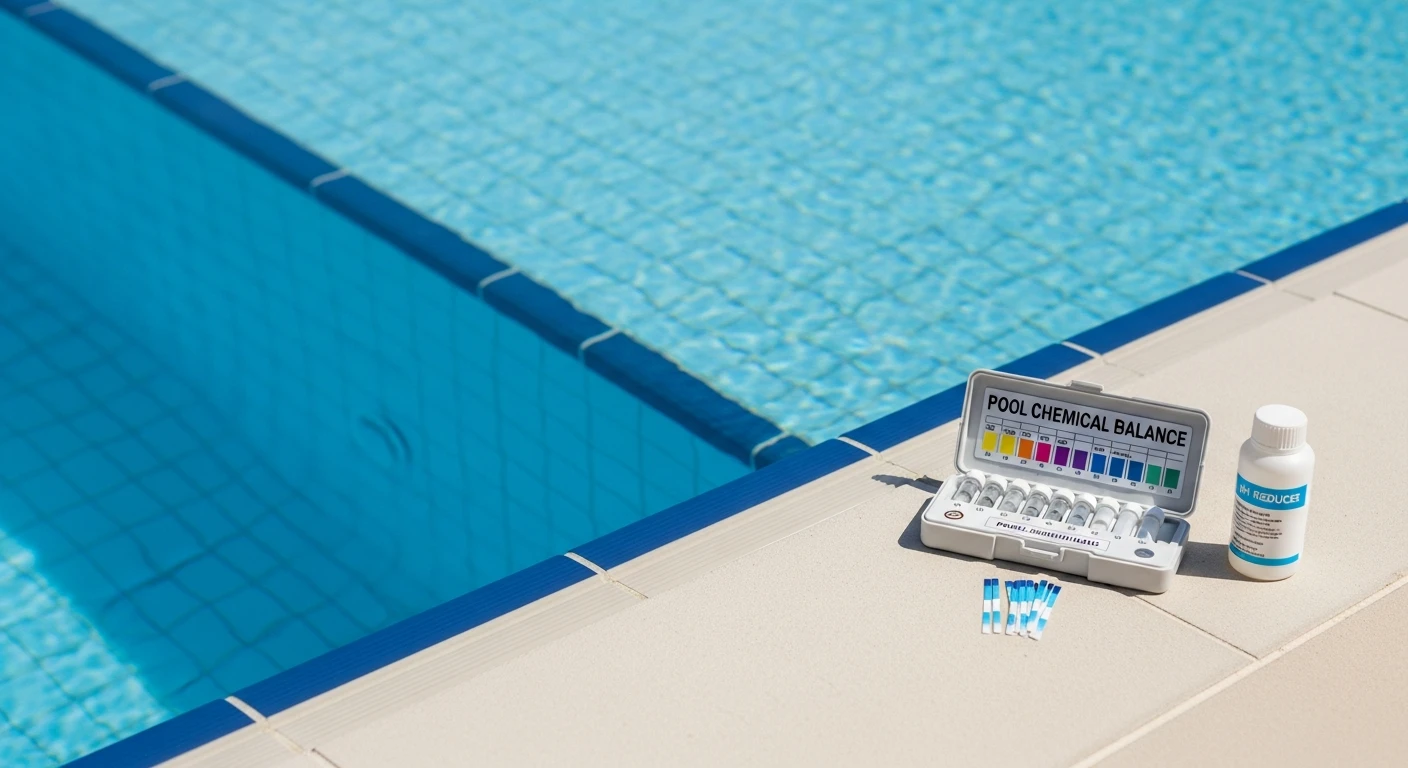
- Step 3: Comprehensive Water Analysis. This is where I use my photometer to test for Free Chlorine (FC), Combined Chlorine (CC), pH, Total Alkalinity (TA), Calcium Hardness (CH), Cyanuric Acid (CYA), and Phosphates.
- Step 4: Targeted Chemical Balancing. Based on the analysis, I add precisely what is needed. I primarily use liquid chlorine (sodium hypochlorite) to avoid adding more CYA. All adjustments are calculated based on the pool's exact volume.
- Step 5: Filter Maintenance. I backwash sand filters or clean cartridge filters only when the pressure gauge indicates it's necessary, preventing unnecessary water waste.
- Step 6: Systematic Vacuuming. I vacuum the pool floor to remove any settled debris that brushing and circulation missed.
- Step 7: Digital Service Report. Before leaving, I send a digital report with a photo of the clean pool, the exact chemical readings, and any actions taken. This provides full transparency and a historical log of the pool's health.
Precision Tuning for Screened vs. Unscreened Pools
One detail that separates an expert from a technician in Lake County is understanding the micro-environment of a pool. A pool inside a screened lanai behaves completely differently from an unscreened one. For my clients with screened enclosures, the primary battle is chemical. There's less organic debris, but the reduced rainfall and higher evaporation rates lead to a faster concentration of Total Dissolved Solids (TDS) and Calcium Hardness, which can cause scaling on tile lines and damage salt cells. For unscreened pools, the strategy shifts to aggressive debris management and accounting for rainwater dilution, which constantly impacts pH and alkalinity, requiring more frequent adjustments.
Is your current pool service measuring your pool's Langelier Saturation Index (LSI) to proactively prevent equipment corrosion and surface scaling, or are they just dumping in chlorine and hoping for the best?