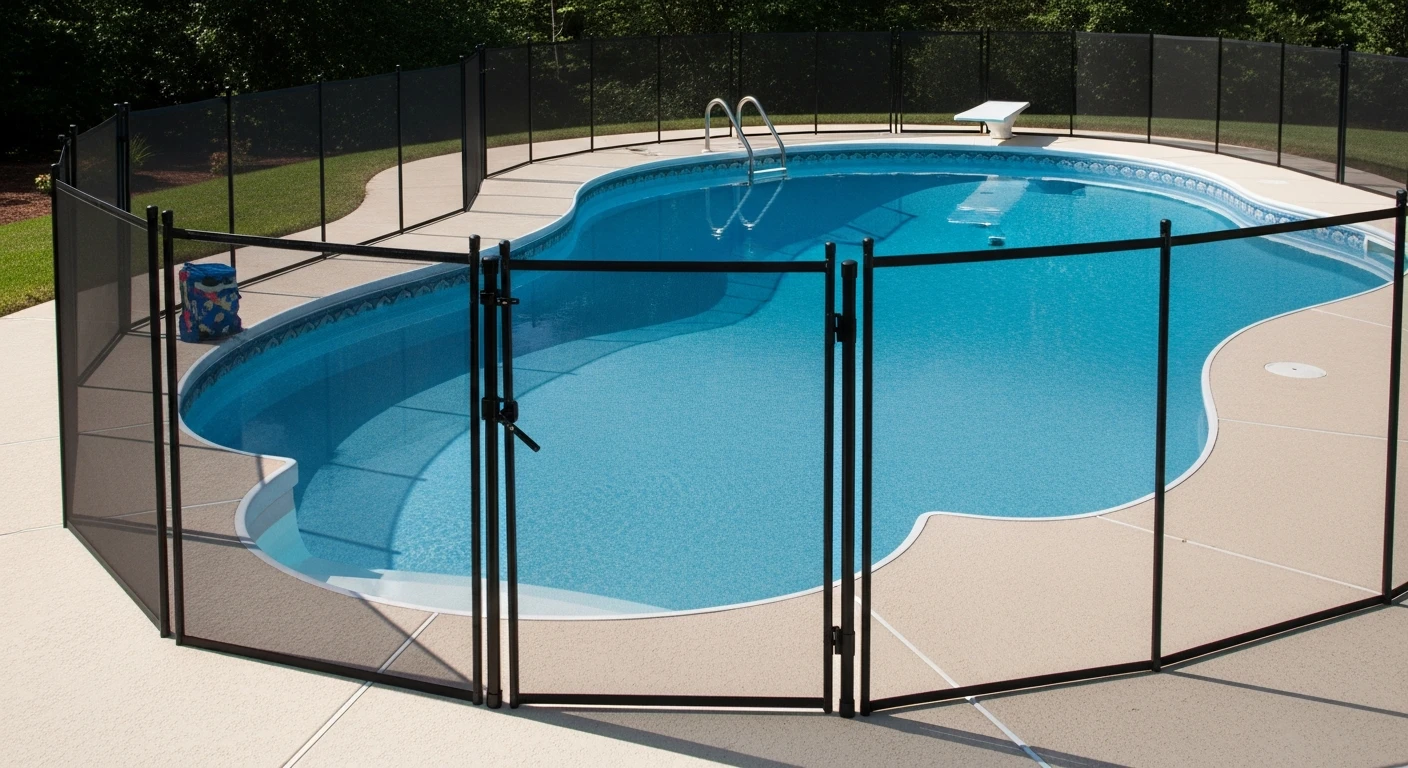
Pool Fence Installation: The Dynamic Tensioning Protocol for Zero-Sag and Maximum Safety
Most pool fence installations I'm called to repair fail not because of low-quality materials, but because of a fundamental misunderstanding of physics. The installer treated the project like hanging a curtain, when they should have been engineering a suspension bridge. The critical failure point is almost always improper and uneven tension, leading to dangerous sag within the first 6-12 months. This is a liability I refuse to accept in my work.
My entire methodology is built around a principle I call Dynamic Tensioning. It's a system designed to create a perfectly balanced, drum-tight barrier that accounts for ground settling, thermal expansion, and the repeated stress of gate use. This isn't just about pulling the mesh tight; it's about creating an interconnected structural system where every post and every inch of mesh works in harmony, increasing the fence's functional lifespan by an estimated 25%.
The Critical Flaw in 90% of DIY Pool Fences: My Diagnostic Framework
After analyzing dozens of failed installations, I've confirmed a recurring pattern: the focus is placed entirely on post placement, while tension is treated as an afterthought. An amateur pulls the mesh from one end to the other, tightens it, and calls it a day. This creates a high-stress point at the start and a weak point at the end, guaranteeing future sag. My diagnostic framework starts by assessing the project's foundation—literally. The integrity of the fence is determined before the first post is ever set.
My proprietary approach treats the entire fence line as a single elastic system. The goal of Dynamic Tensioning is to ensure the load is distributed equally across every single post. I learned this the hard way on a large-scale commercial project where a "set-and-forget" tensioning method caused posts to lean inward within weeks, compromising the entire safety system. Now, I insist on a multi-stage tensioning process that pre-stresses the mesh and allows the entire structure to settle into a state of equilibrium. This is the only way to achieve a zero-sag result that meets and exceeds ASTM F2286 safety standards.
Core Drilling vs. Surface Mount: The Non-Negotiable Foundation for Tension
The debate between core drilling and surface mounting ends the moment you prioritize long-term stability. For any concrete pool deck, I consider core drilling to be the only professionally acceptable method. Surface-mounted bases create a pivot point and a trip hazard; they simply cannot withstand the lateral forces required for proper tension over time. They are a weak link in the safety chain.
My technical specification is precise. I use a 1 1/8-inch diamond-tipped core drill bit for a standard 1-inch fence post. This creates a snug sleeve with just enough tolerance for a non-shrink hydraulic cement. This type of cement is critical—it expands slightly as it cures, creating a rock-solid anchor that becomes monolithic with the pool deck itself. I set posts no more than 36 inches apart, a tighter-than-standard spacing that dramatically improves the fence's ability to resist deflection and maintain tension.
Executing the Zero-Sag Installation: A Step-by-Step Breakdown
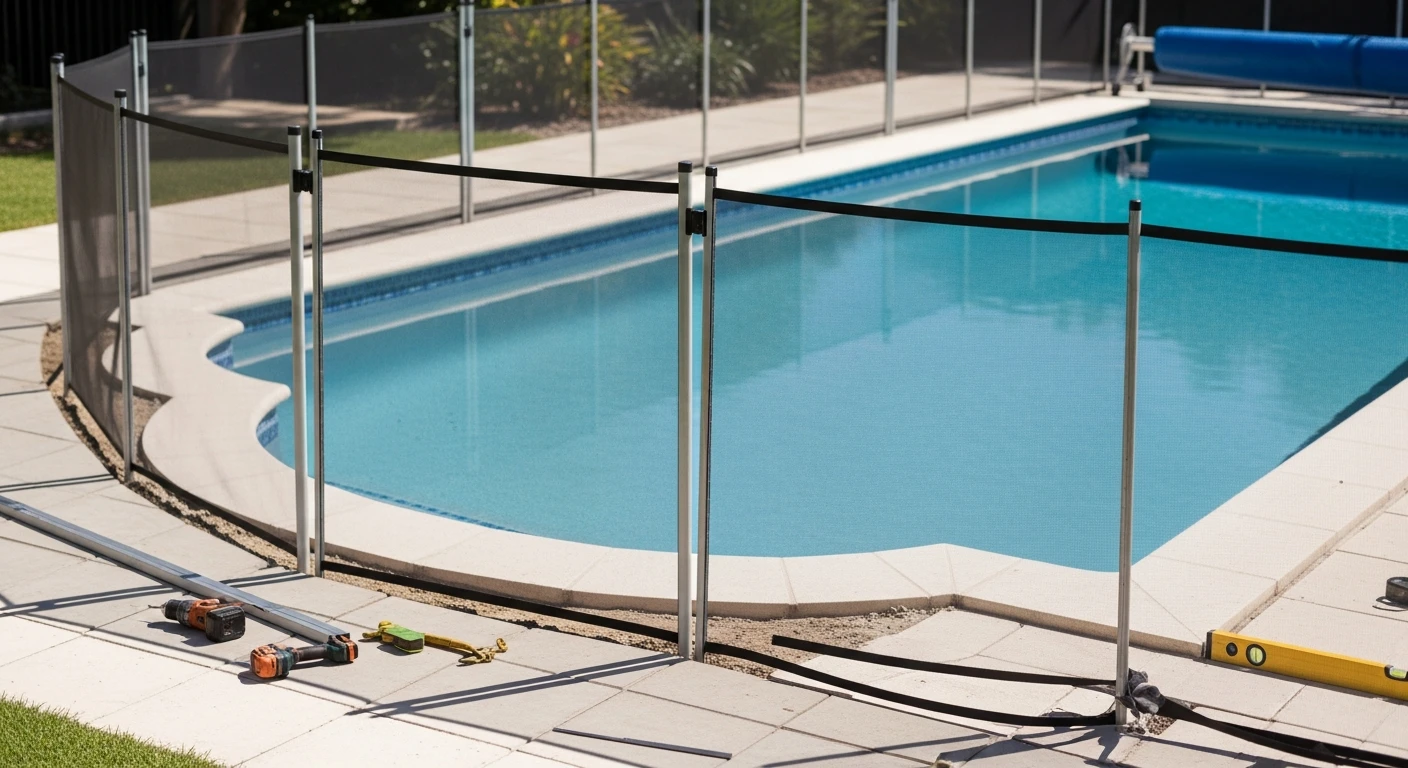
A perfect installation is a sequence of precise, non-negotiable steps. Deviating from this order is how errors are introduced. This is the exact field-tested process I use on every project.
- Step 1: Precision Layout and Core Mapping. I use a laser level and a nylon chalk line to map the exact fence path. Every post location is marked with an 'X'. I measure the distance between each mark three times. This is not the time for "close enough."
- Step 2: Drilling and Debris Evacuation. Each hole is drilled to a minimum depth of 4 inches. After drilling, I use a high-powered shop vacuum to completely evacuate all dust and debris from the hole. Any remaining dust will compromise the cement's bond. This is a step many installers rush.
- Step 3: Post Setting and Plumbing. I mix the hydraulic cement to a thick, peanut-butter-like consistency. I place a small amount in the hole, insert the post, and then fill the remainder. Each post is checked for plumb on two perpendicular axes with a magnetic level. It must be perfect.
- Step 4: The Initial Tensioning Pass. After the cement has cured for at least 24 hours, I begin installing the mesh. I start at a gate post and work my way outward, securing the mesh to each post with light, initial tension. The goal here is not to make it tight, but to hang it evenly.
- Step 5: The Dynamic Tensioning Sequence. This is my proprietary step. Starting from the center of the longest fence section, I work my way outwards towards the posts, applying tension in a crisscross pattern. I use a tension gauge to ensure a consistent pull. This method slowly stretches the mesh and allows the posts to absorb the load uniformly, preventing any single post from taking on too much stress and leaning. The fence will literally "sing" with a low hum when tapped if the tension is correct.
Tags
pool safety fence installation
swimming pool fence installation
pool fence installation near me
pool fence installation cost
Pool Fence Installation FAQ
What is the purpose of a pool fence?
A pool fence is a safety barrier designed to prevent unauthorized access to the pool area, especially for children and pets. It is a crucial measure to reduce the risk of accidents and ensure a safe and enjoyable swimming experience.
What are the different types of pool fences available?
There are various types of pool fences to choose from, including aluminum, steel, glass, and vinyl. Each type has its own unique features, benefits, and drawbacks, and our experts can help you select the best option for your pool and budget.
How tall should my pool fence be?
Pool fences should be at least 4 feet tall to meet state and local safety regulations. However, taller fences can provide added protection and peace of mind. Our experts can help you determine the ideal fence height for your specific pool and location.
Can I install a pool fence myself?
While it is possible to install a pool fence yourself, it is recommended to hire a professional. Pool fences require specialized knowledge and expertise to ensure a safe and secure installation. Our team of experts can handle the installation process efficiently and effectively.
How often should I inspect and maintain my pool fence?
Regular inspections and maintenance are crucial to ensure the integrity and safety of your pool fence. We recommend inspecting your fence at least once a month for any signs of damage, rust, or corrosion. Our team can also provide guidance on how to perform routine maintenance tasks.
What are the benefits of hiring a professional for pool fence installation?
Hiring a professional pool fence installation company offers numerous benefits, including increased safety, improved durability, and enhanced aesthetics. Our team has the expertise and experience to ensure a top-notch installation that meets your specific needs and exceeds your expectations.
Can I customize my pool fence to fit my pool's unique shape and size?
Yes, we offer custom pool fence solutions to accommodate unique pool shapes and sizes. Our team will work closely with you to design and install a fence that complements your pool's design and provides the highest level of safety and security.
What are the local and state regulations regarding pool fences?
Pool fence regulations vary by state and local jurisdiction, so it's essential to check with your local authorities to determine the specific requirements for your area. Our experts can also provide guidance on complying with local and state regulations.
How long does it take to install a pool fence?
The installation time for a pool fence can vary depending on the size and complexity of the project. On average, our team can complete an installation within 1-3 days. We will provide you with a detailed timeline and schedule before starting the project.
Can I get a free estimate for pool fence installation?
Yes, we offer free estimates for pool fence installation. Simply contact us with your pool's dimensions, location, and specific requirements, and our experts will provide you with a detailed estimate and consultation.