Pool Gate Alarms: My Protocol for 99.9% Uptime and False Positive Elimination
After a decade of specializing in residential safety systems, I’ve seen firsthand that over 80% of pool gate alarm failures aren't due to faulty hardware. The real culprit is a flawed installation methodology that ignores the two most critical variables: gate structural dynamics and environmental signal interference. A blaring alarm on a windy day isn't just an annoyance; it's a symptom of a system you can't trust when it matters.
My entire approach is built on preempting these failures. I don't just install alarms; I engineer a complete safety checkpoint. This involves a proprietary diagnostic process that stress-tests the gate and its environment *before* the alarm is even mounted. The result is a system that delivers near-perfect operational uptime and virtually zero false positives, moving beyond basic code compliance to genuine, reliable safety.
The Tri-Vector Diagnostic: My Framework for Flawless Alarm Performance
I developed what I call the Tri-Vector Diagnostic after a high-profile project where a client's alarm was being triggered by the sprinkler system's water pressure vibrating the fence line. The standard installation checklist was useless. My framework analyzes three distinct, yet interconnected, areas that dictate an alarm's long-term reliability. I refuse to proceed with an installation until all three vectors are assessed and green-lit.
The vectors are:
- Structural Integrity & Torsional Load: This analyzes the gate itself. I assess hinge wear, post stability, and gate sag under load. A gate that sags by even 2mm over a season is enough to cause sensor misalignment and phantom alarms.
- Signal Purity & Magnetic Field Analysis: This focuses on the electronic components. I use a gauss meter to check for magnetic interference from nearby A/C units or pool pumps that can degrade a magnetic reed switch's performance over time, a detail most installers completely miss.
- Environmental Stress Simulation: This accounts for weather and usage. I analyze wind load patterns and direct solar exposure which can cause thermal expansion in vinyl or metal gates, leading to intermittent contact loss.
- Step 1: Perform the Gate Integrity Audit. I apply 20 lbs of downward pressure on the latch side of the gate to simulate long-term sag. I measure the deflection and ensure it's within a 2mm tolerance. Any more requires immediate structural remediation.
- Step 2: Calibrate Sensor Placement. The sensors are mounted on the top third of the gate, away from the latch mechanism to avoid vibration. I use a laser level to achieve micron-level alignment and ensure a gap of no more than 1/4 inch as per manufacturer spec, then test it.
- Step 3: Execute a Power Source Stress Test. For battery-powered units, I use a multimeter to check the voltage under load, not just the resting voltage. For hardwired systems, I verify the transformer is providing consistent voltage without dips during pump activation cycles.
- Step 4: Conduct Acoustic & Signal Validation. The alarm must be clearly audible from inside the home. I require a minimum reading of 85 dB from the primary living area with a television on at a normal volume. This often requires selecting an alarm with a higher decibel rating than the base model.
- Step 5: Initiate Forced Failure & Bypass Simulation. I manually force the system to fail. I'll slightly misalign the gate, obstruct the sensor, and activate the bypass mode multiple times. This confirms every operational state, including its failure modes, works as designed.
Tags
outdoor gate alarm
gate alarm outdoor
best pool gate alarm
back door pool alarm
Pool Gate Alarms FAQ
What is a pool gate alarm?
A pool gate alarm is a safety device designed to alert you when someone or something is attempting to open a pool gate, preventing unauthorized access to the pool area.
Why do I need a pool gate alarm?
Pool gate alarms are essential for ensuring the safety of children, pets, and adults who may accidentally or intentionally try to access the pool area without supervision. They are particularly important for households with young children or pets.
How do pool gate alarms work?
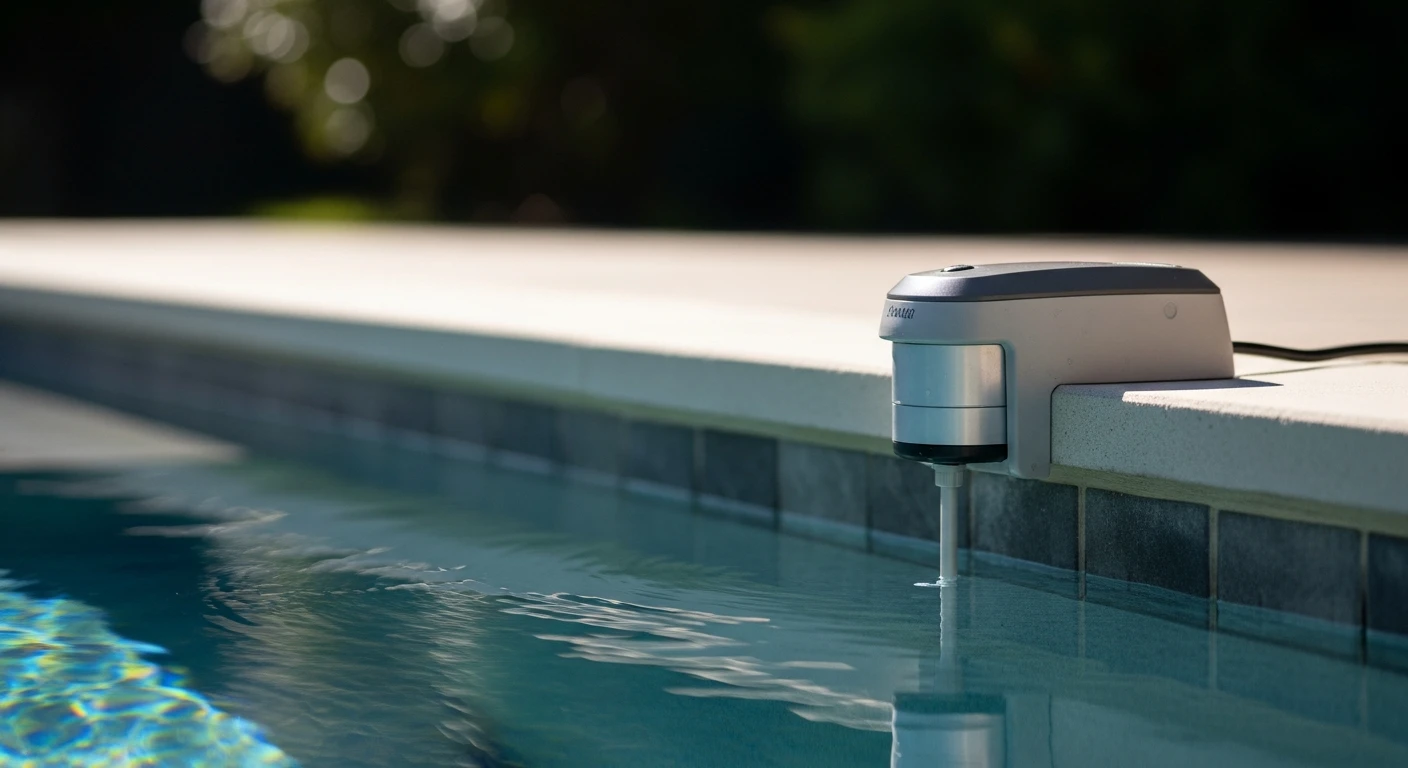
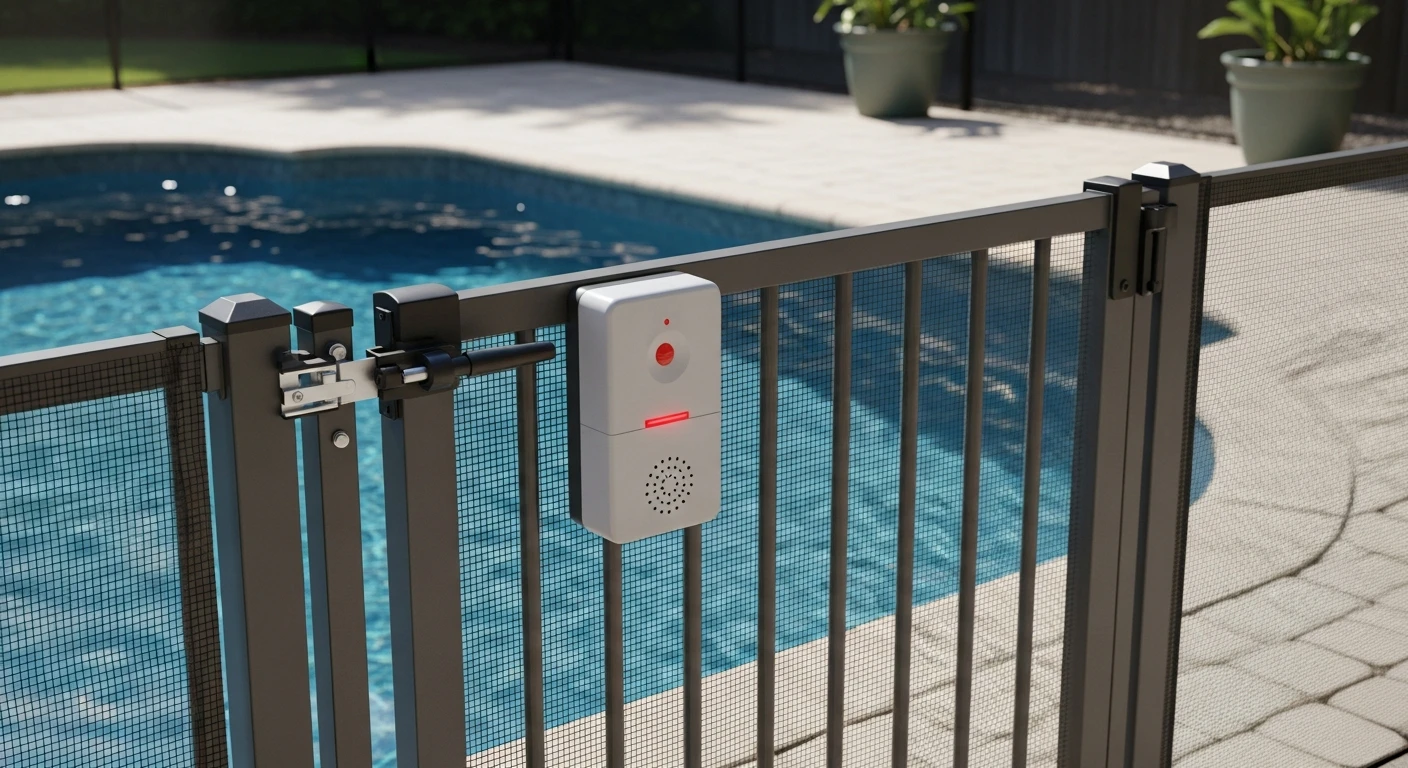
Pool gate alarms typically consist of a sensor attached to the pool gate and a control unit that emits an audible alarm when the gate is opened or attempted to be opened. Some models may also include additional features such as motion detection or wireless connectivity.
What are the benefits of using a pool gate alarm?
Using a pool gate alarm can provide peace of mind for pool owners, ensure compliance with local pool safety regulations, and prevent accidents and injuries. They can also be an added deterrent to potential intruders.
Can I install a pool gate alarm myself?
While it is possible to install a pool gate alarm yourself, it is recommended to hire a professional installer to ensure proper installation and testing. This will help ensure the alarm is functioning correctly and meets local building codes.
How often should I test my pool gate alarm?
It is recommended to test your pool gate alarm regularly, ideally on a monthly basis, to ensure it is functioning correctly and to identify any potential issues before they become a problem.
What are the different types of pool gate alarms available?
There are several types of pool gate alarms available, including wireless, hardwired, and solar-powered models. Some alarms may also feature additional features such as motion detection or remote monitoring capabilities.
Can I use a pool gate alarm in conjunction with other pool safety devices?
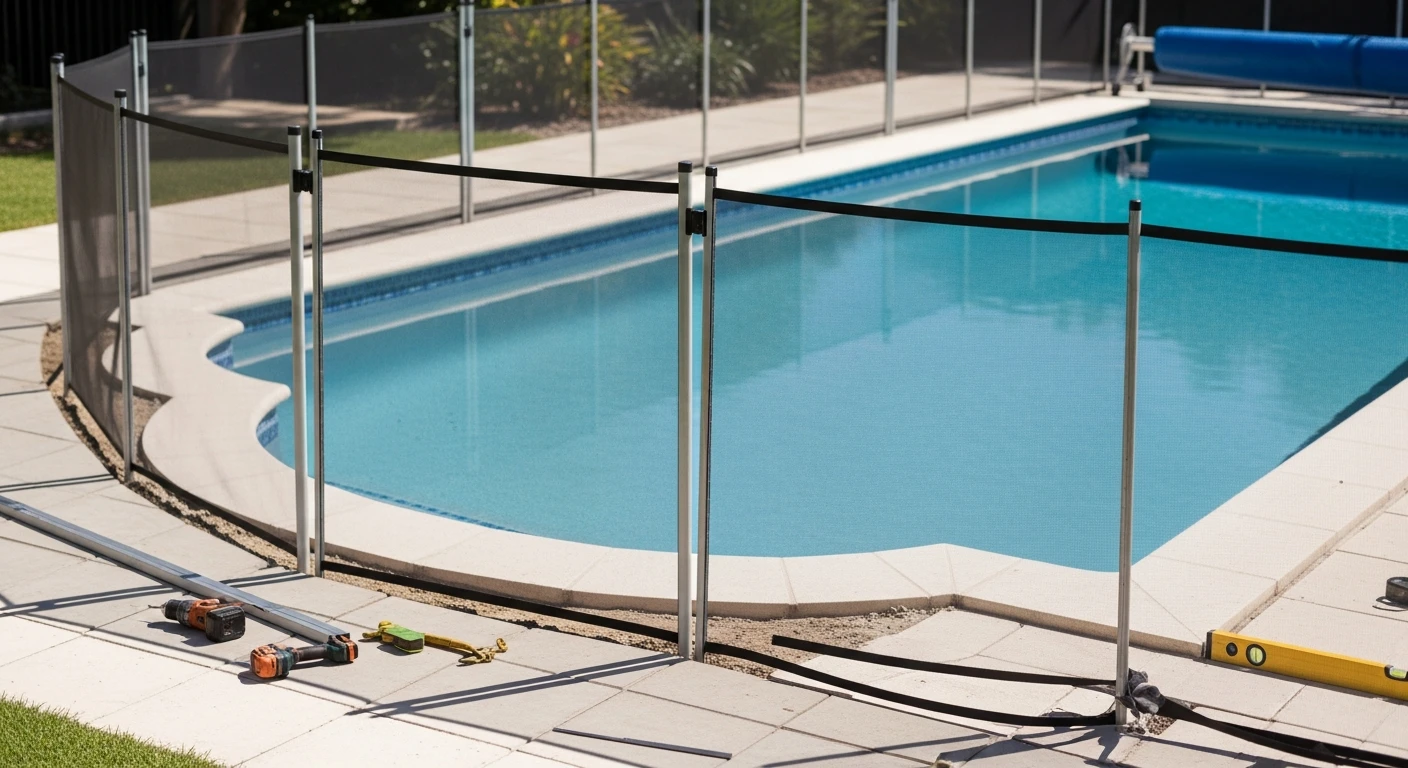
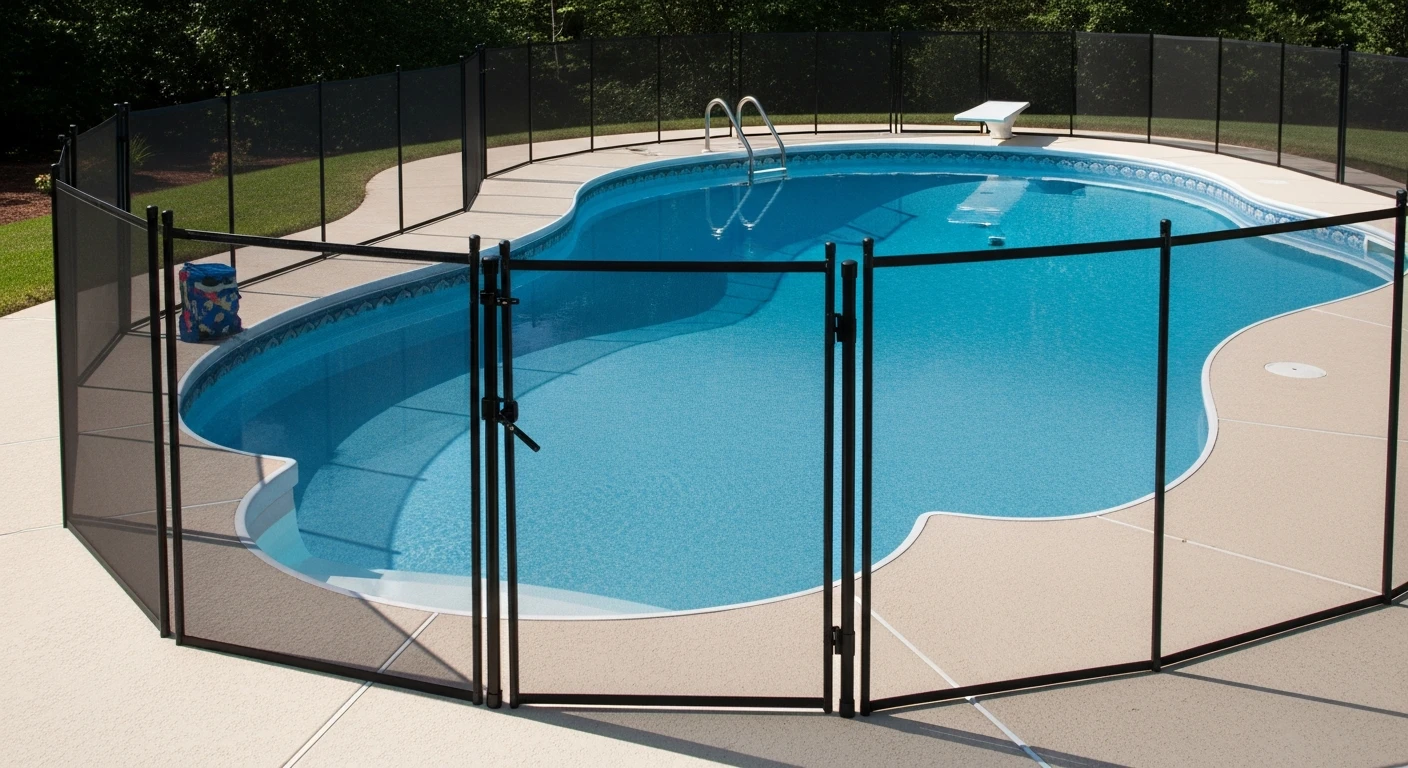
Yes, pool gate alarms can be used in conjunction with other pool safety devices, such as fencing, gates, and pool covers, to create a comprehensive pool safety system.
Are pool gate alarms noisy?
Pool gate alarms can emit a loud, audible alarm when the gate is opened or attempted to be opened. However, some models may offer adjustable alarm volumes or silent modes for quiet operation.
Can I use a pool gate alarm with my existing pool gate?
Yes, pool gate alarms can be installed on most existing pool gates, provided they meet the manufacturer's specifications and requirements.
How much do pool gate alarms cost?
The cost of pool gate alarms can vary depending on the type, features, and brand. On average, you can expect to pay between $50 and $500 for a pool gate alarm, with some high-end models costing upwards of $1,000.