Pool Skimming and Brushing Protocol: Preventing Plaster Etching in Seminole County's Climate
My approach to pool maintenance is built on one core principle: what you can't see is more damaging than what you can. After servicing countless pools, from the large screened-in lanais in Lake Mary to the older, more established pools in Sanford, I’ve found that most homeowners focus on visible debris like leaves and bugs. This is a critical error in our Seminole County climate, where high humidity and intense UV exposure create a perfect breeding ground for microscopic threats that lead to costly plaster etching and persistent algae. The standard "skim the top, brush the sides" advice is dangerously incomplete here. It fails to account for the fine yellow oak pollen that blankets everything in the spring or the oily residue from sunscreens and atmospheric pollutants that summer storms wash into the pool. This unseen layer is what truly compromises your water chemistry and attacks the pool surface, reducing its lifespan by as much as 30%. My methodology targets this invisible enemy first, making visible debris cleanup a secondary, simpler task.The Diagnostic Flaw in Conventional Pool Care
The biggest mistake I see, time and again, is treating skimming and brushing as two separate, unrelated chores. They are two parts of a single, symbiotic process. When a client in Longwood called me about a recurring green haze that multiple shock treatments couldn't fix, the issue wasn't his chemicals; it was his technique. He was brushing debris *into* the water column, but his skimming only collected what floated. The microscopic particles—the algae spores and biofilm precursors—remained suspended, reattaching to the walls within hours. My proprietary system, the Micro-Particle Disruption Method, is designed to break this cycle. It focuses on using the brushing action to direct suspended particulate matter towards the skimmer and main drain for immediate removal.A Deeper Look at Surface Tension and Biofilm
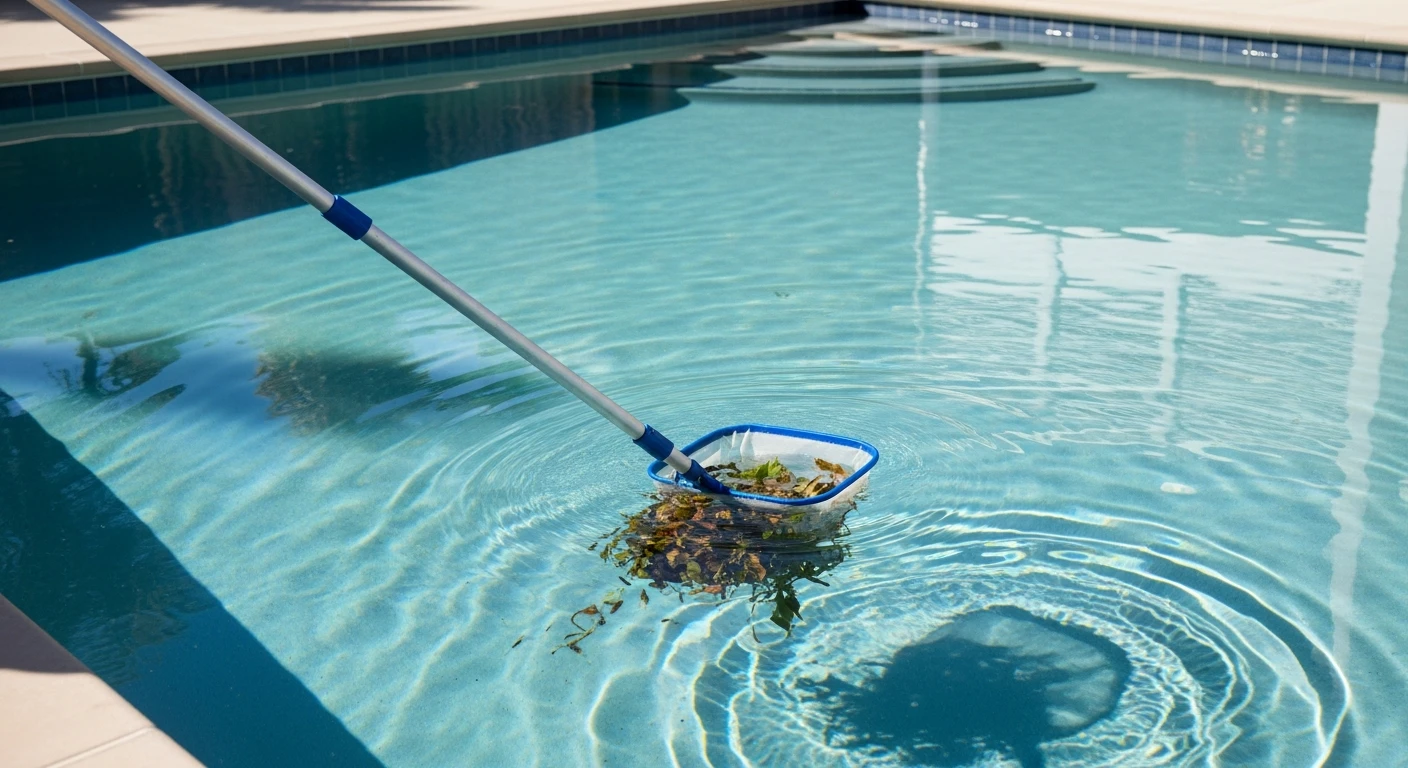
The water’s surface tension is a magnet for oils, pollen, and other fine contaminants. A standard leaf rake often glides right under this layer. The key is to use a fine-mesh silt net and break the surface tension with a specific "flick-and-drag" motion. This captures the oily film, preventing it from becoming a food source for algae. Simultaneously, the pool walls are developing an invisible layer of biofilm. This is a sticky, microscopic colony of bacteria that forms long before you ever see green. Aggressive, random brushing with the wrong brush (I've seen wire brushes absolutely destroy new plaster finishes in Altamonte Springs) is ineffective and damaging. The goal is systematic, overlapping strokes that lift this biofilm off the surface and push it into the water, timed so the filtration system can immediately capture it. Brushing isn't just for cleaning; it’s for feeding the filter.Implementing the Weekly Disruption Protocol
This is the exact weekly sequence I use. Following this order is critical for ensuring particles dislodged by brushing are actually removed from the system, not just temporarily relocated.- Step 1: System Priming. Before you touch the pool with a tool, ensure your pump is running on high speed. You want maximum circulation from the moment you begin.
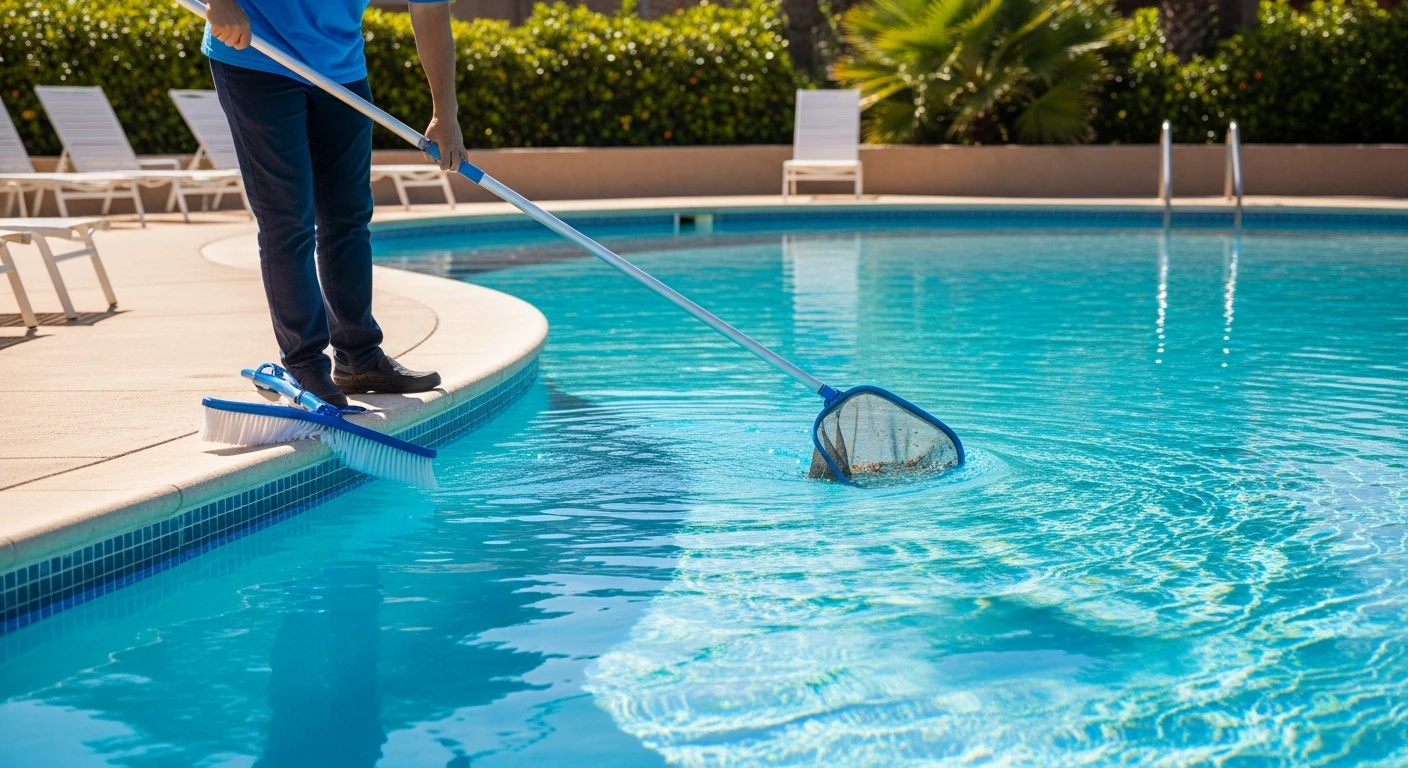
- Step 2: The Waterline Attack. Using a dedicated nylon-bristle brush, start at the tile line. This is where oils and calcium accumulate. Brush this "bathtub ring" down into the pool.
- Step 3: Systematic Wall Brushing. Begin in the shallow end. Use firm, overlapping downward strokes from the tile to the floor cove. Work your way around the entire perimeter. Do not use a random scrubbing motion.
- Step 4: Floor and Step Brushing. Once the walls are done, brush the steps, benches, and then the main floor. The key is to always brush towards the main drain. You are herding the debris to its exit point.
- Step 5: Surface Tension Skim. Only after all brushing is complete do you skim. By now, much of the debris you dislodged will have floated up. Use the fine-mesh net to perform the "flick-and-drag," removing the last of the surface film and floating particles. Let the pump run for at least 4-6 hours afterward.
Precision Adjustments for Seminole County Pools
Achieving a 100/100 score on water clarity and surface health requires adapting to our local conditions. My quality standard demands adjustments based on the season and your pool's specific finish. During the heavy pollen season from February to April, I recommend brushing twice a week. The acidic nature of our oak pollen can stain plaster if left to settle. For pools with a pebble or quartz finish, a brush with a combination of nylon and stainless steel bristles can be used *cautiously* once a month to remove stubborn mineral deposits, but for standard plaster, stick to nylon only. Over-brushing with a harsh tool is an irreversible error I've been called in to assess for resurfacing quotes far too often. The goal is maintenance, not abrasion. Are you brushing to simply clean what you see, or are you executing a precise strategy to disrupt and remove the invisible biofilm that truly threatens your pool's health?Written by

Tags
pool brushing
pool skimming
best pool brush
swimming pool brush
Pool Skimming and Brushing in Seminole FL FAQ
What is pool skimming and brushing?
Pool skimming and brushing are essential maintenance tasks that help to remove dirt, debris, and algae from the surface of your pool. Skimming removes floating debris such as leaves and insects, while brushing helps to scrub the walls and floor of the pool to remove dirt and algae that can accumulate.
Why is pool skimming and brushing important?
Regular pool skimming and brushing are crucial to maintaining a clean and healthy pool. It helps to prevent the growth of algae, reduces the risk of pool equipment damage, and ensures that your pool water is safe and enjoyable for swimming.
How often should I skim and brush my pool?
The frequency of skimming and brushing depends on the size of your pool, the number of users, and the environmental conditions around your pool. As a general rule, it's recommended to skim your pool daily and brush it weekly. However, it's best to consult with a professional pool technician for personalized advice.
Can I do pool skimming and brushing myself?
While it's possible to do pool skimming and brushing yourself, it can be a time-consuming and labor-intensive task. If you're short on time or not comfortable with the process, it's recommended to hire a professional pool technician to do it for you.
What equipment do I need for pool skimming and brushing?
To skim your pool, you'll need a pool skimmer or a pool net. For brushing, you'll need a pool brush and a suitable cleaning solution. You can purchase these equipment at a pool supply store or online.
Can I hire a professional to do pool skimming and brushing for me?
Yes, you can hire a professional pool technician to do pool skimming and brushing for you. They will have the necessary equipment and expertise to do the job efficiently and effectively. Contact us to learn more about our pool skimming and brushing services.
What are the benefits of hiring a professional for pool skimming and brushing?
Hiring a professional for pool skimming and brushing can provide numerous benefits, including improved pool water quality, reduced energy consumption, and increased peace of mind. Our professionals will ensure that your pool is properly maintained and cleaned, allowing you to enjoy your pool to the fullest.
How can I schedule a pool skimming and brushing service with your company?
To schedule a pool skimming and brushing service with our company, simply contact us through our website or give us a call. One of our friendly customer service representatives will be happy to assist you with scheduling a service that meets your needs.
What areas do you serve?
We serve [insert areas served], offering pool skimming and brushing services to residential and commercial pool owners in these areas. Contact us to learn more about our service areas and to schedule a service.