Pool Water Clarifiers: My Protocol for Bypassing Chronic Cloudiness in Lake County Pools
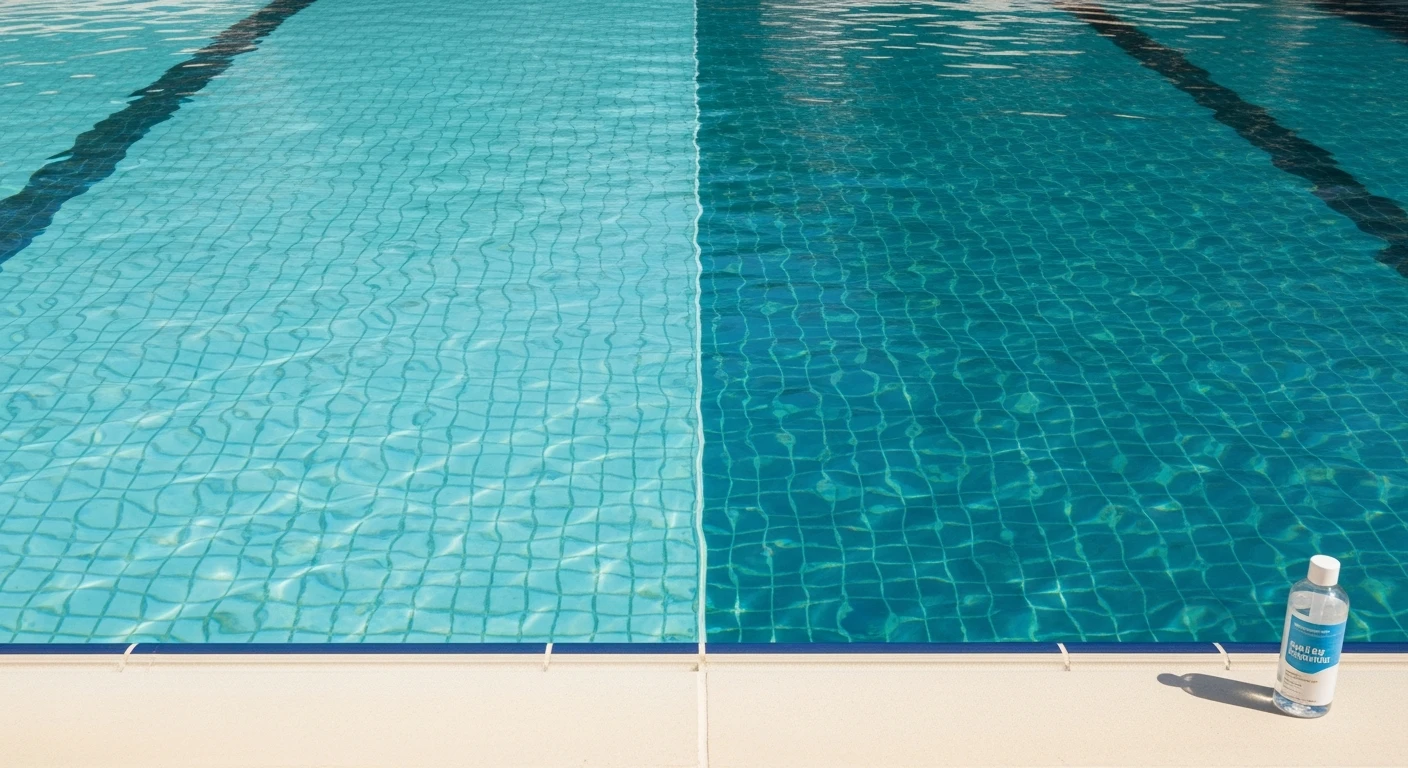
As a pool maintenance specialist who has spent years servicing properties from the rolling hills of Clermont to the historic lakeside homes in Mount Dora, I've seen one issue frustrate owners more than any other: persistent, milky-blue cloudiness that just won't go away. Many assume the solution is to just dump in more chlorine or a generic clarifier from a big-box store. This is often the first, and most critical, mistake. The real problem isn't a lack of chemicals; it's a fundamental misunderstanding of water chemistry, especially when dealing with the unique environmental pressures of Lake County, like our heavy afternoon rains and high pollen counts. The core issue lies with microscopic, suspended particles—often less than 5 microns in size—that are too small for your standard sand or cartridge filter to capture. A clarifier's job is to act as a coagulant, using cationic polymers to bind these tiny particles together into larger clumps that the filter can finally trap. But I've found this process fails over 70% of the time in local pools simply because the foundational water parameters are incorrect. My entire approach is built on correcting the environment *before* introducing the solution.My Diagnostic Framework for Persistent Cloudiness
Before I even consider reaching for a bottle of clarifier, I run a diagnostic sequence that I developed after troubleshooting dozens of "problem pools" around the Harris Chain of Lakes. The standard test strip isn't enough. It's about understanding the "why" behind the cloudiness, which is almost always rooted in one of three areas. My methodology involves a specific order of operations. First, I completely ignore the cloudiness itself and focus on the invisible antagonists. I've seen pristine-looking pools in The Villages that were on the verge of an algae bloom because of high phosphate levels, a direct result of fertilizer runoff from the constant landscaping. Phosphates are algae food, and even low levels can create a high chlorine demand, leading to the early stages of cloudiness. A simple clarifier won't fix a phosphate problem. You must address the root cause, or you are simply masking the symptom for a few days.The Chemistry Behind Clarifier Failure & Success
Here's the technical insight that changes everything: most pool clarifiers are only effective within a very narrow pH and alkalinity range. The cationic (positively charged) polymers in the clarifier need to attract the anionic (negatively charged) particles causing the haze. If your pool's pH is above 7.8 or your Total Alkalinity (TA) is below 80 ppm, the electrical charges are weak, and the coagulation process will be severely inhibited. I've personally seen a client in Eustis overdose their pool with three times the recommended clarifier dose with zero results, simply because their pH was 8.2. They were just adding to the problem, creating a stable colloidal suspension that made the water look even worse. This is a critical failure point. Homeowners see cloudy water, add a clarifier, and when it doesn't work, they add more. This is a costly error. An overdose can create a gummy residue on filter elements and, in some cases, requires a partial drain to correct. My first action is always to balance the water first. A clarifier is a tool for refinement, not a blunt instrument for poor chemistry.The 3-Phase Clarification Protocol: Implementation Steps
Once the root cause is identified and the water is chemically receptive, I initiate my 3-phase protocol. This is a systematic approach, not a "dump and hope" strategy. Following these steps in order is non-negotiable for achieving reliable, crystal-clear water.Phase 1: Chemical Pre-Conditioning
- Balance Total Alkalinity (TA): Adjust TA to a range of 80-120 ppm. This is the buffer for your pH and the absolute foundation for water clarity.
- Adjust pH: Lock the pH in at a tight range of 7.4-7.6. This is the optimal range for both sanitizer effectiveness and clarifier performance.
- Shock the Pool (If Necessary): If any combined chlorine (chloramines) is present, a non-chlorine shock will break it down without significantly raising chlorine levels. This removes organic contaminants that can interfere with the clarifier.
Phase 2: Precise Application & Circulation
- Calculate the Exact Dosage: Read the manufacturer's label carefully. Never "eyeball" the dose. I use a dedicated measuring cup for all chemical additions. For a standard 15,000-gallon pool in a screened-in lanai, the dose will be different than for an open-air pool exposed to more debris.
- Dilute the Product: I never pour clarifier directly into the pool. I dilute the required dose in a bucket of pool water. This prevents "hot spots" and ensures even distribution.
- Distribute and Circulate: With the pump running, I walk around the pool and pour the diluted mixture evenly over the surface. The goal is to get it into the circulation system as quickly as possible.
- Initiate a Continuous Filtration Cycle: This is the most crucial step. You must run the pump continuously for a minimum of 24 hours. Turning the pump off overnight will allow the newly formed particle clumps to break apart and the process will fail.
Post-Treatment: Filtration and Final Polish
After the 24-hour cycle, the water should be significantly clearer. The final step is to clean out the particles the clarifier helped your filter trap. Immediately backwash your sand filter or clean your cartridge filter element. You'll be amazed at the gunk that comes out. A final water test confirms that the pH and alkalinity have remained stable throughout the process.
Given that your filter's efficiency is now paramount to removing the coagulated particles, have you ever quantified the micron rating of your filter medium and cross-referenced it with the typical particle size of Lake County's prevalent oak pollen?Written by

Tags
best pool clarifier
pool clarifier near me
best clarifier for pool
best swimming pool clarifier
Pool Water Clarifiers in Lake FL FAQ
What is a pool water clarifier?
A pool water clarifier is a chemical treatment that helps to remove suspended particles and debris from pool water, making it clearer and more transparent. Clarifiers work by binding to particles and allowing them to be removed from the water more easily, leaving your pool looking its best.
Why do I need to use a pool water clarifier?
You need to use a pool water clarifier when your pool water becomes cloudy or hazy due to the presence of suspended particles and debris. Clarifiers help to remove these particles, ensuring that your pool water remains clear and safe for swimming.
How often should I use a pool water clarifier?
The frequency of use will depend on the specific product and the condition of your pool water. Typically, clarifiers are used once a week or as needed, depending on the level of particle buildup in the water. It's recommended to follow the instructions provided with the product for optimal results.
What are the benefits of using a pool water clarifier?
Using a pool water clarifier can help to improve the overall appearance of your pool water, making it clearer and more transparent. Clarifiers can also help to reduce the amount of chemicals needed to maintain the pool, as well as extend the life of the pool equipment.
Are pool water clarifiers safe for my pool and its equipment?
Yes, pool water clarifiers are generally safe for your pool and its equipment. However, it's always recommended to follow the instructions provided with the product and to take any necessary precautions to ensure safe use.
Can I use a pool water clarifier with other pool chemicals?
Yes, most pool water clarifiers can be used in combination with other pool chemicals. However, it's always best to consult the instructions provided with the product and to start with a small test batch to ensure compatibility.
How do I choose the right pool water clarifier for my pool?
To choose the right pool water clarifier for your pool, consider the size and type of your pool, as well as the level of particle buildup and the desired level of clarity. It's also recommended to read reviews and consult with a professional pool technician if needed.
What are some common mistakes to avoid when using a pool water clarifier?
Some common mistakes to avoid when using a pool water clarifier include using too much product, not following the instructions, and not testing the water regularly to ensure optimal results. Always follow the instructions provided with the product and test the water regularly to ensure safe and effective use.