Saltwater Pool Conversion in Pinellas County: A Protocol for 30% Extended Cell Lifespan
I've lost count of the number of saltwater pool conversions I've had to correct in Pinellas County, from waterfront homes in St. Pete Beach to older pools in Largo. The most common failure point isn't the equipment itself; it's the initial diagnostic and sizing methodology. Many installers simply match the salt system to the pool's gallonage listed on a spec sheet, completely ignoring the intense Florida sun and local water chemistry. This oversight directly leads to premature salt cell failure, often within two years, when a properly specified system should last four or five.
My entire approach is built on preventing this specific outcome. A successful conversion isn't about just adding salt and a generator. It’s a recalibration of the entire pool ecosystem, specifically tailored to handle the high UV index and bather loads common from Clearwater to Gulfport. I’ve refined a protocol that focuses on extending the life of the salt chlorine generator (SCG) cell, which is the most expensive component to replace.
My Diagnostic Framework for Pinellas County Pools
Before I even consider equipment, my first step is a comprehensive audit of the pool's current state. I developed this methodology after seeing a large-scale project in a Tierra Verde community suffer from widespread equipment corrosion because the original installer failed to account for existing variables. The humid, salt-heavy air in our coastal areas is already tough on equipment; a poorly planned conversion accelerates that decay by an order of magnitude.
My diagnostic process is non-negotiable and consists of three core components:
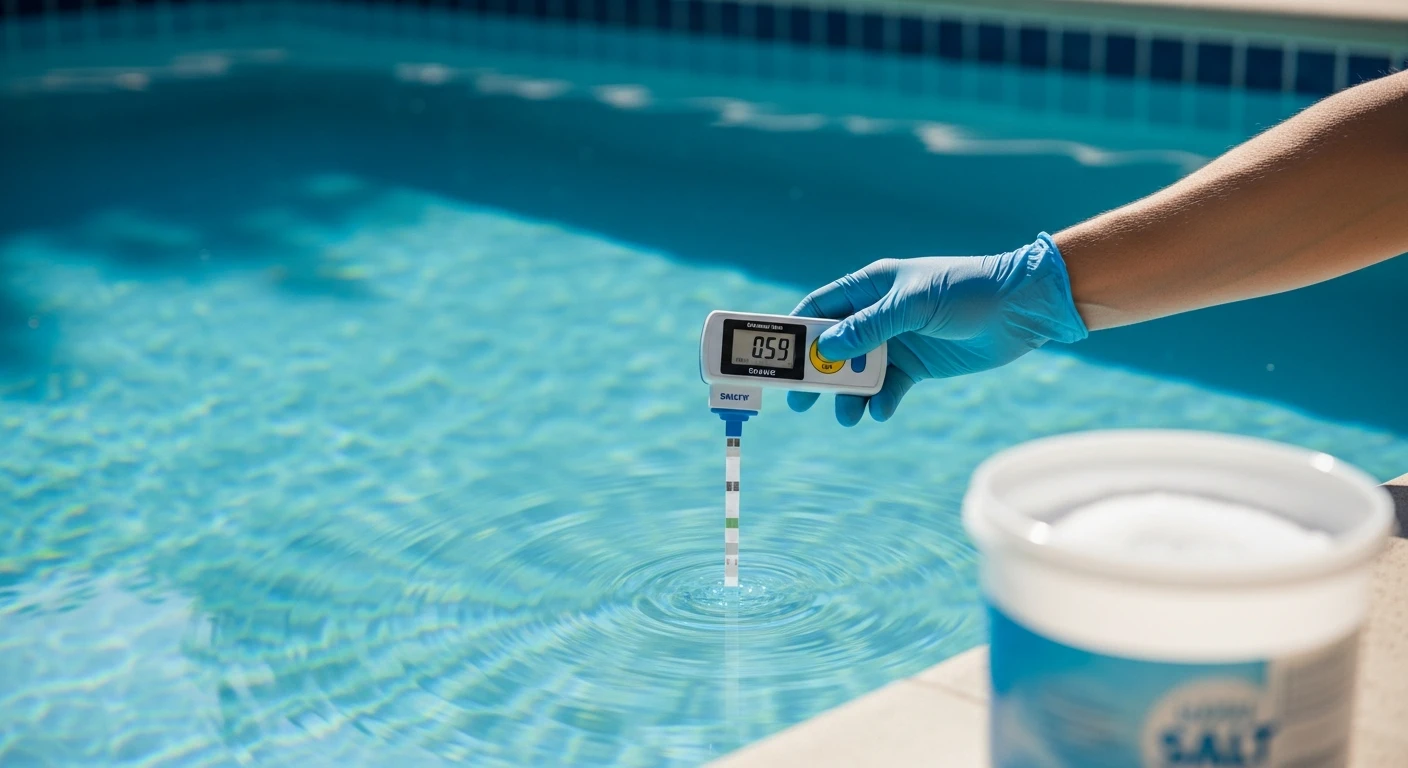
- Comprehensive Water Chemistry Baseline: I go far beyond a standard chlorine and pH test. I specifically measure Cyanuric Acid (CYA), Calcium Hardness (CH), Total Dissolved Solids (TDS), and phosphates. High phosphates, a common issue in Pinellas due to fertilizer runoff, can act as a nutrient for algae and force an SCG to work much harder, drastically reducing its operational lifespan.
- Plumbing and Equipment Compatibility Audit: Is there a gas heater with a copper heat exchanger? If so, installing an SCG without a sacrificial zinc anode is a recipe for galvanic corrosion that will destroy the heater. I also inspect the pump's flow rate to ensure it meets the minimum GPM required by the SCG's flow switch.
- Pool Surface and Fixture Analysis: The type of pool surface—be it classic marcite plaster common in older Pinellas Park homes or modern pebble finishes—dictates the target Calcium Hardness and how we introduce the salt to prevent staining.
Sizing the Salt Chlorine Generator (SCG): Beyond Gallon Ratings
Here's the single biggest "insider" secret: the manufacturer's maximum gallon rating for an SCG is almost irrelevant in Pinellas County. That rating is based on ideal conditions, not the reality of our eight-month swimming season with intense sun. The UV rays degrade free chlorine rapidly, forcing the SCG to run at a higher percentage for longer hours.
My proprietary sizing formula is simple but effective: I calculate the pool's actual volume and then select an SCG rated for 1.5x to 2x that volume. For a standard 15,000-gallon pool in an unscreened Palm Harbor backyard, I would never install a system rated for only 20,000 gallons. I'd specify a 30,000 or 40,000-gallon system. This allows the unit to produce the required amount of chlorine while running at a lower output percentage (e.g., 40-50% instead of 80-90%), which significantly reduces wear on the cell's precious metal coatings and extends its life by a conservative 25-30%.
The Conversion Protocol: Step-by-Step Implementation
Once the diagnosis and sizing are complete, the physical conversion follows a precise sequence. Deviating from this order is a common cause of post-installation problems. I've been called to fix "cloudy saltwater pools" a week after conversion, and it's almost always due to improper balancing *before* the system was activated.
- Pre-emptive Water Balancing: This is done *before* any salt is added. I balance the water to the ideal parameters for a new salt system, not the old chlorine system. My target for a Pinellas pool is:
- pH: 7.4 - 7.6
- Total Alkalinity: 80 - 120 ppm
- Cyanuric Acid (CYA): 60 - 80 ppm (This is higher than for traditional chlorine pools and is critical for protecting the generated chlorine from UV degradation).
- Calcium Hardness: 200 - 400 ppm (adjusted based on surface type).
- Phosphates: As close to zero as possible.
- Salt Dissolution: I add the required amount of high-purity, granular pool salt (typically 99.8% NaCl) to achieve a baseline salinity of 3,200 ppm. The key here is the method: I have the pump running and brush the pool floor vigorously as the salt is added to prevent it from settling and staining the plaster. I've seen permanent stains on pools from installers who just dump the bags in and walk away.
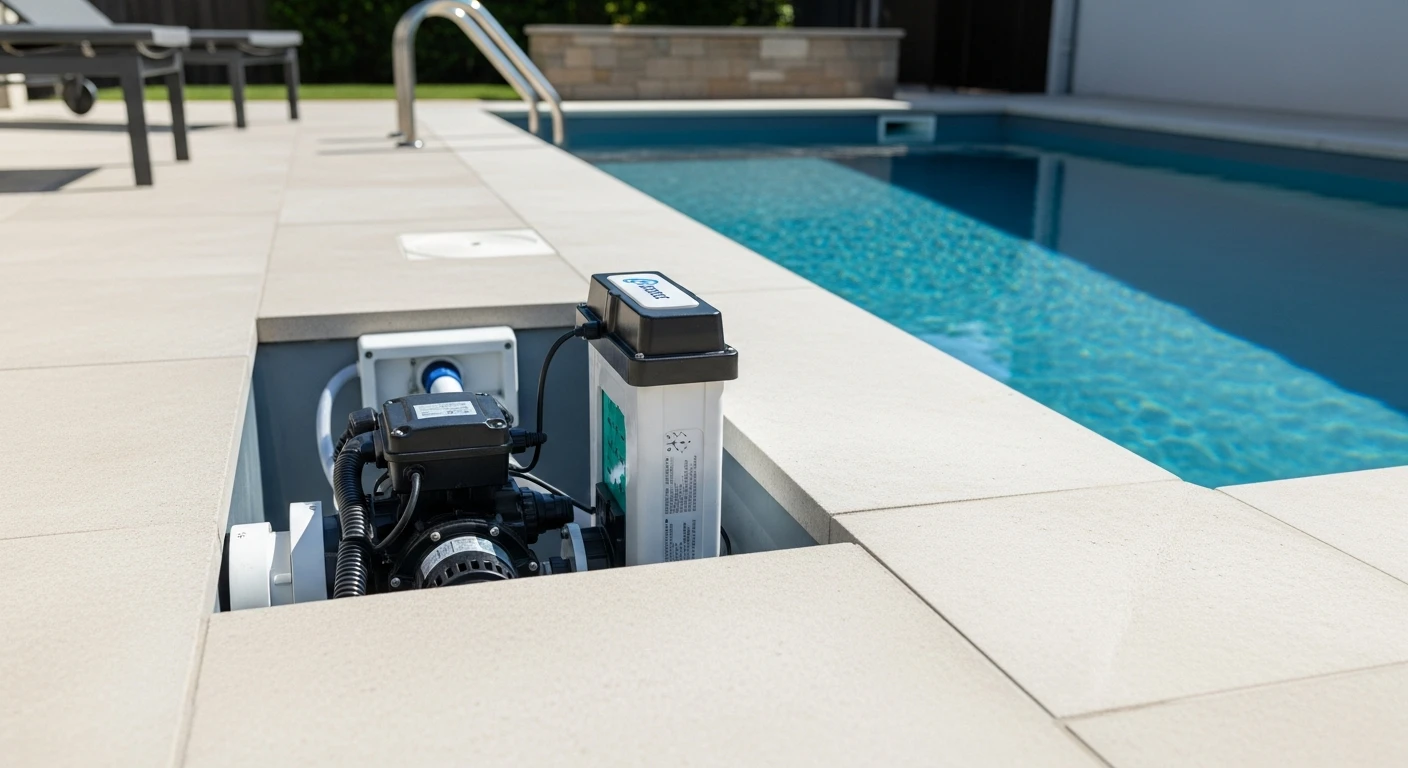
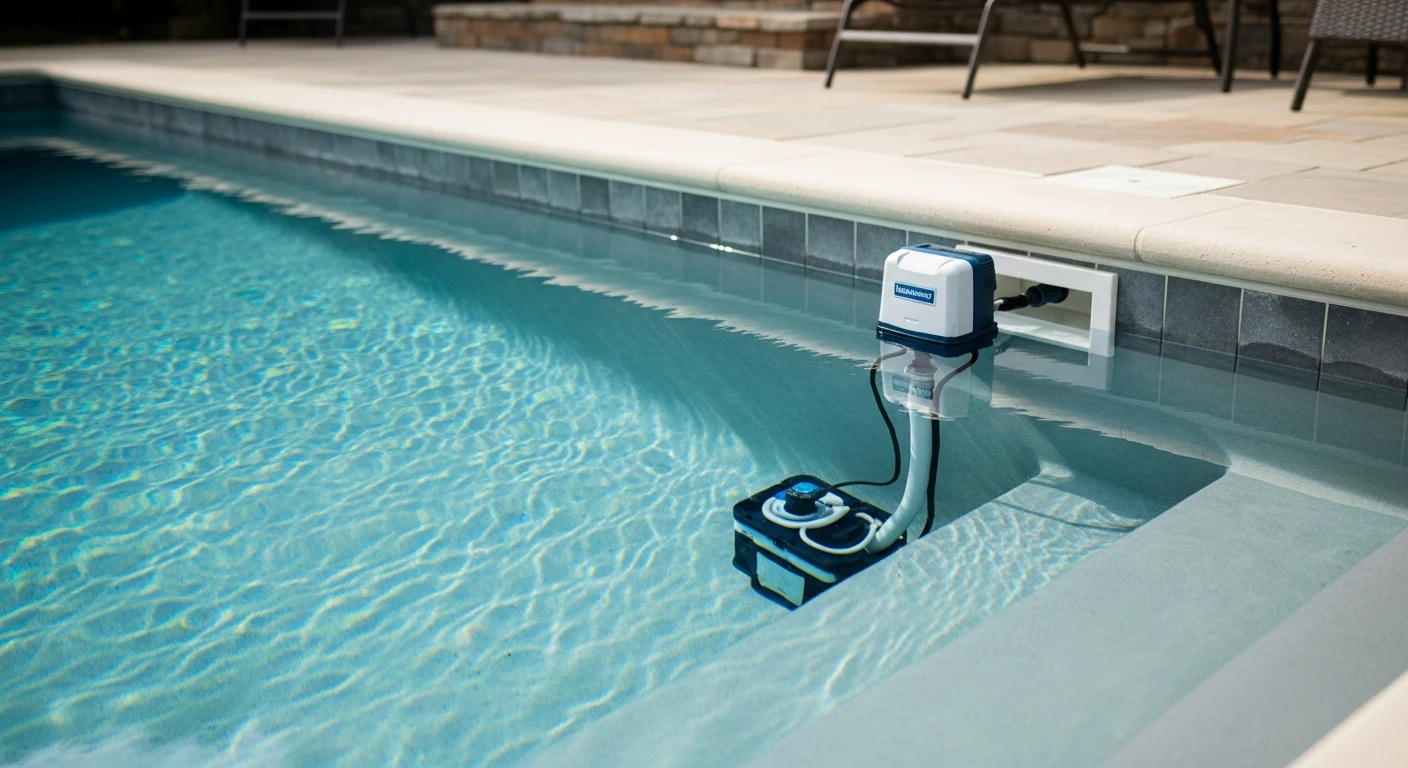
- Physical Installation of the SCG: The SCG cell is plumbed into the return line, always as the last piece of equipment before the water returns to the pool. It must be installed after the filter and any heaters to prevent damage. The control panel is mounted and wired according to code, ensuring it is properly grounded. This is where I install the inline sacrificial zinc anode if a heater is present.
- System Calibration: After the salt has fully dissolved (which can take 24 hours of pump circulation), I power on the SCG. I then calibrate the unit's salt reading against an independent, digital salinity tester to ensure accuracy. Setting the initial chlorine production output usually starts at 50%, with fine-tuning over the next few days.
Post-Conversion Fine-Tuning and Quality Control
My job isn't finished when the system is running. The first week is critical for dialing in the performance. I monitor the free chlorine level daily and adjust the SCG's output percentage until it consistently maintains a level of 2-4 ppm. I also re-check the pH, as the process of generating chlorine can cause it to rise slightly. Educating the homeowner is part of the process; they need to understand that a saltwater pool is not a "no-maintenance" pool.
The final quality control check is a thorough inspection of the cell after 100 hours of operation. I check for any early signs of calcification, a common issue with our hard water in some parts of the county. I also provide my clients with a specific, gentle cleaning protocol using a diluted muriatic acid solution (1 part acid to 15 parts water) to be performed quarterly, which prevents the stripping of the cell's coating caused by overly strong acid washes often recommended elsewhere.
Given the specific environmental stressors here in Pinellas, have you factored in how your pool's Total Alkalinity level will buffer the natural pH rise from the electrolysis process, and how that impacts your SCG's chlorine production efficiency?