Saltwater Pool Maintenance: A Protocol to Prevent Salt Cell Burnout in Collier County’s Climate
As a pool maintenance specialist in Collier County for over a decade, the most frequent—and costly—issue I encounter is premature saltwater generator cell failure. Homeowners in Naples and Marco Island invest in these systems for convenience, only to find themselves replacing a $900 cell every two years. The root cause is almost never a faulty unit; it's a fundamental misunderstanding of how our intense Florida sun and torrential summer rains impact water chemistry, forcing the system to work at 100% capacity nonstop. My entire approach is built on reducing the operational strain on your salt chlorinator cell, effectively doubling its lifespan. This isn't about adding more chemicals. It's about creating a chemically stable environment where the generator can operate at a lower, more efficient output percentage, even during the peak heat of August in Golden Gate Estates. I've refined this protocol after servicing hundreds of pools, from small lanai-enclosed setups to large, exposed pools in luxury coastal homes.My Diagnostic Framework for Collier County Saltwater Pools
Before I touch a single setting on a salt system, I perform a diagnostic that goes far beyond the typical pool store water test. The most common mistake I find is a knee-jerk reaction to boost the generator's output when the water gets cloudy. In 90% of cases I've documented in Collier County, the actual problem is an external chemical imbalance that’s neutralizing the chlorine as fast as the cell can produce it. My diagnostic zeroes in on the three silent culprits. My methodology involves analyzing the relationship between Cyanuric Acid (CYA), phosphates, and total dissolved solids (TDS). A pool in Port Royal surrounded by lush landscaping will have a vastly different phosphate load than a minimalist setup. The intense UV exposure here degrades unstabilized chlorine in under two hours. Without the correct CYA level acting as a "sunscreen" for your chlorine, your salt cell is fighting a battle it will always lose, leading directly to burnout.Decoding the Salt-to-Chlorine Conversion Rate Under Intense UV
The core of my technical approach is optimizing the Salt-Chlorine-CYA relationship. Your salt generator's "output percentage" setting is not arbitrary. It should directly correlate to the CYA level. For Collier County, I’ve found the sweet spot for CYA is between 60-80 ppm for pools with significant sun exposure. Anything lower, and the chlorine burns off too fast. Anything higher, and you risk chlorine lock, where the chlorine is present but ineffective. I once worked on a large commercial pool in the Ave Maria area where the management kept replacing the salt cell annually. The issue wasn't the bather load; it was their CYA level, which was consistently below 30 ppm. By raising and maintaining the CYA at 70 ppm, we were able to drop the generator's output from 90% to 45% and the next cell lasted over four years. This represents a 400% increase in component lifespan. The key is understanding that the cell's job is not to shock the pool daily; it's to maintain a baseline level in a stabilized environment.The Climate-Adjusted Calibration Process I Implement
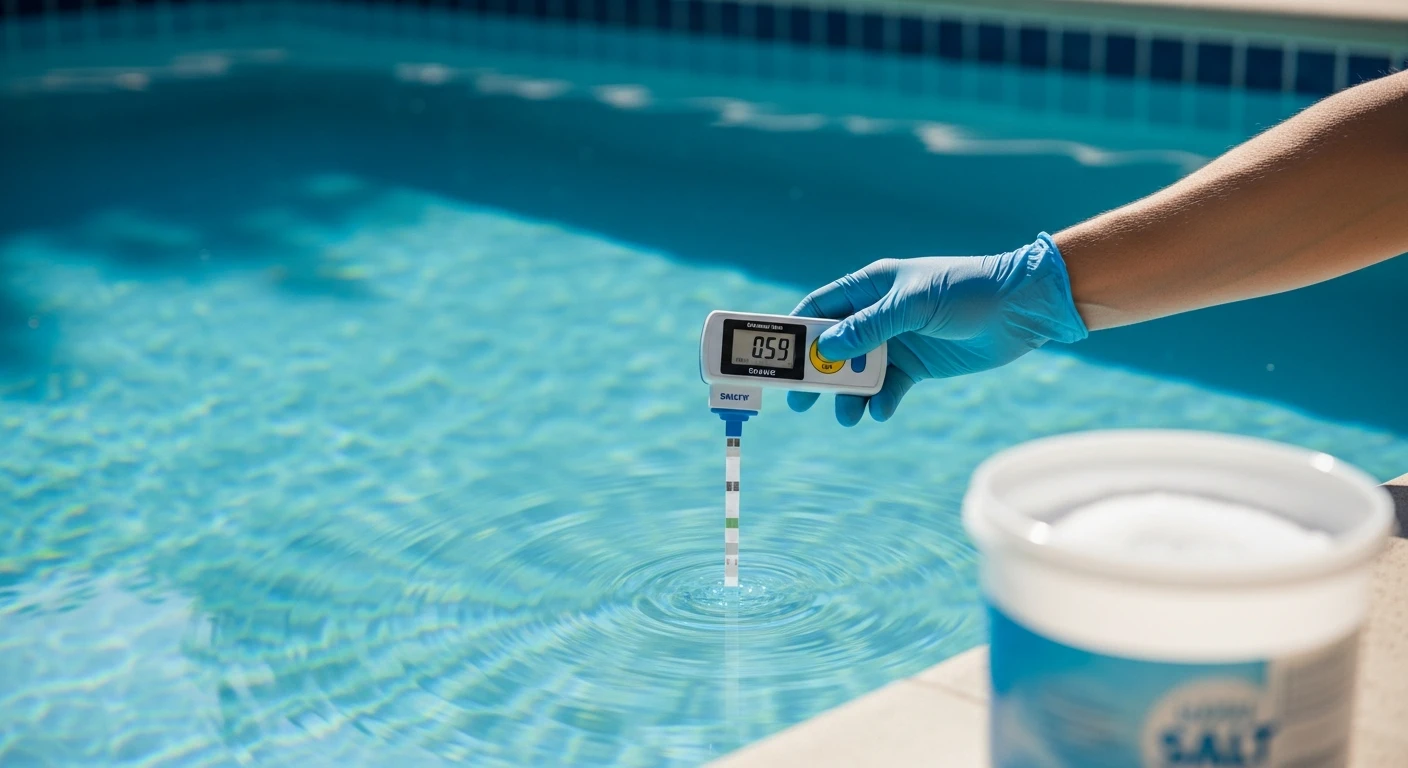
Calibrating a salt system for our environment is not a one-time setup. It requires a specific, seasonal protocol. This is the exact process I use to ensure peak efficiency and longevity.- Step 1: The Comprehensive Baseline Test. Before any adjustments, I test for seven specific factors: Free Chlorine, pH, Total Alkalinity, Calcium Hardness, CYA, Salt (PPM), and crucially, Phosphates. High phosphates, often from fertilizer runoff common in many Naples communities, act as a primary food source for algae and can consume massive amounts of chlorine.
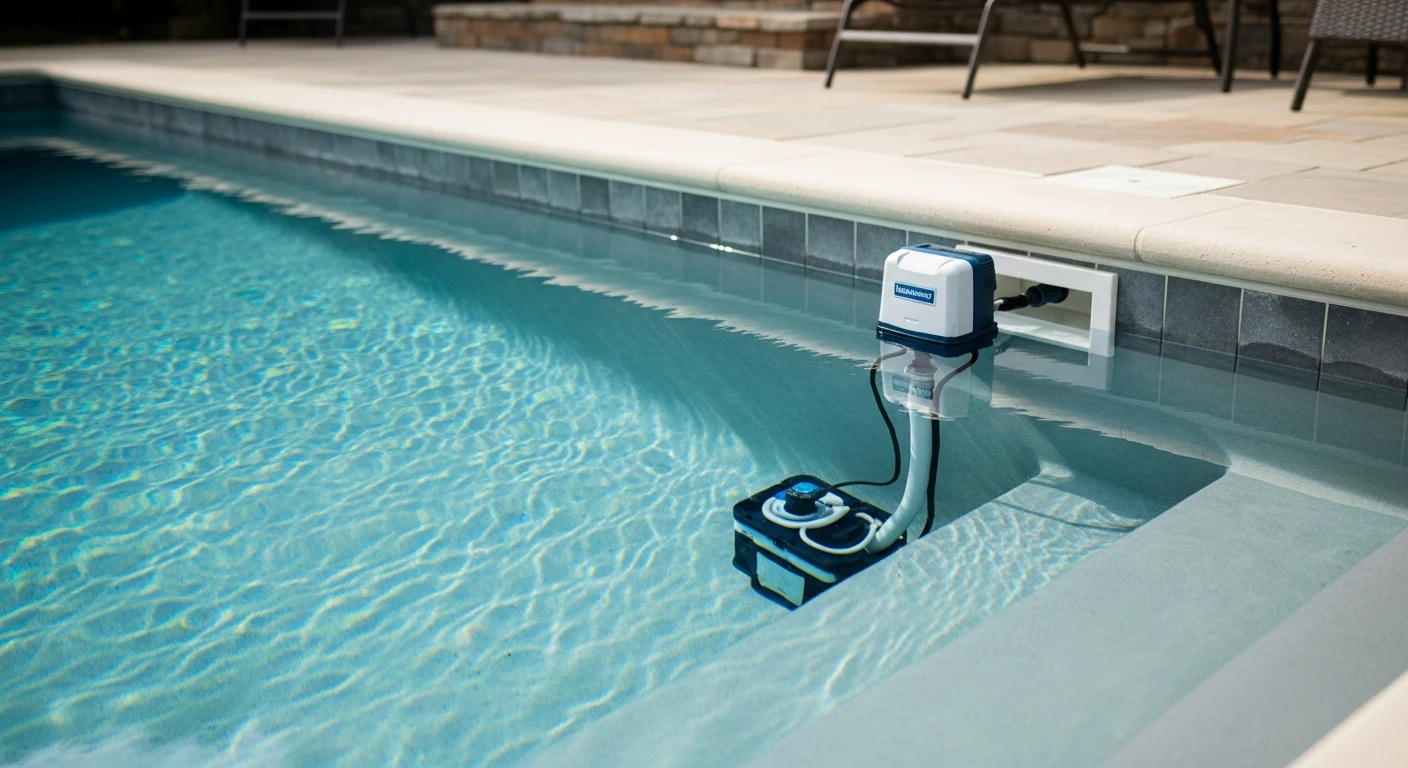
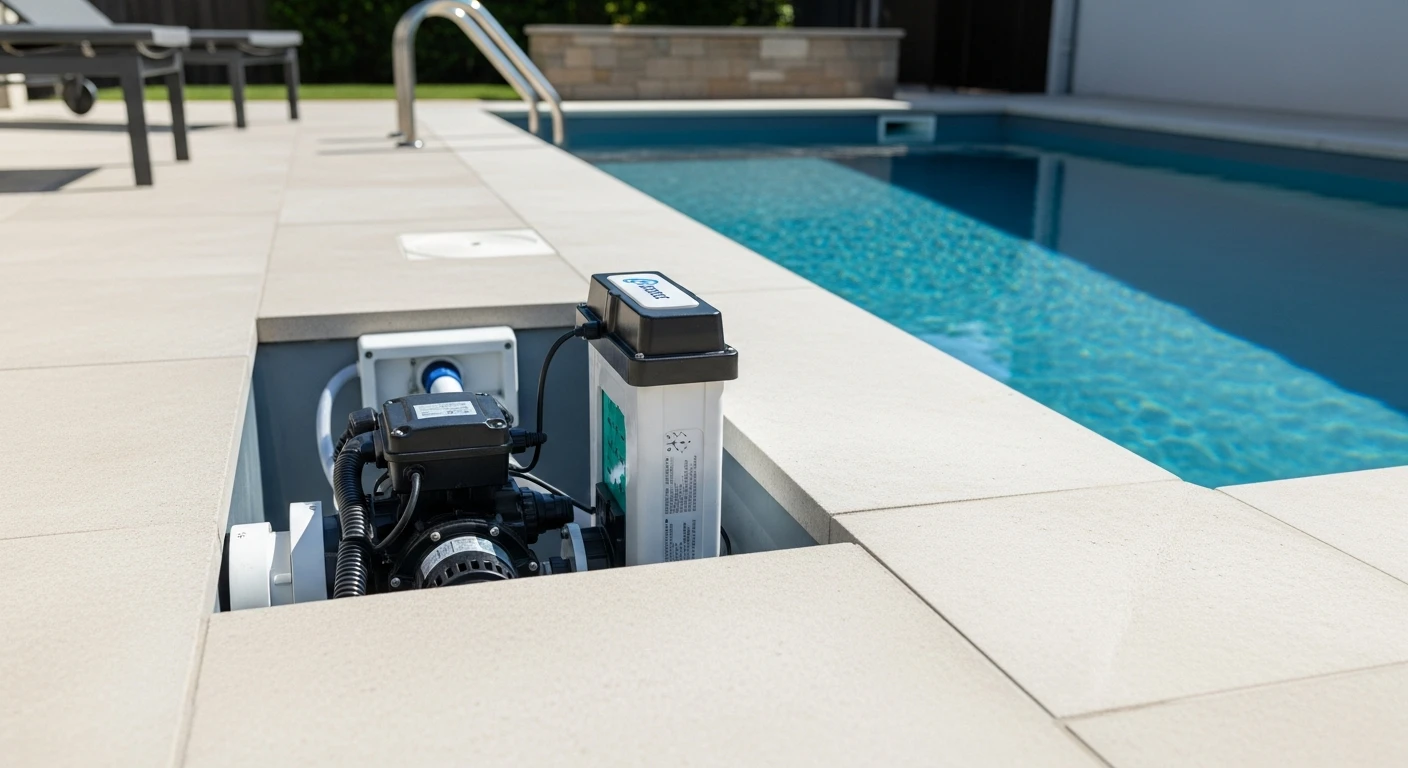
- Step 2: Physical Cell Inspection and Cleaning. I physically inspect the cell plates for calcium scaling. A common mistake is to clean the cell too frequently or with an overly strong acid solution, which erodes the precious metal coating on the plates. My rule is to clean only when there is visible white buildup, using a 1:15 solution of muriatic acid to water, and soaking for no more than 10 minutes.
- Step 3: Seasonal Output Calibration. This is my proprietary step. After balancing the water chemistry, I set the generator's output based on the season. For a typical Collier County pool, this might look like 50-60% output during summer (May-September) and dialed back to 20-30% during our milder winters (December-February). I also disable the "Super Chlorinate" or "Boost" function, as it puts extreme strain on the cell. If a pool needs shocking, it must be done with liquid chlorine (sodium hypochlorite) manually.
Fine-Tuning for Collier County’s Rainy Season and High Bather Load
The final layer of my strategy is adapting to our unique weather patterns. During the summer rainy season, a single afternoon downpour can dump 500 gallons of fresh, acidic water into a pool, drastically throwing off the pH, alkalinity, and salinity. This dilution requires immediate re-balancing. After a heavy rain, my first action is to test and adjust alkalinity to buffer the pH, then test salinity to ensure it's within the generator's operational range (typically 3000-3500 ppm). For calcium hardness, especially with the expensive tile and water features common in homes along the coast, I maintain a level of at least 250 ppm. In a saltwater pool, low calcium can lead to the water becoming aggressive and etching plaster or grout, a subtle but costly form of damage. By managing these variables proactively, the salt system remains in a state of low-stress equilibrium. Are you adjusting your salt generator's output percentage based on seasonal CYA degradation and rainfall dilution, or are you just letting it run on a fixed setting year-round?Written by

Tags
maintaining a saltwater pool
maintaining a salt pool
salt cell pool cleaning
saltwater pools maintenance
Saltwater Pool Maintenance in Collier FL FAQ
What is the difference between a saltwater pool and a traditional pool?
A saltwater pool uses a saltwater chlorine generator to sanitize the water, whereas a traditional pool uses chlorine tablets or liquid chlorine. Saltwater pools are considered more gentle on the skin and hair, and produce a softer, more natural swimming experience.
How do I maintain my saltwater pool?
Regular maintenance of your saltwater pool includes testing and adjusting the pH and chlorine levels, cleaning the filter and skimmer, and performing routine saltwater cell cleaning and replacement. Our team can provide customized maintenance plans to keep your pool in top condition.
Why do I need to replace my saltwater cell?
Your saltwater cell should be replaced every 6-12 months, depending on usage and pool conditions. Replacing the cell ensures optimal sanitizing performance and prevents damage to your pool equipment.
Can I use a saltwater pool without a saltwater chlorine generator?
No, a saltwater chlorine generator is necessary to convert salt into chlorine to sanitize your pool. Without one, you'll need to use traditional chlorine tablets or liquid chlorine, which can be harsh on the skin and hair.
Why is it important to monitor my pool's pH level?
Proper pH levels are crucial for maintaining a healthy pool. If the pH level is too high or too low, it can cause scaling, corrosion, or eye and skin irritation. Our team can help you maintain optimal pH levels for a safe and enjoyable swimming experience.
How often should I clean my pool filter?
We recommend cleaning your pool filter every 1-2 weeks, or as needed. Cleaning the filter ensures optimal water circulation and prevents clogging, which can lead to reduced sanitizing performance and increased maintenance costs.
What if I notice algae growth in my pool?
Algae growth can occur if your pool's sanitizer levels are too low or if the pool is not properly maintained. Our team can help you identify the cause and provide a customized solution to eliminate algae growth and prevent future occurrences.
Can I swim in my pool immediately after cleaning or maintenance?
It's recommended to wait at least 30 minutes to an hour after cleaning or maintenance before swimming. This allows the sanitizer to re-establish and ensures a safe and healthy swimming environment.
Do I need to test my pool water regularly?
Yes, regular water testing is crucial for maintaining a healthy pool. We recommend testing your pool water at least once a week, or as needed, to ensure optimal sanitizer levels, pH, and alkalinity.