Saltwater Pool Systems in Collier County: My Framework for Doubling Cell Lifespan in High-Humidity Climates
I see many Collier County saltwater pools suffer from premature equipment failure, and the cause is almost always a misdiagnosis of our unique coastal environment. My approach moves beyond generic installation advice to directly combat the two biggest threats to your investment here in Naples and Marco Island: aggressive galvanic corrosion from the humid, salt-laden air and accelerated calcium scaling inside the salt cell. This isn't about simply adding salt; it's a specific protocol I developed after analyzing dozens of system failures in canal-front homes and properties east of I-75.
Forget the manufacturer's one-size-fits-all manual. The intense Florida sun and year-round bather load demand a more robust strategy. The average salt cell is often undersized and improperly configured for the chlorine demand in a typical screened-in lanai pool, leading to overwork and a drastically shortened lifespan. My methodology focuses on proper sizing, electrical isolation, and precise chemical balancing to create a resilient system that thrives, rather than just survives, in our challenging climate.
My Diagnostic Protocol: The Coastal Corrosion Control Framework
The biggest mistake I consistently find in Collier County, from Port Royal to Golden Gate Estates, is treating a saltwater system installation as a simple plumbing job. It's an electrochemical project. My framework begins by assessing the entire pool equipment pad not as separate components, but as a single electrical circuit. The humid, salty air acts as an electrolyte, accelerating the corrosion of any unprotected metal components the second a salt system is introduced.
My proprietary methodology is built on three core principles tailored for our local conditions. The first is Electrolytic Mitigation, which assumes corrosion is inevitable and plans for it. The second is Demand-Based Sizing, which calculates chlorine needs based on Collier County's high UV index and warm water temperatures, not just pool volume. The third is Chemical Drift Management, which proactively addresses the consistent upward drift of pH common in saltwater pools, a primary driver of scaling that kills generator cells.
Technical Deep Dive: Sizing, Anodes, and Water Chemistry
Properly implementing my framework requires a deeper understanding of the forces at play. For Demand-Based Sizing, I always specify a chlorine generator with a maximum capacity at least 1.5x the actual pool volume. For a 25,000-gallon pool in Naples, I won't even consider a cell rated for less than 40,000 gallons. This allows the system to run at lower output percentages (around 50-60%) for shorter periods, drastically reducing wear on the cell's iridium and ruthenium coatings and extending its life by an estimated 30-40%.
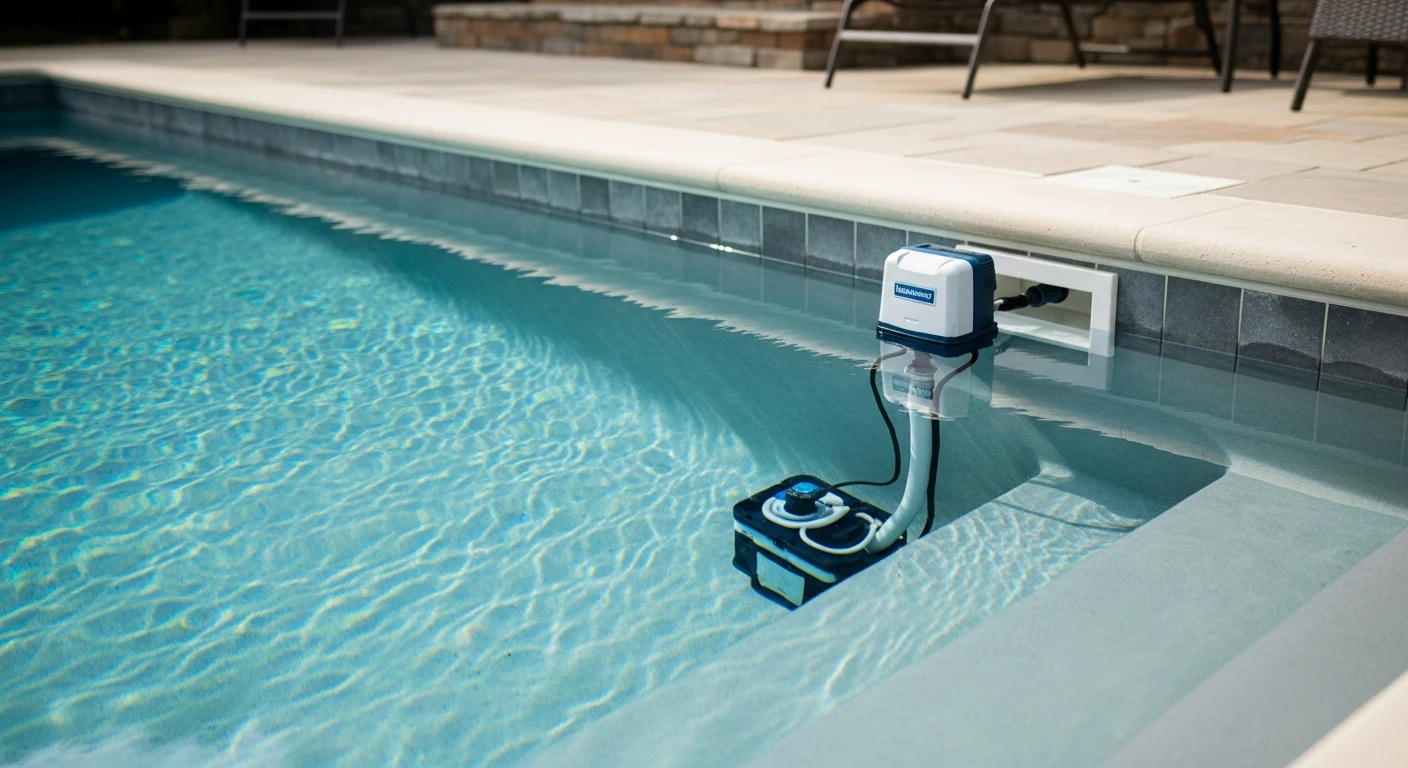
For Electrolytic Mitigation, the non-negotiable component is a sacrificial zinc anode. I install this inline, after the filter and heater. This small, inexpensive part becomes the most attractive target for stray electrical currents in the water. It corrodes instead of your expensive heater core, light niches, or handrail anchors. I once diagnosed a $4,000 heater failure in a Pelican Bay home that could have been prevented by this $60 part. It's the single most critical, and most often overlooked, element for saltwater pool longevity in our area.
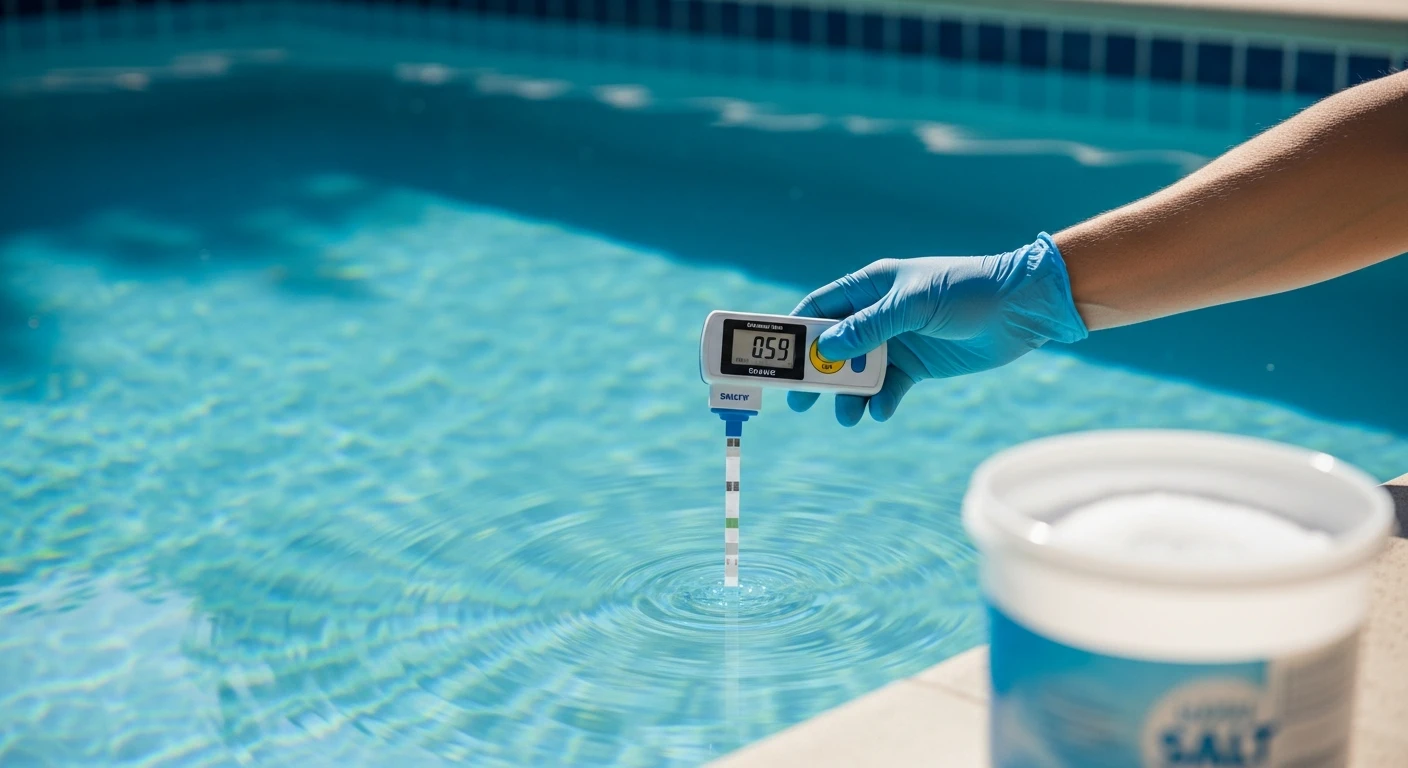
Finally, Chemical Drift Management means staying ahead of the pH rise. The byproduct of salt chlorination is sodium hydroxide, which has a high pH. I teach my clients to keep their Total Alkalinity in the 80-100 ppm range, slightly lower than traditional pools, to provide a buffer without letting the pH climb too aggressively. We also maintain Cyanuric Acid (CYA) at 60-80 ppm to shield the generated chlorine from our intense sun, reducing the system's workload.
Implementation Checklist: A Step-by-Step Execution
Putting this theory into practice requires precision. Rushing any of these steps will compromise the entire system and negate the benefits. This is the exact process I follow for every installation in Collier County.
- 1. Pre-Installation Water Balancing: Before a single pipe is cut, I balance the water to ideal levels, with a specific focus on getting the Calcium Hardness between 200-350 ppm. Starting with high calcium is a recipe for immediate cell scaling.
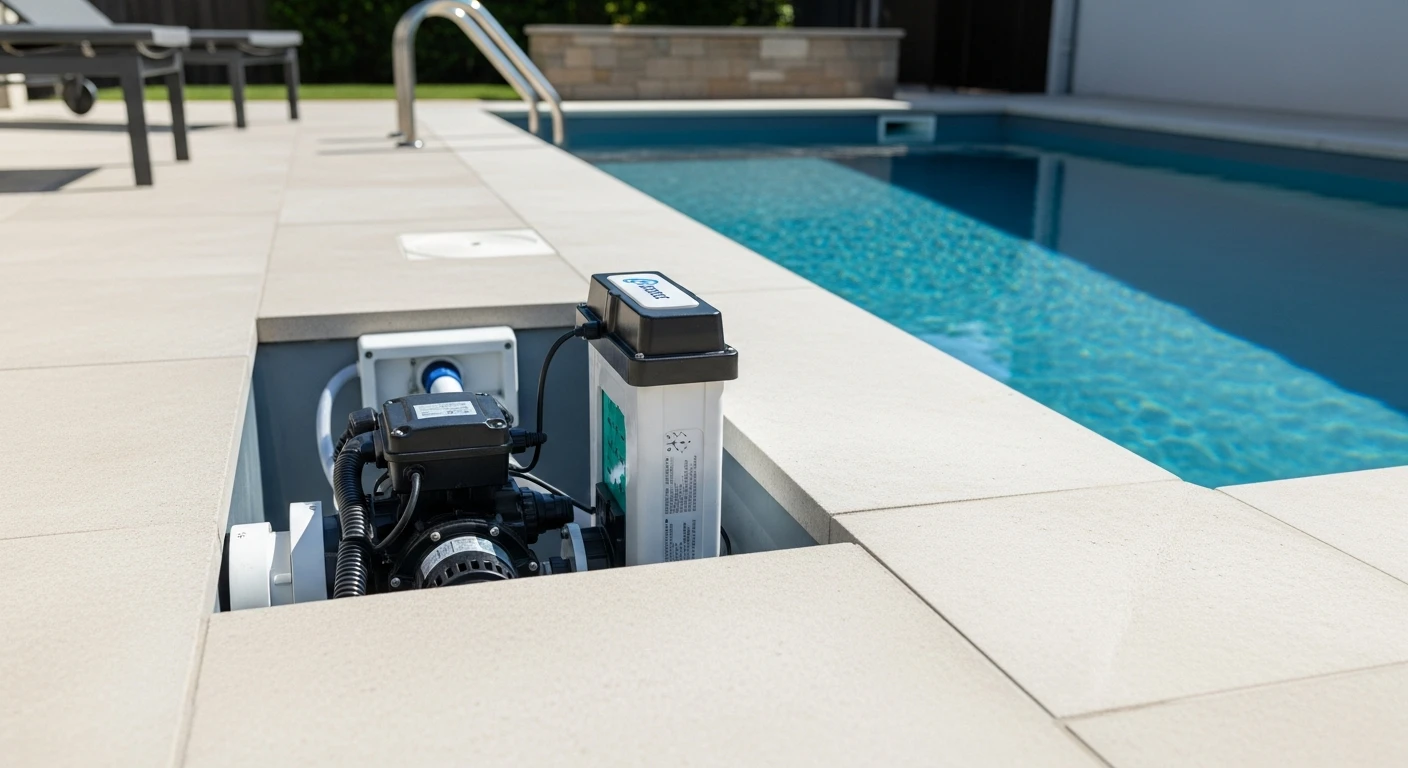
- 2. Mount the Control Unit: I select a location with adequate ventilation, away from direct afternoon sun and corrosive filter chemicals. Heat is a primary enemy of the circuit board.
- 3. Install the Salt Cell and Sacrificial Anode: The cell is plumbed into the return line, always as the last piece of equipment before the water returns to the pool. The sacrificial zinc anode is installed just before it. I ensure both are correctly oriented for water flow.
- 4. Complete Electrical Bonding: This is a critical safety and equipment protection step. The control unit and cell must be bonded to the main pool bonding wire. I've seen more equipment fried from improper bonding than from any other cause. This is not optional.
- 5. Calculate and Add Salt: Using the pool volume and the manufacturer's target salinity (usually 3200-3400 ppm), I calculate the exact amount of high-purity pool salt needed. I add it to the pool and allow it to fully dissolve for 24 hours with the pump running before turning the system on. Never dump salt directly into the skimmer.
- 6. System Activation and Calibration: Once the salt is dissolved, I power on the system and calibrate the salinity reading. I set the desired output percentage based on my oversizing calculations, starting low and adjusting upward over the next few days to dial in the perfect free chlorine level.
Precision Tuning and Quality Standards Post-Installation
My job isn't done after the system is running. The first two weeks are for fine-tuning. I closely monitor the free chlorine and pH levels daily to find the system's "sweet spot." For example, during Collier County's rainy season, heavy downpours can dilute salinity, so I check levels after major storms. Conversely, during the dry winter months, evaporation concentrates salt, which also requires monitoring.
My standard for cell cleaning is also meticulous. I see people use harsh acid solutions that strip the cell's precious metal coatings. My protocol calls for a diluted solution of 1 part muriatic acid to 15 parts water. The cell should only soak long enough for the fizzing to stop. Aggressive cleaning will shave years off a cell's life. A properly sized and balanced system should only require cleaning once or twice a year, a key performance indicator that my initial setup was successful.
Now that your system is installed and optimized, how are you actively monitoring the Langelier Saturation Index to prevent the invisible calcium scaling that will ultimately destroy your salt cell and heater core?