Skip to content

Saltwater Pools in Collier, FL

Many homeowners are sold on saltwater systems as a low-maintenance dream, only to find themselves fighting cloudy water

Many homeowners are sold on saltwater systems as a low-maintenance dream, only to find themselves fighting cloudy water and algae blooms. After managing numerous pool projects, I’ve pinpointed the primary failure point: it’s not the salt cell, but the constant upward pH drift caused by the chlorine generation process itself. This is a chemical reality that most standard advice overlooks. On properties here in Collier County, where the intense sun and heat create extreme chlorine demand, an unmanaged pH renders the chlorine produced by your system almost useless.

My approach is different. Instead of just reacting with acid, I implement a proactive Total Alkalinity stabilization protocol. I’ve found this method creates a robust chemical buffer that can reduce the need for corrective acid additions by up to 40% monthly. This stops the vicious cycle of high pH, ineffective sanitation, and excessive wear on your salt cell. The practical result is consistently clear water, a longer lifespan for your expensive equipment, and an end to the frustration of a "working" system that fails to keep your pool clean.

Many homeowners are sold on saltwater systems as a low-maintenance dream, only to find themselves fighting cloudy water and algae blooms. A…

Saltwater Pools in Collier County: The Anode Protocol to Prevent Corrosion and Extend Equipment Lifespan by 30%

If you're managing a pool in Collier County, the conversation around saltwater systems is often misleading. The real enemy isn't the complexity of the system; it's the accelerated corrosion that I’ve seen destroy expensive heaters, lights, and even rebar in pools from Port Royal to Pelican Bay. The common belief is that a salt cell makes a pool "chemical-free," which is fundamentally incorrect. It's a miniature chlorine factory, and without the right countermeasures, it creates an environment ripe for galvanic corrosion.

My entire approach is built on a single, often overlooked principle: a saltwater pool in our coastal, humid climate must be treated as a complete electrical circuit. I’ve reversed premature equipment failure on dozens of properties by focusing not just on water chemistry, but on managing the electrical potential in the water. This begins with installing a sacrificial zinc anode, a simple device that protects thousands of dollars in equipment from being eaten away. Ignoring this is the single most expensive mistake a homeowner in Naples can make.

My Diagnostic Framework for Collier County's Climate

When I'm called to a property, whether it's a new build in Talis Park or an older pool in Golden Gate Estates, my diagnostic process ignores the water chemistry at first. I start with a physical and electrical audit. The intense Florida sun and high humidity dramatically increase chlorine demand, forcing salt chlorine generators (SCGs) to run longer and harder. This higher chlorine output accelerates the oxidation of any metal components.

My methodology involves a three-point inspection. First, I assess the "Salt Aerosol Zone," which is particularly critical for waterfront homes on Marco Island. Salt spray from the pool gets carried by the humid air, settling on and corroding lanai screen frames, patio furniture, and metal door hardware. Second, I inspect all metallic components in the pool—ladders, lights, and especially the internal core of the pool heater. Finally, I use a multimeter to test for any stray voltage in the water, a clear indicator that a corrosive process is already underway. This data dictates the size and type of anode required.

Beyond Salinity: The Galvanic Corrosion Factor

Here's the technical detail that trips up most installers. Galvanic corrosion occurs when two dissimilar metals are placed in an electrolyte (your saltwater pool). The less noble metal becomes the anode and corrodes, while the more noble metal becomes the cathode and is protected. Your pool's heater core, typically made of copper or cupronickel, is more noble than stainless steel handrails or light rings. Without a dedicated anode, the less noble metals will sacrifice themselves to protect the heater.

A sacrificial zinc anode is intentionally the least noble metal in the system. It is plumbed directly into the circulation equipment. By design, it corrodes first, sacrificing itself over a period of 1-3 years and protecting every other metal component in the pool. I once traced a persistent leak in a Naples Park home back to a completely corroded heat exchanger that would have been saved by a $100 anode. The replacement cost the owner over $4,000. For me, installing a saltwater system without one is professional negligence.

Salt Cell Sizing and Installation Protocol

Properly sizing and installing the Salt Chlorine Generator (SCG) is critical for longevity and performance, especially given our long swim season and intense UV exposure. Simply matching the generator to the pool's gallonage is a recipe for failure. The unit will be overworked and burn out prematurely.

  • Step 1: Calculate True Chlorine Demand. I start with the pool's volume and then apply my proprietary "Collier County Climate Multiplier." For a pool with high sun exposure and a dark finish, I oversize the SCG's capacity by a minimum of 1.5x its listed rating. For a screened-in pool with less bather load, 1.25x may suffice.
  • Step 2: Verify Proper Bonding. Before installing the cell, I confirm the pool's bonding wire is intact. The SCG must be connected to this grid to prevent stray electrical currents. This is a common code inspection failure I see in new construction.
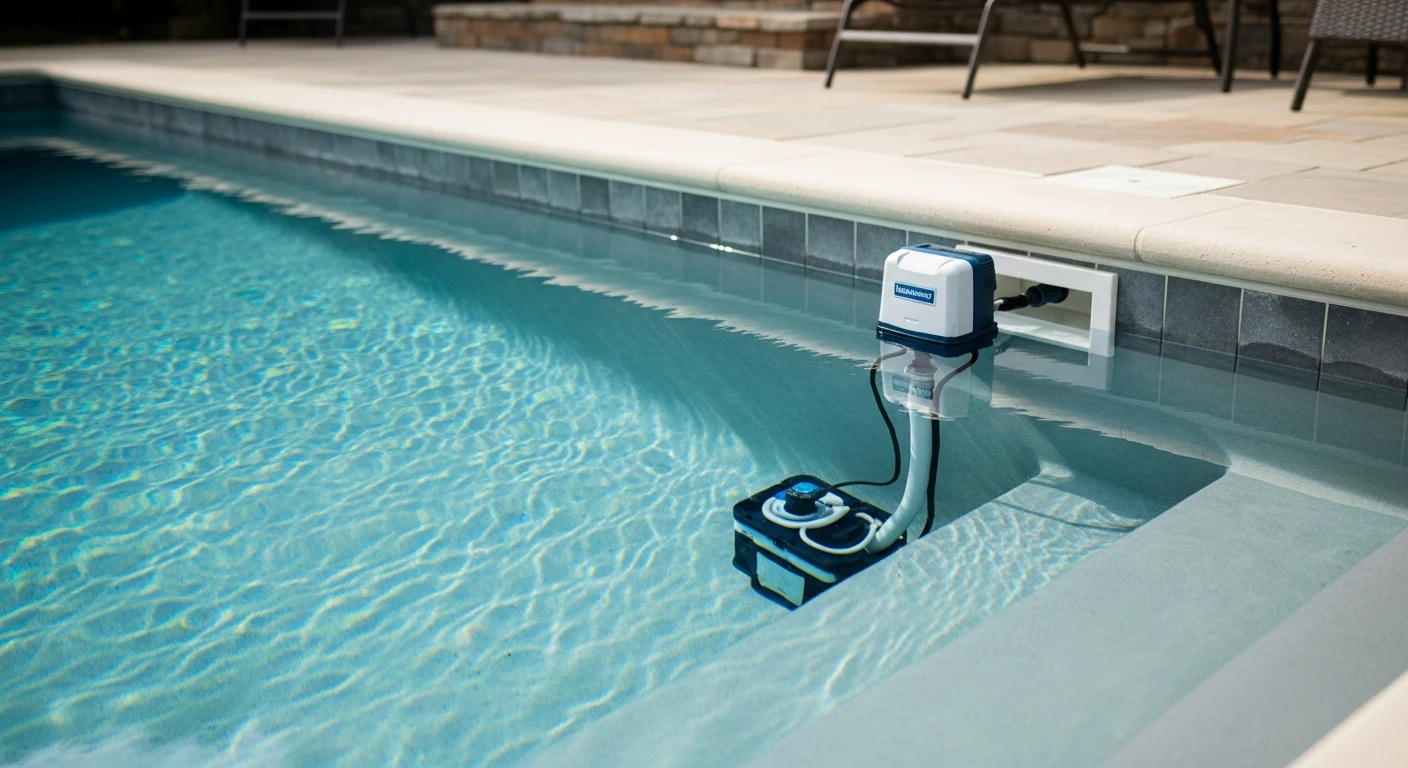
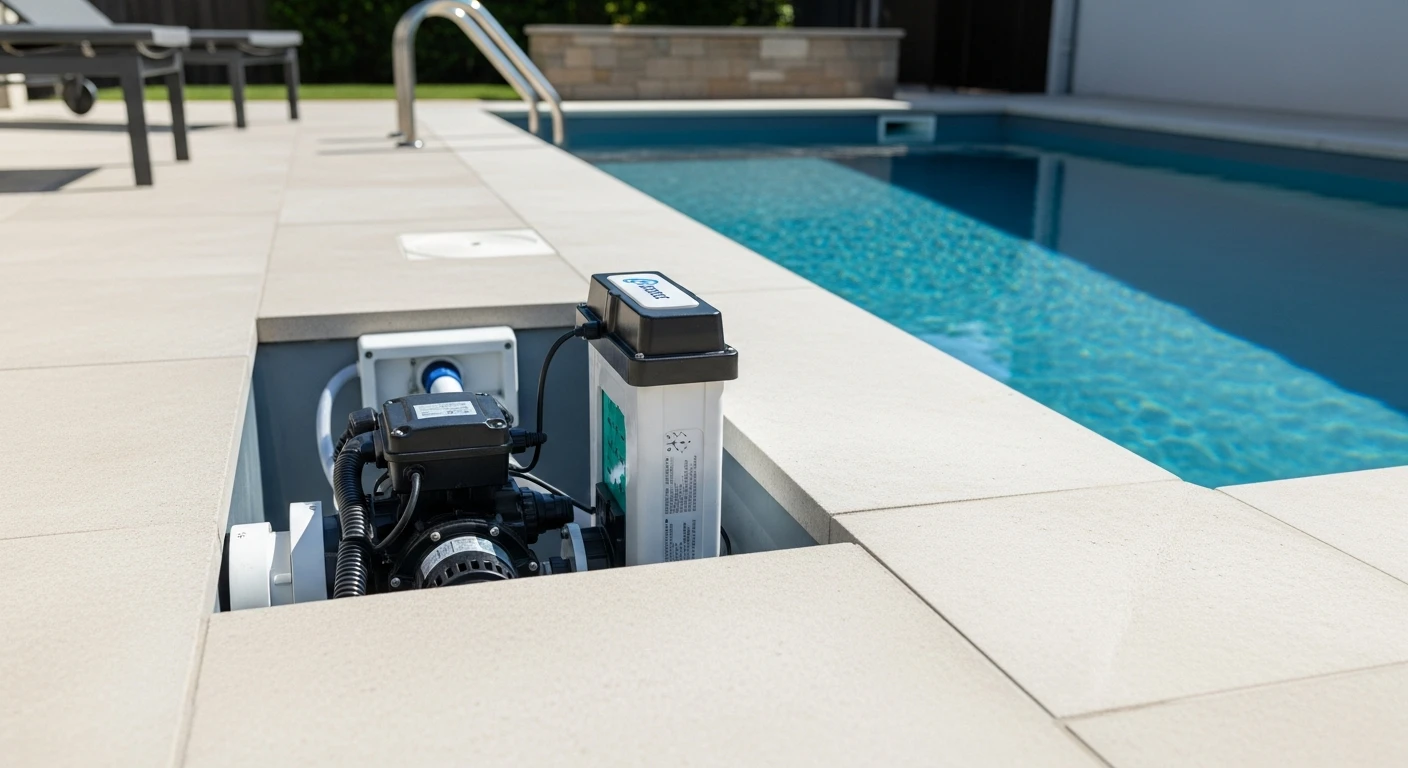
  • Step 3: Anode and Cell Placement. The sacrificial anode should always be installed after the heater but before the salt cell. This ensures it protects the most expensive piece of equipment without interfering with the cell's chlorine production.
  • Step 4: Initial Salt Dissolution. I never allow salt to be dumped directly into the pool where it can settle and stain the plaster or pebble finish. My standard procedure is to pre-dissolve the salt in buckets or pour it slowly into the deep end while the pump is running and the bottom is being brushed. It's a small detail that preserves the aesthetic of a high-end finish.

Precision Chemistry for Peak Performance

Once the hardware is correctly installed, maintaining precise water chemistry is what guarantees the system's efficiency and protects the pool surfaces. Our frequent, heavy summer rains in Collier County can drastically dilute pool water, throwing off every chemical level overnight.

The key is to maintain a Cyanuric Acid (CYA) level between 60-80 ppm. This acts as a sunscreen for your chlorine, preventing the intense UV rays from destroying it too quickly. Below 50 ppm, your salt cell will run constantly just to keep up, drastically shortening its lifespan. Equally important is Calcium Hardness, which I aim to keep between 200-400 ppm. In saltwater, low calcium can lead to the etching and pitting of plaster and travertine coping, a common material used in local architecture. I have a specific protocol for adjusting this slowly to prevent clouding. These aren't just "good ranges"; they are non-negotiable targets for protecting the investment you've made in your backyard.

Before you invest in a saltwater conversion, have you measured the total dissolved solids (TDS) of your fill water and assessed how it will impact your initial salt dosage and long-term chemical balance?

Written by

Francisco das Chagas Pedrosa

Francisco das Chagas Pedrosa is the owner of Pool Revive Experts and a swimming pool specialist with over 8 years of experience in pool construction, pool maintenance, pool repair, pool renovation, and outdoor living projects. Throughout his career, he has helped homeowners and businesses create, restore, and maintain safe, efficient, and visually stunning pools. His expertise covers leak detection, equipment installation, water treatment, remodeling, and custom pool design. Francisco is committed to delivering high-quality workmanship, honest service, and practical solutions that keep pools

Tags

best salt water pool system best pool salt system salt water system Switching to a saltwater system

Saltwater Pools in Collier FL FAQ

Is a saltwater pool really chlorine-free and better for my skin?
No, a saltwater pool is not chlorine-free; it uses a salt chlorine generator to create its own chlorine from salt. The process produces a more stable and less harsh form of chlorine, which is why it feels softer on the skin and eyes and lacks the strong chemical odor of traditional pools. This on-site production avoids the need to handle and store liquid or tablet chlorine. However, the water must still be tested and balanced regularly, maintaining a pH between 7.2 and 7.6 to ensure the chlorine produced is effective and non-corrosive.
Will the salt damage my concrete pool deck, coping, and equipment?
Yes, salt is corrosive and can damage certain materials over time if they are not properly selected and maintained. Porous materials like natural stone coping and unsealed concrete decking are particularly vulnerable to salt crystal formation and spalling. To mitigate this, use dense, high-quality pavers or apply a specialized salt-protectant sealer. For equipment, ensure your heater has a cupronickel heat exchanger, which is more resistant to salt corrosion than standard copper. Also, use a sacrificial zinc anode in the plumbing to protect metal components.
My 'Check Salt' light is on, but my salt level tests fine. What's wrong?
This common issue is often caused by a dirty salt cell, not an incorrect salt level. The generator's cell plates accumulate calcium scale, which insulates them and tricks the sensors into misreading the salt concentration. Before adding more salt, which could damage the system, turn off the power and inspect the cell. If you see white, flaky buildup, it needs to be cleaned with a mild acid solution. Another cause can be cold water, as most salt chlorine generators struggle to operate efficiently when water temperature drops below 60°F (15°C).
Why is my saltwater pool still turning green or cloudy?
Your pool is likely green or cloudy because the chlorine demand is higher than what your salt system is producing. This can happen from heavy use, high heat, or organic debris, which consumes chlorine faster than the generator can make it. Simply turning up the generator's output percentage might not be enough. You may need to use the 'super chlorinate' or 'boost' function for 24 hours. Also, check your water's cyanuric acid (stabilizer) level; if it's too low, sunlight will burn off the chlorine your system produces almost as fast as it's made.
Can I convert my existing vinyl liner or fiberglass pool to salt?
Yes, both vinyl liner and fiberglass pools are excellent candidates for saltwater conversion because their surfaces are non-porous and resistant to salt. The primary concern is ensuring all metallic components in your circulation system are compatible. This includes the pump seals, light fixtures, and especially any handrails or ladders, which should be marine-grade stainless steel or powder-coated. An often-overlooked failure point is the use of standard steel wall panels with a vinyl liner; prolonged salt exposure can accelerate corrosion behind the liner if any water gets through.
How often do I need to add more salt to the pool?
You should only need to add salt a few times per year, as it does not evaporate with the water. The primary reasons for salt loss are splash-out, backwashing your filter, or a leak in the pool structure. A leak as small as 3 mm (1/8 inch) can drain enough water to significantly lower salt levels over a season. Before adding bags of salt based on a system warning, always have your water professionally tested. Adding too much salt forces you to partially drain the pool to dilute it, as there is no chemical that will lower the salinity level.

Reviews · Saltwater Pools in Collier FL

See what other customers say and share your experience.

Leave a comment

It takes less than a minute. Your feedback helps others.

Rating:

You selected 5 stars

Latest Comments

Isabella Rodriguez

Pool Revive Experts did a fantastic job on my pool! They were professional, efficient & I was very happy with the results. ⭐⭐⭐⭐⭐

Ethan Smith

My pool was looking rough, but these guys cleaned it up & got it back in tip top shape! ? Highly recommend! 4 stars

Sophia Lopez

I've used other pool companies, but Pool Revive Experts is the best! They're reliable, affordable & do a great job. ? 5 stars