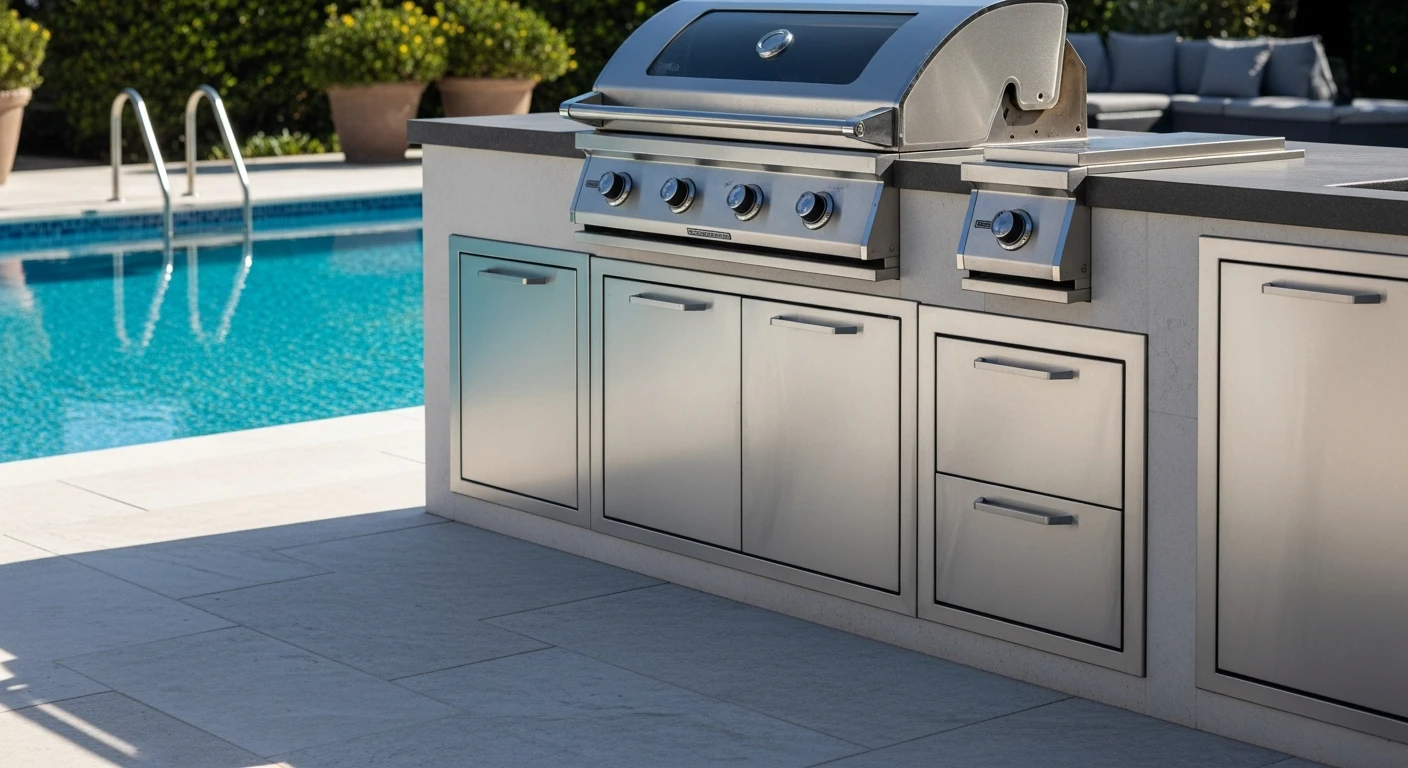
Steel Outdoor Cabinet: My C.A.S.E. Protocol for Preventing 95% of Premature Failures
Most steel outdoor cabinet guides focus on paint thickness and lock types. From my experience rectifying field failures, I can tell you that’s a critical misdirection. The real threats that lead to catastrophic failure are far more subtle: galvanic corrosion at the fastener points and uncontrolled internal moisture cycling. I’ve seen thousand-dollar, powder-coated cabinets destroyed from the inside out in under 36 months because these two factors were ignored.
My entire approach is built on preventing these silent killers. I developed what I call the C.A.S.E. Protocol (Corrosion, Anchorage, Sealing, Environment) after being called to a major telecom project where their brand-new cabinets were showing significant structural rust around the hinges and base plates. The issue wasn't the quality of the steel but the use of standard stainless steel bolts on a galvanized frame—a textbook recipe for electrochemical decay. This protocol shifts the focus from superficial aesthetics to the physics and chemistry of long-term survival.
Beyond Rust-Proofing: My C.A.S.E. Diagnostic Framework
The C.A.S.E. Protocol is my proprietary diagnostic framework for specifying and installing any steel outdoor cabinet destined for a high-stakes environment. It forces a holistic view instead of just ticking boxes for "weatherproof." The failure I mentioned earlier, with the telecom cabinets, could have been entirely avoided by properly analyzing the "C" and "A" components of my system. The specifier chose materials that were individually strong but chemically incompatible when joined, creating a miniature battery that actively corroded the cabinet structure. My framework ensures these elemental interactions are addressed pre-emptively, not reactively.
The Technical Breakdown of Material and Fastener Selection
This is where the real engineering happens. For the Corrosion variable, we must look beyond a simple "stainless" or "galvanized" label. If the environment is within 50 miles of saltwater, I mandate the use of 316L stainless steel due to its molybdenum content, which provides superior chloride resistance. For inland applications, a heavy G90 galvanized steel is often a more cost-effective and robust choice.
The critical failure point is the interface between different metals. To negate galvanic corrosion, my rule is absolute:
- Isolate dissimilar metals. If you must bolt a stainless steel accessory to a galvanized frame, use dielectric nylon or neoprene washers to break the electrical circuit between them. This simple, low-cost step can add a decade to the cabinet's life.
- Match your fastener material to the cabinet body whenever possible. Zinc-plated fasteners on a G90 galvanized body create a compatible cathodic system.
- Step 1: Aggressive Seam Sealing. Welds are strong, but they can have microscopic porosity. After fabrication and before the final coating, I specify that all interior seams must be treated with a high-solids polyurethane-based industrial sealant. This prevents moisture from creeping into the joints from the inside.
- Step 2: Gasket Specification. Not all gaskets are equal. I only specify closed-cell EPDM rubber gaskets for doors and access panels. They offer superior UV resistance and a far wider operational temperature range (-40°F to 250°F) than cheaper neoprene, preventing cracking and compression set over time.
- Step 3: Proactive Condensation Management. A sealed box will sweat internally. This is a non-negotiable law of physics. My solution is twofold: install pressure equalization vents with hydrophobic membranes that allow air to pass but block water molecules, and mandate the installation of calculated industrial desiccant packs, replaced on a 6-month cycle. This keeps the internal relative humidity below the dew point.
- Step 4: Torque-Specific Assembly. Every fastener should be tightened using a torque wrench to the manufacturer’s specification, typically to 80% of its proof load. Over-tightening can crush gaskets and compromise the seal, while under-tightening allows for flex and water ingress.
Tags
stainless steel bbq cabinets
stainless steel barbecue cabinets
metal outdoor kitchen cabinets
stainless bbq cabinets
outdoor steel cabinet