
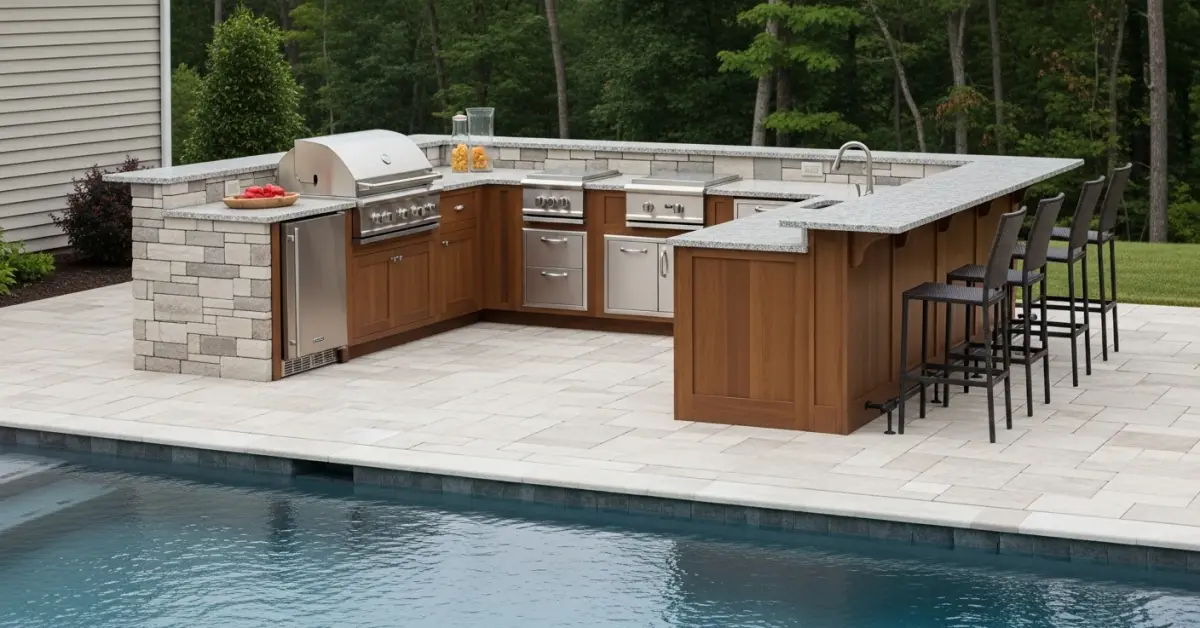
From my direct experience building high-end outdoor living spaces, a U-shaped outdoor kitchen with a bar is the most
From my direct experience building high-end outdoor living spaces, a U-shaped outdoor kitchen with a bar is the most frequently requested layout in Sarasota for a reason: it creates a self-contained entertainment zone. However, its success hinges entirely on avoiding common local pitfalls. The biggest error is underestimating the corrosive effect of our salt-laden air, which requires more than just standard 'outdoor-rated' materials. It's about specifying marine-grade components and ensuring ventilation that prevents moisture and heat buildup within the island structure, a frequent cause of premature appliance failure I see in homes west of I-75.
- Layout & Flow: The most effective U-shaped designs in Sarasota dedicate one leg to high-heat cooking (grill, side burners), the base to preparation and sink access, and the final leg exclusively to the bar with seating, creating distinct functional zones.
- Appliance Specification: 316 marine-grade stainless steel is the minimum standard for appliances and hardware to resist rust and pitting from the coastal humidity, a non-negotiable for properties on the keys or near the bay.
- Structural Material: Poured concrete or concrete block construction with a proper moisture barrier is superior to metal stud framing, which I've seen corrode and fail within 5-7 years in our climate.
- Permitting: Any U-shaped kitchen involving gas or electrical lines requires a permit from Sarasota County, a process that typically adds 4-6 weeks to the project timeline before any construction can begin.
The Critical Planning Failures I See in Sarasota Projects
The most common missteps happen long before the first block is laid. Homeowners often focus on the grill and countertops, but the foundational choices are what lead to regret. A frequent error is improper placement within the lanai, creating smoke traps or blocking primary traffic paths to the pool or backyard.
Another major issue is inadequate utility planning. Running gas lines, plumbing for a sink, and dedicated electrical circuits for a refrigerator and lighting is significantly more expensive and disruptive after a paver patio or concrete slab is already in place. We often have to cut into pristine, newly finished surfaces because the initial plan didn't account for the full scope of a functional custom outdoor bbq kitchen.
The Single Most Expensive Mistake: Ignoring Ventilation
The costliest error I consistently encounter is treating the u shaped bbq island as a solid, sealed box. Homeowners want a clean, monolithic look, but trapping heat and humidity from a high-BTU grill and Florida's ambient air creates a corrosive oven. I was called to a project in The Landings where a two-year-old, $15,000 appliance package had failed. The issue wasn't the equipment; it was the complete lack of ventilation panels in the island. The trapped heat and moisture had destroyed the electronics. Properly placed stainless steel vents are not optional; they are a critical component for appliance longevity and safety.
The Real-World Process for Building Your Outdoor Kitchen
Executing a U-shaped outdoor kitchen is a multi-stage construction project, not a simple appliance installation. The process begins with a detailed site assessment to map out utility access and ensure the layout conforms to local building codes regarding setbacks from property lines and combustible structures.
Once a design is finalized, structural drawings are submitted to Sarasota County for permitting if gas or electrical work is involved. This is a mandatory step. Following permit approval, the foundation is prepared, the block or frame structure is built, and licensed subcontractors run the utility lines. Finally, the exterior finish (stucco, stone) and countertops are installed, followed by the appliances. The entire process, from design to completion, realistically takes 8 to 12 weeks, depending heavily on permit review times.
Selection Criteria for a Sarasota Homeowner
- Licensing and Insurance: Verify the contractor holds a Florida Certified Builder's license (CBC) or a license appropriate for the scope of work, not just a handyman registration. Ask for proof of liability and worker's compensation insurance specific to construction.
- Portfolio of Coastal Work: Ask to see examples of projects completed in coastal areas like Siesta Key or Longboat Key. This demonstrates experience with materials and techniques suited for saltwater environments.
- Subcontractor Transparency: The contractor should be able to name the licensed plumbers and electricians they use. In Florida, these trades must be properly licensed for any new utility connections.
- Understanding of Lanai Integration: The contractor must know how to properly anchor structures to existing concrete slabs and flash against the home's exterior wall to prevent water intrusion, a major concern during our rainy season.
Comparing the U-Shaped Kitchen to Other Layouts
While the U-shaped layout offers the most comprehensive functionality, it's not the right fit for every space or budget. Its large footprint demands significant patio or lanai real estate, and the complexity of three-sided construction increases costs for materials and labor. Homeowners in Sarasota should weigh its benefits against more streamlined alternatives.
| Feature | U-Shaped Kitchen with Bar | L-Shaped Kitchen | Linear (Straight) Island |
|---|---|---|---|
| Footprint Requirement | Large (Typically 10' x 8' or more) | Medium | Small / Narrow |
| Social Interaction | Excellent (Creates a conversational hub) | Good (Defines a corner) | Limited (Cook faces away from guests) |
| Typical Cost in Sarasota | $25,000 - $60,000+ | $15,000 - $35,000 | $8,000 - $20,000 |
| Functionality | Highest (Dedicated cook, prep, and serve zones) | High (Good workflow) | Basic (Primarily for cooking) |
When a U-Shaped Design Is the Wrong Choice
A U-shaped kitchen is a poor choice for narrow lanais or patios where it would create a bottleneck. If the layout obstructs the main path from the house to the pool or yard, it becomes a daily frustration. I advised a client in Palmer Ranch against a u shaped outdoor kitchen because it would have left less than 36 inches of clearance, violating code and making the space feel cramped. They opted for a more efficient L-shaped design that preserved the open feel of their patio.
A Safe Hiring Checklist for Your Project
Protecting your investment starts with vetting your contractor thoroughly. The allure of a lower price can lead to unlicensed work, failed inspections, and materials that degrade quickly in our sun and salt. This checklist is based on issues I've seen derail projects across the county.
- Verify Florida License: Use the Florida Department of Business and Professional Regulation (DBPR) online portal to confirm your contractor's license is active and free of complaints.
- Review the Written Estimate: The proposal should detail specific materials, including the grade of stainless steel (304 vs. 316), countertop material, and brand/model of appliances. Vague terms like "high-quality grill" are a red flag.
- Confirm They Handle Permitting: The contractor, not the homeowner, should be responsible for pulling all necessary permits. This places liability for code compliance on them.
- Ask About Hurricane Code Compliance: Any permanent structure must meet local wind load requirements. Discuss how the kitchen will be anchored and constructed to withstand hurricane-force winds.
- Check for a Lien Waiver Clause: Ensure your contract specifies that you will receive a "Release of Lien" from all subcontractors and suppliers upon final payment. This protects you from claims if your general contractor fails to pay them.
Decisions That Define a Successful Outcome
The difference between a functional outdoor oasis and a source of constant maintenance comes down to a few key decisions made at the design stage. The single most important factor I've observed is prioritizing all-weather durability over short-term aesthetic trends. Materials like marine-grade polymers (e.g., StarBoard) for cabinetry and non-porous countertops like granite or Dekton will outperform and outlast trendy but less durable options.
Another critical decision is the appliance selection. Investing in a brand known for performance and warranty support in coastal regions provides peace of mind. While the initial cost is higher, you avoid the frustration and expense of replacing a corroded grill or a faulty outdoor refrigerator in just a few years. It's about total cost of ownership, not just the upfront price.
The Moment Most Homeowners Get It Wrong
The critical mistake often happens during the countertop selection. A homeowner falls in love with a beautiful, porous stone like marble or a dark-colored quartz. In the intense Sarasota sun, dark countertops can become dangerously hot, and porous materials will stain easily from spills, sunscreen, and leaf tannins. The best decision is to choose a light-colored, dense natural stone like granite or a high-performance sintered stone that reflects heat and resists staining. This practical choice has a far greater impact on daily usability than almost any other aesthetic decision.
Practical Answers About Operating in Sarasota
Navigating the local requirements for a project of this scale is often the most confusing part for homeowners. The rules are in place for safety and structural integrity, and understanding them is key to a smooth process. Here are answers to the most common operational questions I field.
What triggers the need for a permit from Sarasota County?
A permit is not typically required for a simple, pre-fabricated grill island with no connected utilities. However, a custom, permanently installed outdoor kitchen u shape requires a permit if it includes any of the following: a natural gas or propane line hard-piped to the structure, any 120V electrical circuit for outlets or appliances, or any plumbing for a sink or drain. Essentially, any work that touches licensed trades mandates a full permit application and inspections.
How do HOA architectural reviews in communities like Lakewood Ranch affect my design?
Most master-planned communities in the Sarasota area have strict architectural review committees (ARCs). For an outdoor kitchen, they will review the design, materials, colors, and placement to ensure it aligns with the community's aesthetic standards. You must submit your full plans, including material samples for the facade (stone, stucco) and countertop, for ARC approval before applying for a county permit. Failure to do so can result in fines and a stop-work order.
What are the specific code requirements for ventilation?
The Florida Building Code has specific requirements for ventilation in any enclosure containing a gas appliance. This is not a contractor preference; it is a legal safety requirement. The code mandates a minimum amount of free air ventilation, typically achieved through installed vents on opposite sides of the island, to prevent the buildup of gas in case of a leak. Your contractor must demonstrate compliance with these codes during the final inspection to close out the permit.



