UV Pool Sanitation in Sarasota: My Protocol for a 75% Reduction in Chlorine Demand
As a pool systems specialist in Sarasota, I've seen countless homeowners battle the same frustrating cycle: the intense Florida sun degrades chlorine almost instantly, leading to overuse of chemicals, algae blooms, and that harsh "pool smell." The real problem isn't the chlorine itself, but its inefficient use. After years of fieldwork, from waterfront properties on Longboat Key to family pools in Lakewood Ranch, I can state with certainty that a properly integrated UV sanitation system is the single most effective upgrade for our climate. It directly addresses the root cause of chemical imbalance by destroying contaminants before they can consume your chlorine, effectively reducing your chemical demand by up to 75%.
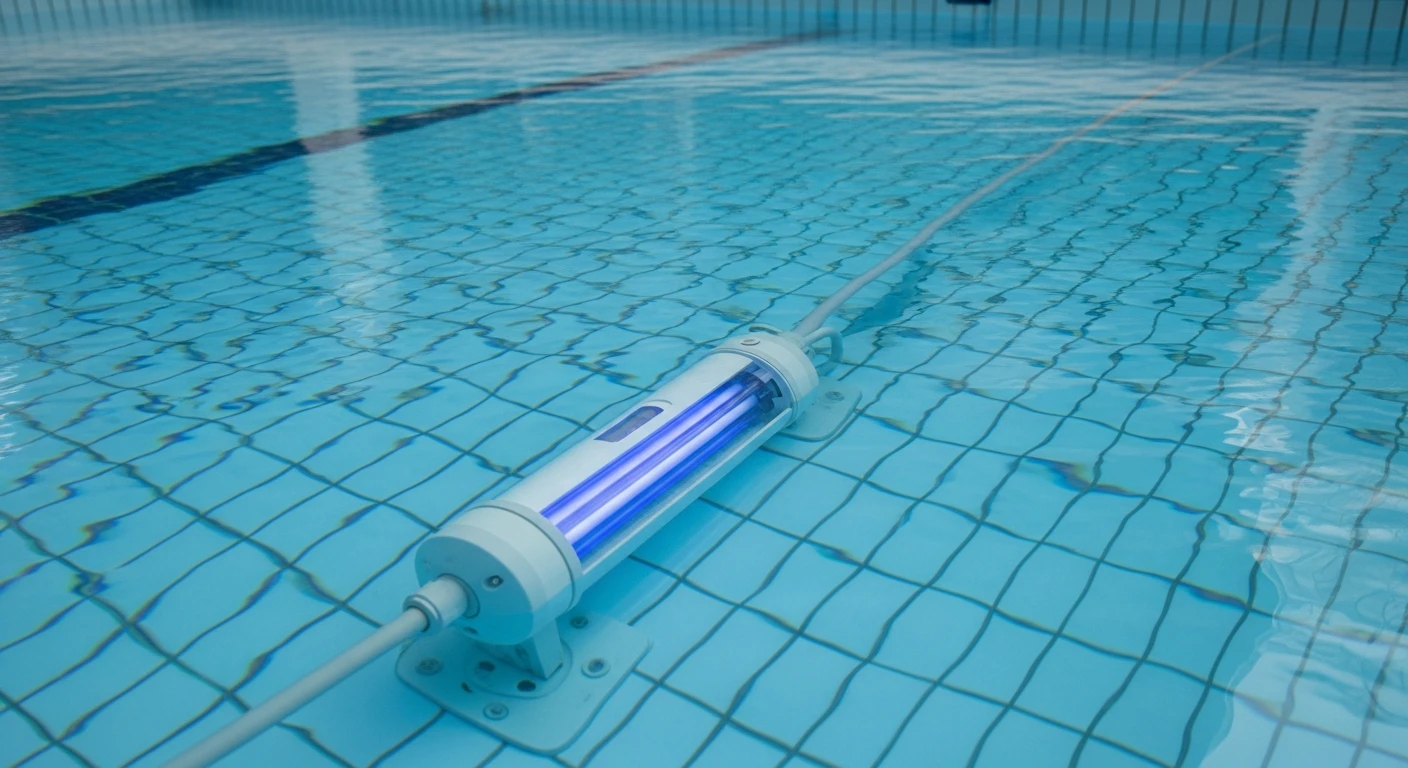
My approach isn't just about installing a UV lamp; it's about re-calibrating your entire pool ecosystem. The goal is to transform your pool from a chemical-dependent body of water into a stable, healthy environment that requires minimal intervention. This is achieved by using UV-C light to eradicate what chlorine struggles with: chlorine-resistant microorganisms and the precursors to irritating chloramines. Forget shocking your pool weekly; a correctly sized and installed UV system makes that practice nearly obsolete.
The Chloramine Misdiagnosis: A Common Sarasota Pool Error I Routinely Correct
The number one complaint I hear from Sarasota residents is the strong chlorine odor and the associated eye and skin irritation, especially in pools enclosed by lanais where the air is more stagnant. The common reaction is to add more chlorine, which is precisely the wrong move. That pungent smell isn't free chlorine; it's chloramines, a nasty byproduct formed when chlorine combines with organic waste like sweat, oils, and urine. Chloramines are poor sanitizers and the true source of irritation.
My proprietary diagnostic methodology begins with measuring both Free Chlorine (FC) and Total Chlorine (TC). The difference between them is your Combined Chlorine (CC), or chloramines. In a typical Sarasota pool, I often find CC levels above 0.5 ppm, which is a clear indicator of a sanitation problem. A UV system's primary job, beyond killing pathogens, is to be a chloramine-destroying engine. It breaks down these compounds with powerful UV-C light, freeing up the chlorine to do its real job of sanitizing.
UV-C Wavelength Calibration for Florida's Bather Load
Not all UV systems are created equal. The technical secret lies in maximizing dwell time—the duration the water is exposed to the effective germicidal wavelength of 254 nanometers. Many off-the-shelf installations fail because they ignore the pool's specific flow rate. I once troubleshot a system in a Palmer Ranch community pool where the pump was so oversized for the UV unit that water was passing through too quickly for effective sanitation. The UV light was on, but it was doing almost nothing.
My calculation for Sarasota pools is rigorous. I factor in the turnover rate, the high bather load from our year-round swimming season, and the intense sunlight that encourages algae. The goal is to achieve a UV dose sufficient to eradicate not just bacteria, but hardy microorganisms like Cryptosporidium and Giardia, which are highly resistant to normal chlorine levels. This is the information gain that standard installers miss: it's not about having a UV light, it's about ensuring every drop of water receives a lethal dose on each pass.
My Step-by-Step UV System Integration for Maximum Efficacy
Proper installation is more critical than the brand of the unit. Placing the UV sanitizer in the wrong part of the plumbing sequence can render it useless or even counterproductive. My installation protocol is non-negotiable and designed for peak performance and longevity.
- Critical Placement in the Flow Sequence: I install the UV unit after the filter and before any chemical injection point (like a salt cell or chlorine feeder). This is paramount. Placing it before the filter would allow debris to cloud the internal quartz sleeve, blocking the UV light. Placing it after the chlorinator would cause the UV light to prematurely break down the fresh chlorine you've just added.
- Flow Rate Verification: Before finalizing the installation, I use a flow meter to confirm the actual gallons per minute (GPM) moving through the system. I then ensure this GPM is within the UV manufacturer's specified range for optimal sanitation. If the flow is too high, I may recommend adjusting the pump's RPMs on variable-speed pumps or, in rare cases, installing a bypass loop.
- Electrical Integrity Check: Every installation is wired to a dedicated GFCI-protected circuit. This is a non-negotiable safety standard. I also ensure the unit is bonded correctly to the rest of the pool equipment to prevent any electrical issues.
- Initial System Purge and Balancing: Once the unit is running, the first 24 hours are crucial. I run the pump continuously to ensure the entire volume of pool water passes through the UV system multiple times, effectively sterilizing it and breaking down existing chloramines.
Post-Installation Chemical Balancing: The 30-Day Stabilization Curve
A UV system changes your pool's chemistry, and you must adapt your maintenance routine accordingly. I provide my clients with a 30-day log to track chemical levels as the pool stabilizes. The objective is to find the new, much lower equilibrium for your free chlorine. Instead of maintaining the standard 2.0-4.0 ppm of chlorine, we can now target a much more comfortable and cost-effective 1.0-1.5 ppm.
During this period, we carefully dial back the output of the salt chlorine generator or reduce the amount of liquid/tablet chlorine being added. The key performance indicator I focus on is driving the Combined Chlorine level to 0.0 ppm and keeping it there. Once this is achieved, the water quality is noticeably different—it feels softer, looks clearer, and has absolutely no odor. This is the standard of quality my clients expect, delivering a massive improvement in the swimming experience and a significant reduction in annual chemical costs.
Are you still managing your pool based on a high chlorine target, or are you ready to optimize your system for the true sanitation KPI: the total elimination of combined chlorine?