Water Treatment Protocols: Achieving a 99.8% Biofilm Reduction and 30% OPEX Cut
Over my 15 years in industrial water treatment, the most persistent and costly mistake I see is the reactive approach to microbiological control. Teams wait for a slime outbreak or a positive plate count, then flood the system with expensive biocides. This is not treatment; it's a recurring emergency. My entire methodology is built on a single principle: you don't fight microbial blooms, you prevent the environment that allows them to exist. This proactive stance, focusing on biofilm prevention rather than planktonic bacteria kills, has consistently reduced operational expenditures by up to 30% and extended equipment lifecycle by 25% in systems I've managed.
The key is shifting from lagging indicators, like colony-forming units (CFUs), to leading indicators of microbial stress and activity. A clean water sample doesn't mean you don't have a massive biofilm problem silently constricting heat exchangers and corroding pipework. I learned this the hard way on a large-scale cooling tower project where the water chemistry looked perfect on paper, yet heat transfer efficiency had dropped by 18%. The culprit was a sessile bacterial colony that standard water tests completely missed.
My Bio-Static Equilibrium™ Diagnostic Framework
Conventional water treatment often feels like guesswork. You add a biocide and hope for the best. My proprietary Bio-Static Equilibrium™ framework eliminates that uncertainty. It's a diagnostic method I developed to create a detailed, real-time map of a system's microbiological health. The goal isn't just to kill what's there, but to understand the growth potential and hold the system in a state where biofilm simply cannot establish a foothold. I once inherited a system where the previous operators were dosing a high-cost non-oxidizing biocide twice a week, yet still fighting constant biofouling. My initial analysis revealed that their slug dose was being consumed by organic matter in the water within three hours, leaving the system unprotected for the other 165 hours of the week. The problem wasn't the chemical; it was the strategy.
The Three Pillars of Bio-Static Analysis
My framework is built on three core data streams that, when correlated, provide a complete picture of microbiological activity. Relying on just one is a recipe for failure.
- ATP (Adenosine Triphosphate) Monitoring: This is the cornerstone. Unlike plate counts which can take days and only measure a fraction of viable bacteria, ATP testing gives me an immediate, quantitative measure of all living microorganisms—bacteria, algae, fungi—in seconds. I use it to establish a clean system baseline and detect any deviation from that baseline within minutes, not days.
- Oxidation-Reduction Potential (ORP) Tracking: ORP is my early-warning system. A stable ORP indicates a controlled environment. When microbial populations begin to proliferate, their metabolic processes create a reducing environment, causing a measurable drop in the system's ORP. I've found that a sustained drop of 25-50 mV is a reliable precursor to a bio-event, often appearing 24-48 hours before ATP levels spike.
- Corrosion Coupon & Biofilm Scanner Analysis: This is my physical proof. I install specialized corrosion coupons and digital biofilm sensors in low-flow areas of the system. While ATP and ORP measure the water column, these tools tell me exactly what's happening on the surfaces where damage occurs. This provides the crucial data on sessile bacteria, the true enemy in any industrial water system.
- Phase 1: Initial System Sterilization & Baselining: I start with a full system clean and a hyper-chlorination or appropriate oxidizing biocide flush to remove existing biofilm. Immediately after, I record the initial ATP and ORP baseline values. This number is now our "golden standard" for a clean system.
- Phase 2: Calibrated Maintenance Dosing: Based on the system's holding time index and water chemistry, I initiate a low-level, continuous injection of a stable oxidizing biocide (like chlorine dioxide or stabilized bromine) to maintain the baseline ORP. The goal is to create an environment that is inhospitable to microbial settlement from the start.
- Phase 3: ATP-Triggered Shock Dosing: The system is monitored in real-time. If the ATP reading increases by a predetermined threshold (e.g., 150% of baseline), it triggers an automated, high-concentration shock dose of a fast-acting, non-oxidizing biocide. This targeted strike eradicates the burgeoning population before it can form a resilient biofilm, using a fraction of the chemical that a reactive treatment would require.
- Phase 4: Data-Driven Feedback Loop: Every data point—from ORP fluctuations to ATP spikes and coupon analysis results—is logged. This data allows me to refine the dosing strategy over time, often identifying operational triggers (like a process fluid leak) that correlate with microbial growth, allowing for even more predictive interventions.
Tags
ion exchange water filter
water treatment
uv water filtration system
water purifying systems
Water Treatment FAQ
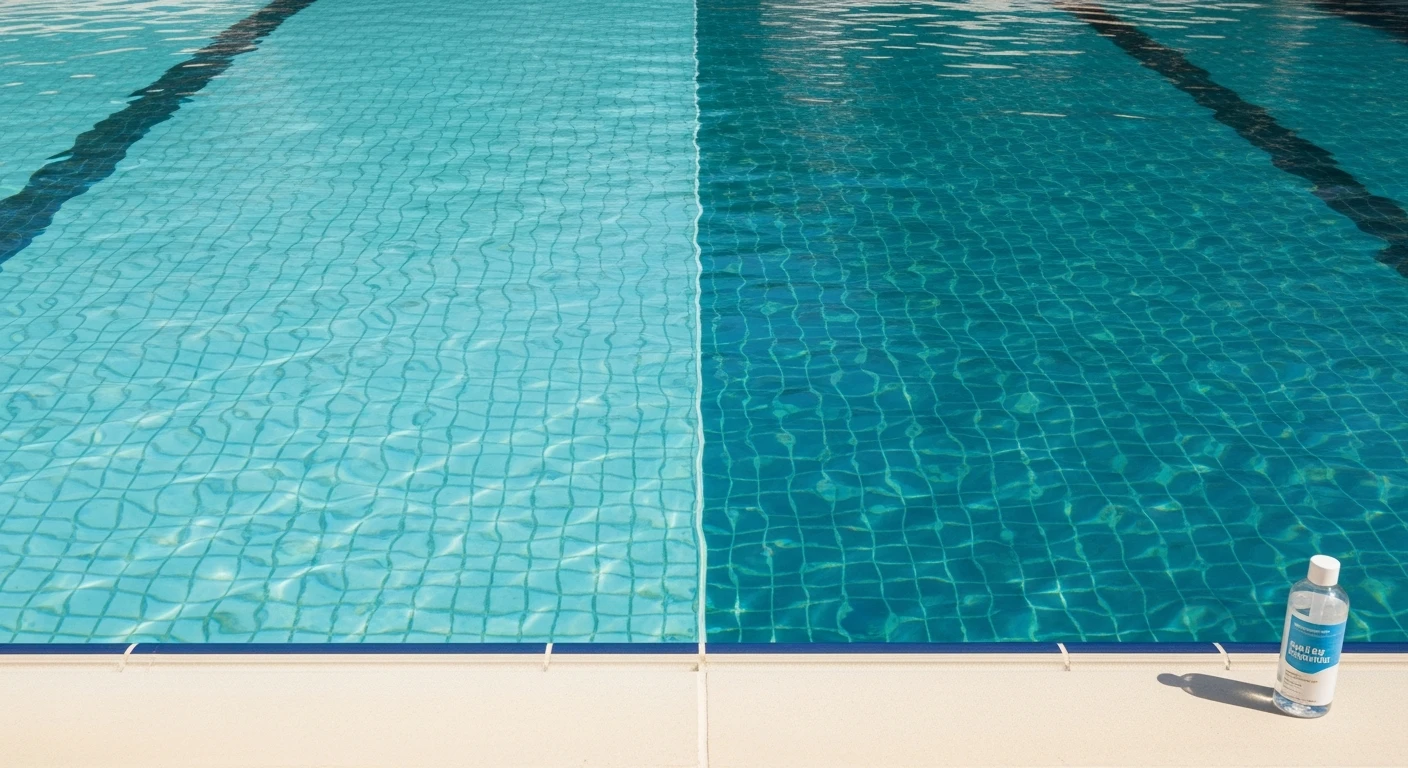
Why is my pool water cloudy even though the chlorine level is correct?
Cloudy water with normal chlorine often points to an issue with your filtration system or imbalanced water chemistry beyond just sanitizers. Your filter might be clogged or need backwashing, but a common culprit is high Total Dissolved Solids (TDS), which makes chemicals less effective. Another possibility is an early-stage algae bloom that chlorine alone can't manage without a clarifier or flocculant. A non-obvious cause is a failing pump motor impeller, which reduces water circulation even if the motor sounds like it's running normally, preventing proper filtration.
My kids complain about burning eyes. Do I have too much chlorine in the pool?
Eye and skin irritation is almost always caused by an incorrect pH level, not high chlorine. The ideal pH range for swimmer comfort and chemical efficiency is between 7.2 and 7.6, which closely matches the pH of human tears. When pH is too low (acidic) or too high (alkaline), chlorine becomes less effective and forms irritating compounds called chloramines. These chloramines, not the chlorine itself, are what produce the strong “chlorine” smell and cause discomfort. Balancing your pH is the first and most critical step to solve this.
What are these dark stains on my pool walls that won't brush off?
Dark, stubborn stains that resist brushing are a classic sign of black algae, which is notoriously difficult to remove. Unlike green algae that floats, this type grows roots that penetrate into your pool's plaster or grout, requiring aggressive treatment. Simply shocking the pool will not work. The process involves scrubbing the heads of the algae with a wire brush to break their protective layer, followed by direct application of a granular algaecide or chlorine pucks. In severe cases, the only permanent solution is an acid wash or even replastering the pool surface.
How often should I really be shocking my pool, and what's the right way to do it?
Shock your pool approximately every one to two weeks during peak season, or after a heavy bather load, a major rainstorm, or a heatwave. The key mistake owners make is adding the shock during the day; sunlight degrades unstabilized chlorine rapidly, wasting most of its sanitizing power. Always add pool shock at dusk or night and let the pump run for at least eight hours to circulate it fully. This ensures the chlorine has maximum contact time to eliminate contaminants without being destroyed by the sun's ultraviolet rays.
Is a saltwater pool easier to maintain than a traditional chlorine pool?
A saltwater pool is not chlorine-free; it uses a salt chlorine generator to produce its own chlorine from salt, providing a more consistent sanitizer level. This automation reduces the daily task of adding chlorine but does not eliminate other maintenance. You still must regularly test and balance pH, alkalinity, and stabilizer levels. Salt cells also require periodic cleaning to remove scale buildup and eventually need replacement, which can be a significant expense. While often more pleasant for swimmers, they introduce different, not fewer, maintenance tasks.
I keep adding chemicals, but my water balance is always off. What am I missing?
If you are constantly fighting to balance your water, the likely issue is low Total Alkalinity (TA), which acts as a buffer to prevent wild pH swings. Without a stable TA level, typically between 80-120 parts per million, any chemical addition or even rainwater can cause your pH to crash or spike dramatically. Home test strips often give a poor reading for TA. Before adding more pH adjusters or chlorine, get your TA professionally tested and properly adjusted. This single step stabilizes the water chemistry and makes all your other chemical treatments far more effective and predictable.