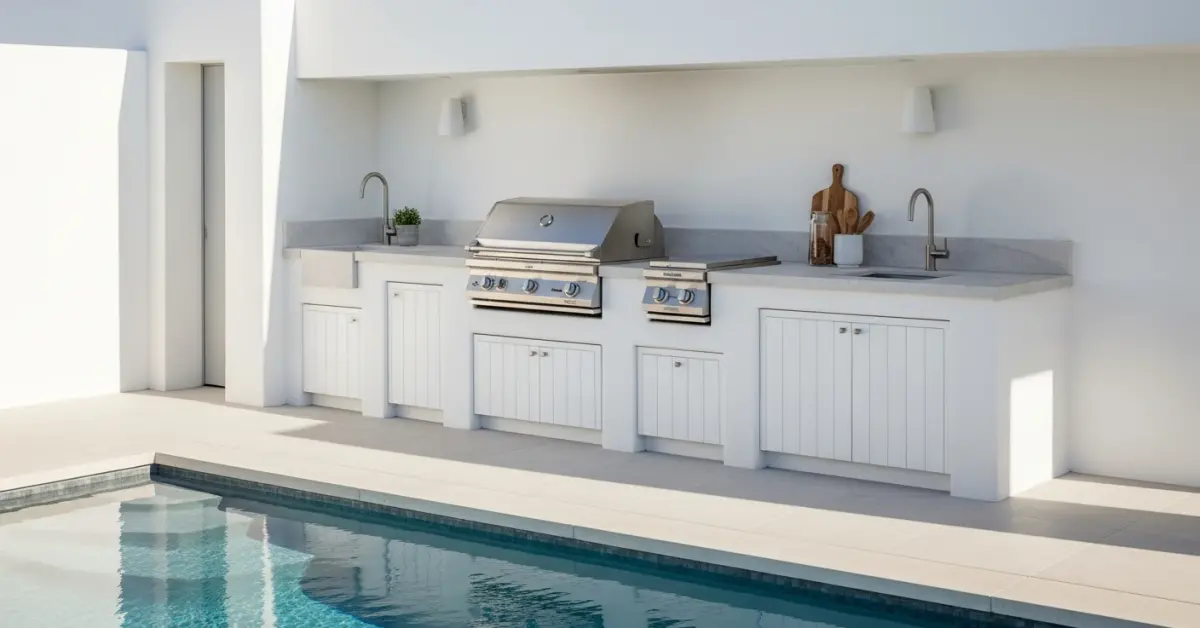
White Outdoor Kitchens in Manatee County: My Protocol for a 15-Year Stain and Humidity-Proof Finish
I've seen it too many times in Manatee County: a stunning, brilliant white outdoor kitchen installed in a beautiful Lakewood Ranch home, only to see it yellowed and stained within two years. The culprit isn't poor cleaning; it's a fundamental misunderstanding of our unique coastal environment. The intense Florida sun, combined with the high humidity and salt air, creates a trifecta of corrosive elements that standard materials simply cannot withstand. My entire approach is built on preventing this degradation before it starts. It’s not about using "weather-resistant" materials; it's about specifying a precise matrix of materials and sealing techniques designed specifically for the high-UV, high-salinity conditions from Anna Maria Island to Parrish. This methodology focuses on achieving a finish that I can confidently say will resist yellowing, mildew, and corrosion for over a decade.The Core Failure Point: Why Standard White Finishes Degrade in Coastal Florida
Early in my career, I was called to consult on a project in a waterfront home near the Braden River. The owner had spent a fortune on a white outdoor kitchen that, after just 18 months, looked blotchy and aged. The powder-coated steel cabinets were showing faint rust blooms beneath the finish, and the white granite countertops had developed a persistent yellow haze. This was my wake-up call. I realized the industry standard for "outdoor-rated" was failing Manatee County homeowners. The primary error is a material specification that ignores two critical local factors: UV radiation intensity and chloride exposure from the salt air. Generic powder coatings will micro-fracture under constant thermal expansion and contraction, allowing humidity and salt to penetrate to the metal underneath. Likewise, many natural stones and lower-grade quartz contain iron deposits that oxidize (rust) when exposed to moisture, causing that irreversible yellowing from within. My proprietary methodology directly counters these failure points from the ground up.The 'Coastal Armor' Material Matrix: A Breakdown of My Selections
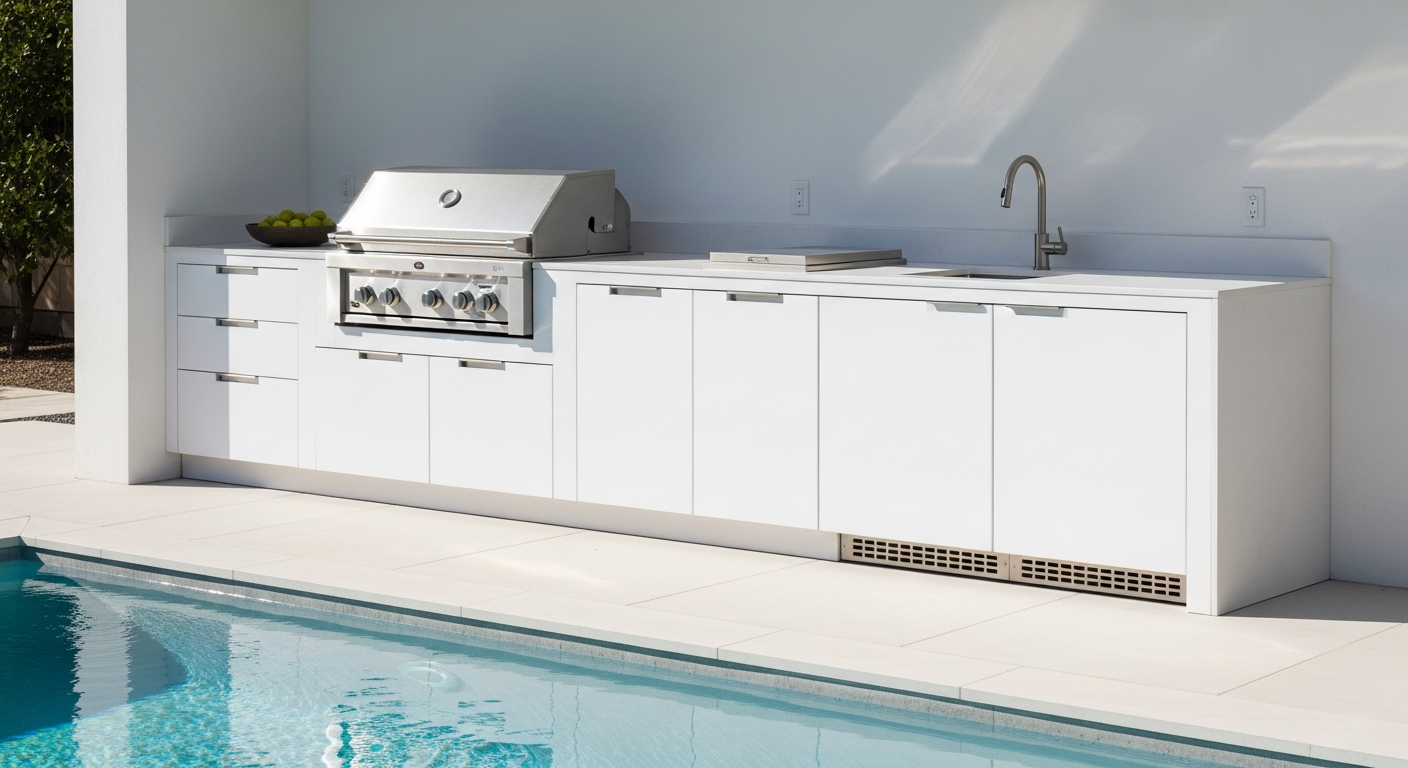
My system isn't about a single magic product, but a synergistic combination of materials where each component addresses a specific environmental threat. This is a non-negotiable checklist I've developed after years of field testing and observing failures. * Cabinetry Core: I exclusively use marine-grade high-density polyethylene (HDPE). Unlike metal, it is dimensionally stable and impervious to water and salt. There is zero risk of rust because there is no metal to rust. The color is integrated throughout the material, so a scratch won't reveal a different color or a vulnerable core. * Countertop Specification: I specify a non-porous, UV-stabilized engineered stone. The key here is the low iron content and the use of an advanced polymer resin binder that is engineered to resist yellowing from sun exposure. I personally reject any slab that doesn't come with a certified 15-year UV-resistance warranty from the manufacturer. * Hardware and Fasteners: This is a detail where many projects fail. I mandate the use of 316L stainless steel for all hinges, handles, and screws. While 304 stainless is common, it lacks the molybdenum content that gives 316L its superior resistance to chloride pitting, which is essential in our salt-laden air.My Phased Implementation for a Zero-Defect Installation
A perfect material list is useless without a flawless installation protocol. I've broken my process down into critical phases, each with its own quality control checkpoint. This eliminates the chance of a weak link compromising the entire system.- Slab and Drainage Preparation: I ensure the concrete slab has a subtle but effective grade to prevent water pooling. We also integrate a capillary break beneath the slab to stop ground moisture from wicking up, which is a major cause of mildew in the cabinet toe-kicks.
- Cabinet Assembly and Anchoring: All cabinets are assembled using the specified 316L stainless steel fasteners. They are anchored to the structure in a way that allows for airflow, which is critical for preventing stagnant, humid air pockets.
- Appliance Integration: Every appliance cutout is sealed with a high-grade silicone sealant before the unit is installed. I discovered on a large project that unsealed cutouts were a primary entry point for moisture into the cabinet interiors.
- Countertop Templating and Sealing: After installation, the countertop receives a final treatment with a nano-tech hydrophobic sealer. This isn't just a surface coat; it penetrates the microscopic pores of the material to create a barrier that repels water, oils, and wine.
The Final 5%: Grout, Sealant, and Ventilation Protocols
The difference between a good job and an exceptional one lies in the final details. These are the small, often-overlooked steps that I’ve learned are non-negotiable for long-term durability in this climate. For any backsplashes, I've completely stopped using traditional cement-based grout. It's a sponge for humidity and mildew. My standard is an epoxy-based grout, which is completely waterproof and stain-proof. Furthermore, proper ventilation is not just about the grill hood. I design subtle ventilation channels into the cabinet layout itself. This creates passive airflow that helps dissipate the high ambient humidity that builds up during our rainy season, preventing that musty smell and protecting sensitive electronics in outdoor refrigerators or sound systems. This was a hard-learned lesson from a project where humidity condensation caused an expensive refrigerator's control board to fail. After accounting for material UV-degradation and hardware corrosion, what is your primary strategy for managing hydrostatic pressure on the concrete slab base?Written by

Tags
modular outdoor kitchen
outdoor bbq kitchen
outdoor kitchens near me
custom outdoor kitchen
stainless steel outdoor kitchen
White Outdoor Kitchen in Manatee FL FAQ
Will my white outdoor kitchen cabinets turn yellow in the sun?
High-quality white outdoor kitchens use materials with UV inhibitors to prevent yellowing for many years. Lower-cost options like standard PVC or certain white paints can start to discolor in as little as 2 to 3 years of direct sun exposure. When selecting materials, specifically ask for a high-density polyethylene (HDPE) or a powder-coated stainless steel with a marine-grade finish, as these offer superior resistance to UV degradation. Always check the manufacturer's warranty, as it often specifies the level of color-fastness you can expect.
What's the best countertop material for a white kitchen that won't stain?
The most stain-resistant countertop for a white outdoor kitchen is a non-porous engineered material like Dekton or Neolith. These ultra-compact surfaces are nearly impervious to stains from wine, grease, or acidic foods and can withstand high heat without scorching. While natural stones like white granite are beautiful, they are porous and require diligent sealing at least once a year to prevent permanent staining. Without proper sealing, a single spilled glass of red wine can create a ghost stain that is impossible to fully remove.
How do I clean grease and food stains off white outdoor kitchen surfaces?
For routine cleaning, use a simple solution of mild dish soap and warm water with a soft microfiber cloth. For tougher grease or BBQ sauce stains, create a paste of baking soda and water, apply it to the spot, let it sit for 15 minutes, and then gently scrub with a non-abrasive sponge. Avoid using harsh chemical cleaners or bleach, which can damage the finish and cause yellowing over time. A common mistake is using a pressure washer, which can force grime into the material's micro-pores and strip protective coatings, making future stains even worse.
Are white outdoor kitchens harder to keep clean than darker colors?
White surfaces show dirt and spills more readily, but they are not necessarily harder to clean if you choose the right materials. A smooth, non-porous white surface like powder-coated metal or a high-gloss polymer is often easier to wipe clean than a dark, textured material that can trap dirt and grease. The key trade-off is visibility versus maintenance; white forces immediate cleanup, which prevents stains from setting. This can actually be an advantage, as it prevents the long-term buildup of grime that often goes unnoticed on darker, more forgiving colors.
What should I look for in a white grill to match my kitchen and prevent rust?
To match your kitchen and ensure longevity, select a grill constructed from 304-grade stainless steel with a white powder-coated exterior. The 304-grade steel provides excellent corrosion resistance, which is critical for outdoor appliances exposed to rain and humidity. Be wary of grills with just a painted steel body, as the paint can easily chip, exposing the metal underneath to rust within a single season. Also, verify that all hardware, including handles and knobs, are made from stainless steel, as these are common failure points where rust first appears.
Can I install a white sink in my outdoor kitchen, and will it stain?
Yes, you can install a white sink, but material choice is critical to prevent staining and damage. A white fireclay or a high-quality composite granite sink offers the best resistance to stains, scratches, and thermal shock from hot pans. Avoid acrylic or solid surface sinks, as they are softer and can be easily stained by things like coffee grounds or berry juice, and may develop fine scratches that trap dirt. A hidden issue with outdoor sinks is freeze damage; ensure your sink has a proper winterization drain to prevent water from freezing and cracking the basin during winter.