LED Pool Lighting: My Framework for 99.9% Illumination Uniformity and Extended Lifespan
Most LED pool lighting failures or disappointments I encounter in the field don't stem from faulty fixtures, but from two critical, often-overlooked factors in the planning phase: voltage drop over long wire runs and inadequate thermal management. These issues lead to dim, mismatched colors and a service life cut down by as much as 50%. After years of troubleshooting these exact problems, I developed a methodology that addresses the entire electrical and thermal ecosystem, not just the light bulb.
My approach shifts the focus from simply choosing a bright light to engineering a stable, low-voltage system. It’s about calculating electrical load with precision and understanding how the fixture itself interacts with the water to dissipate heat. This ensures that the light you see on day one is the same vibrant, consistent light you'll see in year five, maximizing the return on what can be a significant investment.
My Diagnostic Protocol: Beyond Lumens and Watts
Before any hardware is even considered, I run every project through my proprietary diagnostic protocol. I created this because I saw too many high-end installations fail due to basic electrical oversights. My analysis centers on what I call the "Trinity of Failure," the three most common points where a pool lighting system breaks down long before its rated lifespan. Ignoring these is the single biggest mistake I see, even from experienced installers.
The process involves mapping the entire circuit path, from the transformer to the niche of the furthest light. We're not just looking at distance; we're calculating the cumulative electrical resistance and its impact on the 12V AC power supply. This pre-emptive analysis allows me to specify components that prevent problems, rather than just fixing them later.
Decoding the Trinity: Voltage Drop, Thermal Throttling, and Seal Integrity
Let's break down the technical details of these failure points. Understanding them is non-negotiable for a professional-grade installation.
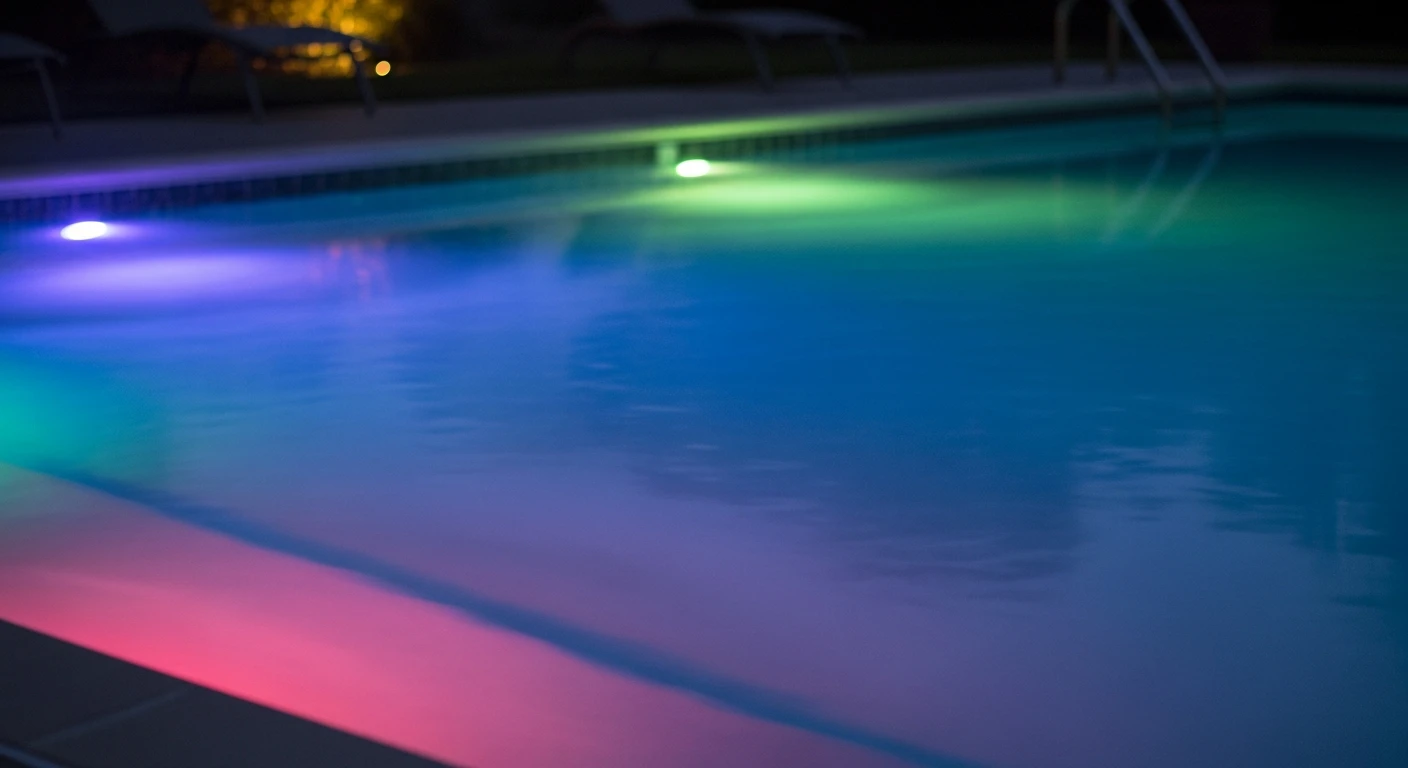
First is voltage drop. In low-voltage systems, every foot of wire adds resistance. On a 100-foot run with an undersized 14-gauge wire, I've measured voltage drops of up to 15%. This is enough to cause lights to appear dimmer and, in RGB systems, can prevent them from syncing colors correctly, leaving one light blue while the other is stuck on green. My rule is to use a dedicated voltage drop calculator and almost always specify a heavier 12-gauge wire for any run over 50 feet.
Second, thermal throttling. LEDs are sensitive to heat. Their primary cooling mechanism in a pool is direct contact with the water. If a light is installed in a niche that traps air or during a period when the pool is empty, the heat buildup can permanently damage the LED drivers and accelerate Lumen Depreciation (L70), which is the point at which the light has lost 30% of its initial brightness. I insist that fixtures are only tested and operated when fully submerged.
Finally, seal integrity. The standard is an IP68 rating, but not all seals are created equal. I’ve seen gaskets made from inferior rubber become brittle from pool chemicals within two years. I specify fixtures that use high-grade silicone gaskets and I train technicians to tighten the faceplate with a torque wrench to factory specification—over-tightening is just as bad as under-tightening, as it can deform the seal and create a slow leak.
The Implementation Blueprint: From Conduit to Controller
With the diagnostics complete, implementation becomes a matter of precise execution. My methodology is built around a sequence of steps designed to eliminate variables and ensure consistency. This isn't just about connecting wires; it's about building a robust electrical system.
- Transformer Sizing and Placement: The transformer is the heart of the system. I always calculate the total wattage of all lights and then add a 20% overhead buffer. This prevents the transformer from running at maximum capacity, which extends its life. It must also be placed in a location that minimizes the length of the longest wire run.
- Conduit and Wire Pulling: We pull all wires before the gunite or final pool finish is applied. We use a lubricating compound to prevent sheath damage, which could compromise the wire's integrity over time. Every wire is labeled at both ends.
- Fixture Niche Grounding and Bonding: This is a critical safety step. The light niche must be bonded to the pool's rebar grid using a solid copper conductor. I personally inspect this connection on every project, as a failure here is not just a performance issue but a significant safety hazard.
- System Synchronization and Burn-In: Once all lights are installed and the pool is full, we power on the system. The final step is to sync all lights to the controller, ensuring they respond to color changes in unison. I then mandate a 24-hour burn-in test to check for any intermittent faults or synchronization drops before signing off on the project.
Tags
inground lights
solar lights for pool cage
pool landscape lighting
inground led lights
LED Pool Lighting FAQ
What is LED pool lighting?
LED pool lighting is an eco-friendly and energy-efficient lighting solution that uses light-emitting diodes (LEDs) to illuminate your pool. LEDs offer a long lifespan, low power consumption, and a wide range of color options, making them an ideal choice for pool lighting.
What are the benefits of LED pool lighting?
LED pool lighting offers several benefits, including energy efficiency, long lifespan, and design flexibility. LEDs also provide a vibrant and consistent color output, which can enhance the overall ambiance of your pool area.
Can I install LED pool lighting myself?
While it is possible to install LED pool lighting yourself, we recommend hiring a professional to ensure a safe and proper installation. Our team of experts can provide guidance and installation services to ensure your LED pool lighting system is installed correctly and functions properly.
How long does it take to install LED pool lighting?
The installation time for LED pool lighting varies depending on the complexity of the project and the size of your pool. On average, our team can complete an installation within 2-5 days, depending on the specific requirements of your project.
Can I customize my LED pool lighting?
Yes, our LED pool lighting systems are highly customizable. We offer a range of color options, lighting effects, and installation configurations to suit your specific needs and preferences.
How much does LED pool lighting cost?
The cost of LED pool lighting varies depending on the size of your pool, the type of lighting system you choose, and the installation requirements. Our team can provide a customized quote for your specific project, taking into account your unique needs and budget.
Is LED pool lighting safe?
Yes, LED pool lighting is designed with safety in mind. Our systems are fully encapsulated and protected from water, ensuring they are safe for use around pools and water features.
Can I control my LED pool lighting remotely?
Yes, our LED pool lighting systems are compatible with remote control systems, allowing you to adjust the lighting levels, colors, and effects from the comfort of your own home.
Do I need to maintain my LED pool lighting?
While LED pool lighting is designed to be low-maintenance, we recommend regular cleaning and maintenance to ensure optimal performance and extend the life of the system. Our team can provide guidance on regular maintenance procedures.
What is the warranty on LED pool lighting?
Our LED pool lighting systems come with a comprehensive warranty that covers parts and labor for a specified period. The warranty terms and conditions vary depending on the specific product and installation, so please consult with our team for more information.