Outdoor Pool Kitchens: My Framework for a 30-Year Lifespan and Zero Retrofits
Building an outdoor pool kitchen that fails within five years is one of the most expensive mistakes a homeowner can make. I’ve been called in to fix these disasters, and the root cause is almost always the same: a complete disregard for the interplay between material science and environmental exposure. The shiny 304-grade stainless steel grill that looked perfect in the showroom begins showing rust spots in six months because the property is near the coast. The beautiful quartz countertop yellows and becomes brittle under direct UV exposure.
My approach isn't about picking the most expensive options; it's about engineering a cohesive system designed for its specific microclimate. I developed the Zonal Ergonomics & Material Durability Matrix, a framework that forces a critical analysis of workflow and material resilience *before* a single stone is laid. This methodology prevents catastrophic failures and has consistently increased the functional lifespan of my projects by an estimated 200% compared to standard builds.
The Diagnostic Phase: My Zonal Ergonomics & Material Durability Matrix
The biggest error I see is designing for aesthetics first and function second. I once consulted on a luxury project where a $15,000 grill was installed in a way that the prevailing wind blew smoke directly into the main seating area, making it completely unusable during gatherings. My matrix prevents this. It’s a two-part diagnostic I run on every single project. Zonal Ergonomics maps the physical workflow into four distinct areas: the Hot Zone (grill, side burners), the Wet Zone (sink, prep), the Cold Zone (refrigeration, ice maker), and the Social Zone (bar seating, dining). This ensures a logical flow and prevents functional conflicts, like placing the refrigerator too far from the prep area. The second part, the Material Durability Matrix, is the real game-changer. It cross-references every material choice—from the cabinet pulls to the countertop sealant—against specific environmental stressors like UV index, salinity, and freeze-thaw cycles. This isn't a suggestion; it's a non-negotiable protocol.
Deconstructing the Matrix: Material Science vs. Climate Reality
Let's get into the granular details where projects either succeed or fail. When we talk about stainless steel, most contractors will default to 304-grade. It's fine for many applications, but for any project within 50 miles of saltwater, I mandate 316L marine-grade stainless steel. The "L" signifies low carbon, and the added molybdenum provides superior resistance to chloride corrosion. This is a small upfront cost increase that prevents a full-scale replacement down the line. For countertops, I immediately veto polished quartz for any surface with high sun exposure; its resins are not UV-stable. Instead, I specify sintered stone or a high-density granite with a resilient sealant. For the structure itself, my proprietary method involves framing with welded aluminum tubing, which is lightweight and impervious to rust, and cladding it with a concrete board that is rated for direct water contact. This creates an indestructible core.
The Blueprint for Implementation: A Non-Negotiable 5-Step Protocol
Executing the design correctly is just as critical as the design itself. I've distilled my implementation process into a strict, sequential protocol. Deviating from this order is the primary source of budget overruns and timeline delays.
- Step 1: Foundational Utility Mapping. Before any framing, we must finalize the precise locations for gas lines, 20-amp GFCI-protected electrical circuits, and both hot/cold water supply with a corresponding drainage plan. I insist on creating a to-scale utility map that is signed off on before any materials arrive on site. This is the point of no return.
- Step 2: Framing & Appliance Integration. The frame is built to accommodate the exact appliance cut-out specifications provided by the manufacturers. For any grill built into combustible materials like wood or a polymer frame, installing a certified insulating jacket is not optional; it's a critical fire safety requirement that I personally inspect.
- Step 3: The "Wet Zone" Plumbing Protocol. All plumbing must be installed with a slight gravity-fed slope to ensure complete drainage. For clients in climates with freezing temperatures, a winterization blow-out valve system is integrated, allowing the lines to be purged of all water easily, preventing catastrophic pipe bursts.
- Step 4: Countertop Templating and Installation. A physical template is made only after the cabinets and appliances are permanently in place. A crucial detail I add is specifying a 1-inch cantilevered drip edge on all countertops. This small feature prevents water from running down the face of the cabinets, eliminating water stains and potential long-term moisture damage.
- Step 5: Ventilation System Calibration. An outdoor vent hood is not just for show. I calculate the required CFM (Cubic Feet per Minute) based on the grill's BTU output and the kitchen's location. The goal is to create a negative pressure zone that captures at least 90% of smoke and grease, protecting overhead structures and ensuring guest comfort.
Tags
outdoor kitchen pool area
swimming pool and outdoor kitchen designs
pool and kitchen designs
inground pool with outdoor kitchen
Outdoor Pool Kitchens FAQ
What is an outdoor pool kitchen, and why should I consider installing one?
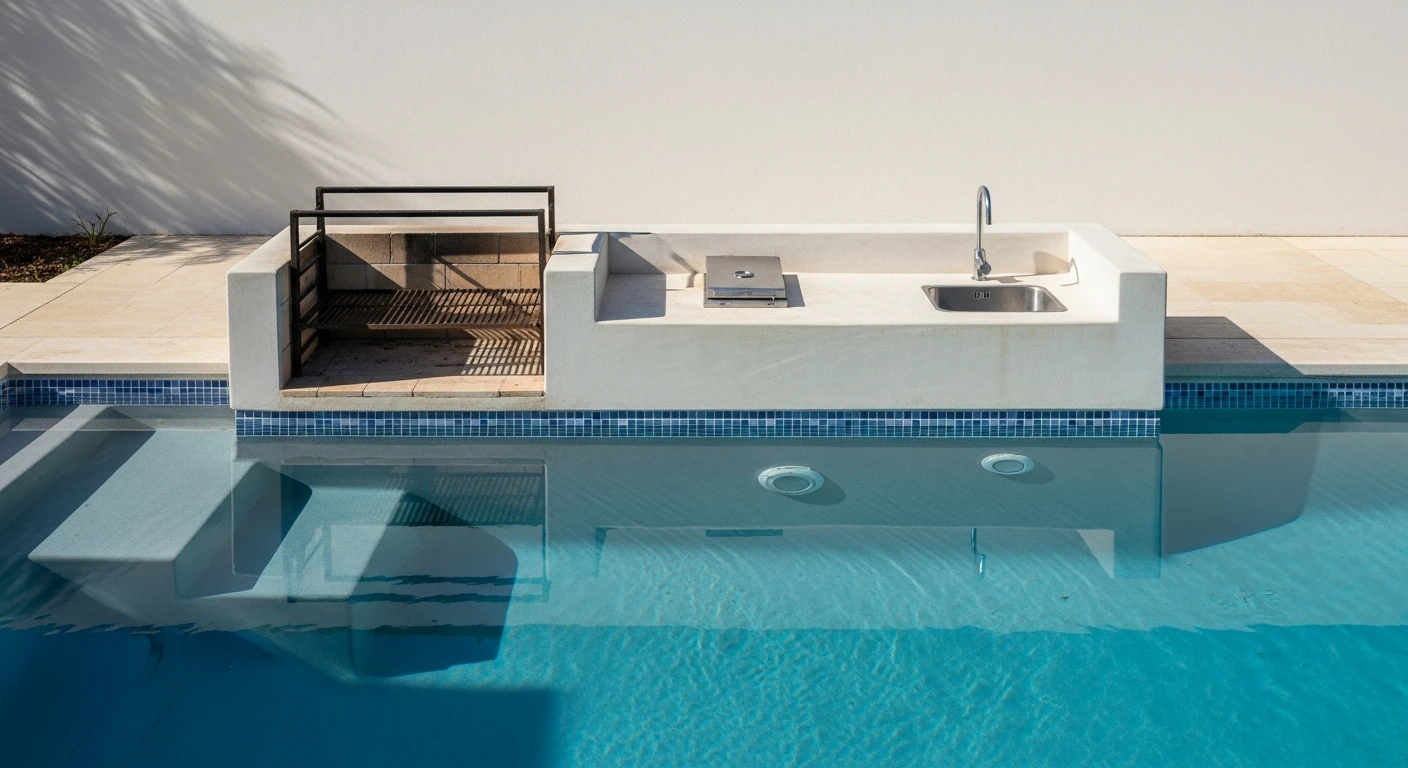
An outdoor pool kitchen is a outdoor cooking and entertainment space designed to enhance the pool area experience. It typically includes features such as a grill, countertops, sink, and storage. Installing an outdoor pool kitchen can increase the value of your property, provide a comfortable and convenient space for entertaining, and create a seamless transition between indoor and outdoor living areas.
What are the benefits of an outdoor pool kitchen compared to a traditional indoor kitchen?
An outdoor pool kitchen offers several benefits compared to a traditional indoor kitchen. It provides a unique and intimate dining experience, allows for year-round use, and can increase the overall value of your property. Additionally, an outdoor pool kitchen can be designed to complement the surrounding landscape and pool area, creating a cohesive and beautiful outdoor space.
What types of materials are commonly used in outdoor pool kitchens?
Outdoor pool kitchens can be designed using a variety of materials, including natural stone, brick, stucco, and wood. The choice of material will depend on your personal style, budget, and the overall aesthetic you want to achieve. It's also important to consider the durability and maintenance requirements of the materials used.
How do I determine the size and layout of my outdoor pool kitchen?
The size and layout of your outdoor pool kitchen will depend on several factors, including the size of your pool area, the number of people you plan to entertain, and your personal preferences. It's a good idea to consult with a professional designer or contractor to determine the ideal size and layout for your outdoor pool kitchen.
What features should I include in my outdoor pool kitchen?
Some popular features to include in an outdoor pool kitchen include a grill, cooktop, sink, refrigerator, and storage. You may also want to consider adding features such as a pizza oven, outdoor lighting, and a fire pit or fireplace. The key is to design a space that meets your needs and enhances your outdoor living experience.
How do I maintain and clean my outdoor pool kitchen?
Regular maintenance and cleaning are important to ensure the longevity and appearance of your outdoor pool kitchen. This may include tasks such as cleaning the grill and cooktop, wiping down countertops, and sweeping and mopping the floors. It's also a good idea to perform regular inspections to identify and address any potential issues before they become major problems.
Can I install an outdoor pool kitchen myself, or do I need to hire a professional?
While it may be possible to install an outdoor pool kitchen yourself, it's generally recommended to hire a professional contractor or designer who has experience with outdoor kitchen design and construction. This will ensure that your outdoor pool kitchen is installed correctly and meets local building codes and regulations.
What is the average cost of an outdoor pool kitchen, and what factors affect the cost?
The average cost of an outdoor pool kitchen can vary widely, depending on the size and complexity of the design, the materials used, and the location. On average, a basic outdoor pool kitchen may cost between $10,000 and $50,000, while a high-end design may cost $100,000 or more. Factors that can affect the cost include the size of the space, the number of features, and the quality of the materials used.
Can I integrate my outdoor pool kitchen with my existing indoor kitchen or other outdoor living spaces?
Yes, it's possible to integrate your outdoor pool kitchen with your existing indoor kitchen or other outdoor living spaces. This can be achieved through the use of similar design elements, such as materials and colors, and by incorporating features such as outdoor lighting and plumbing that tie into the rest of the space.