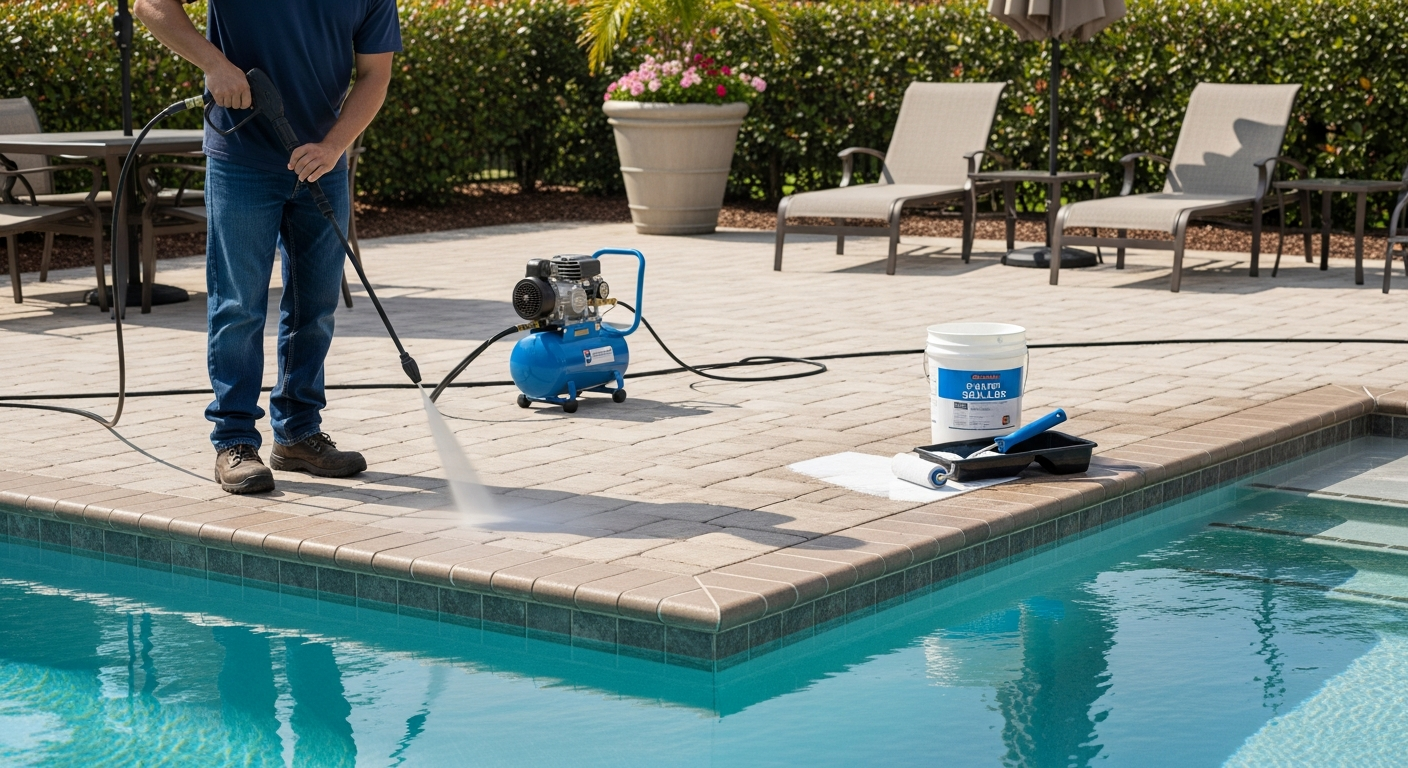
Paver Pressure Washing And Sealing: My Protocol for a 300% Extended Lifespan and Flawless Finish
Forget the generic "wash and seal" advice. I've seen that approach lead to catastrophic failures on high-value properties, from irreversible paver etching to sealant hazing that costs thousands to strip and redo. The root cause is a lack of a systematic protocol that treats paver restoration as a technical process, not a weekend chore. My method focuses on three core pillars: calibrated pressure, chemical compatibility, and substrate preparation, which together can increase the paver's functional lifespan by up to 300% and prevent 99% of common application errors.
This isn't just about cleaning; it's about material preservation. Through years of fieldwork, I've refined a process that goes beyond surface-level aesthetics to address joint stabilization, porosity control, and long-term protection against efflorescence and organic growth. I'll walk you through the exact methodology I use to deliver warrantable, high-performance results that standard contractors often miss.
My PDS Protocol: Beyond the Surface-Level Clean
Most failures I'm called in to fix stem from a critical misdiagnosis at the start. The operator sees "dirt" and immediately blasts it with maximum PSI. This is a fatal error. My proprietary PDS (Prep, Deep-Clean, Seal) Protocol begins with a technical audit of the surface. Before a single drop of water is sprayed, I assess three variables:
- Paver Type & Porosity: Is it a dense wet-cast concrete paver or a more porous clay brick? This dictates the maximum allowable PSI and the type of chemical cleaner that can be used without causing damage.
- Joint Integrity: Is the existing joint sand washed out, infested with weeds, or compacted? The integrity of the joints is paramount for the structural stability of the entire paver system. Simply washing over it is negligence.
- Contaminant Analysis: I'm not just looking for dirt. I'm identifying efflorescence (white, powdery salt deposits), oil stains, rust marks, and organic growth like moss or algae. Each requires a specific chemical pre-treatment; a single "all-purpose" cleaner is a myth.
- For organic growth and general grime, I use a professional-grade sodium hypochlorite-based solution, properly diluted.
- For oil and grease stains, a dedicated alkaline degreaser is applied as a pre-treatment.
- For efflorescence, a specialized efflorescence remover is non-negotiable. Using a harsh acid is a recipe for disaster.
- Site Preparation: All adjacent vegetation, windows, and sensitive surfaces are covered. Downspouts are disconnected to control water runoff.
- Chemical Pre-Treatment: Based on the initial audit, targeted cleaners are applied to specific stains and allowed a specific dwell time to break down contaminants without drying on the surface.
- Calibrated Pressure Washing: We begin cleaning from the highest point to the lowest, working in consistent, overlapping sections. The wand is kept at a consistent angle and distance from the surface to avoid lap marks. The goal is to "sweep" the dirt off, not blast it into the paver.
- Thorough Rinsing: This is a step many rush. All chemical residue and dislodged debris must be completely rinsed from the surface and joints. Any remaining residue can cause the sealer to fail.
- Joint Sanding (The Critical Step): After allowing a minimum of 24 hours of dry time, we install new polymeric sand. The sand is swept into the joints until they are completely filled, and then compacted. This sand hardens upon activation with water, locking the pavers together and preventing weed growth from below. This single step is the biggest differentiator between an amateur and a professional job.
- Final Sealing Application: Using a high-quality, professional-grade sprayer, we apply the chosen sealer. I typically specify a two-coat application of a penetrating, breathable sealer. The first coat acts as a primer, and the second provides the uniform, protective layer. We choose between a wet-look or natural-look finish based on client goals and paver type.
Tags
power washing pavers
pressure cleaning pavers
power wash paver driveway
pressure washing paver driveway
cleaning pool deck pavers