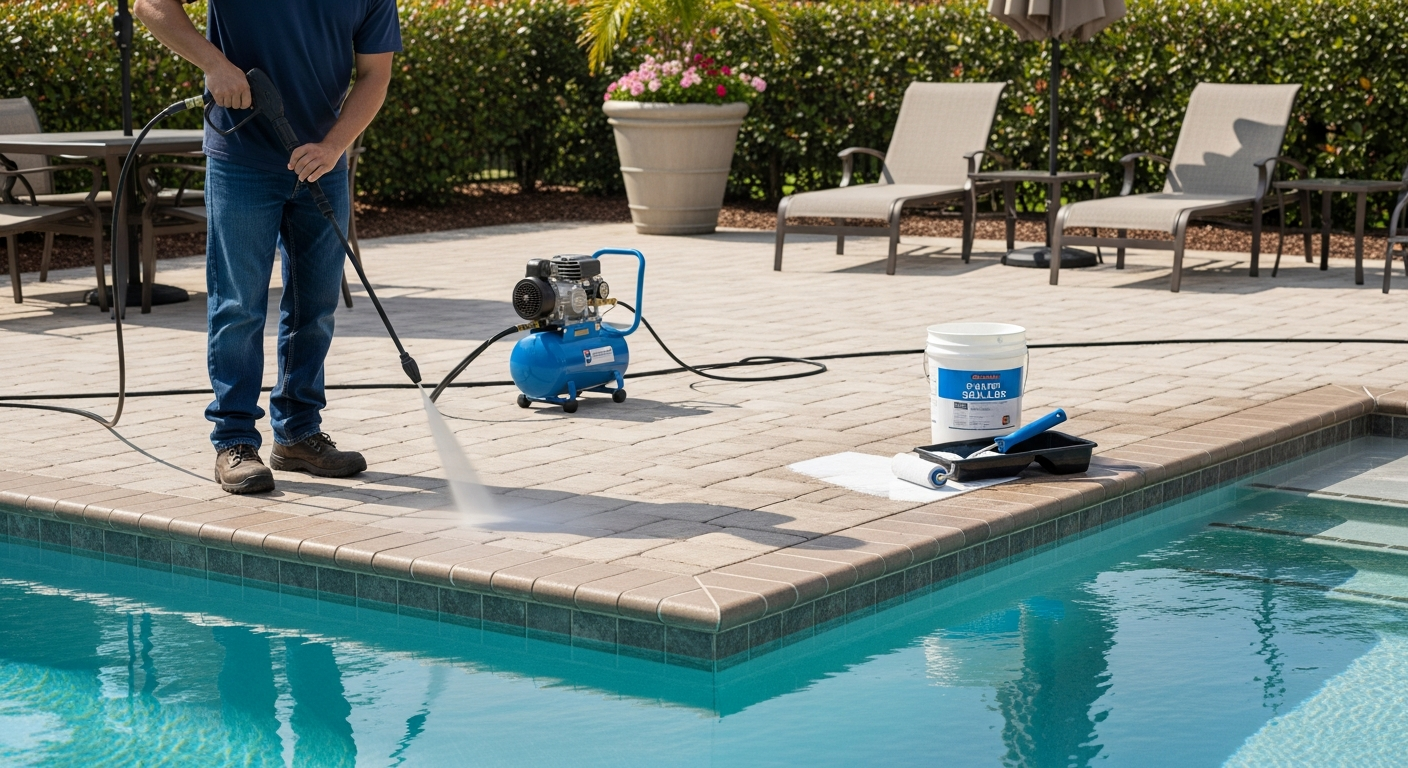
Pressure Cleaning And Sealing: My Proprietary Method to Increase Surface Lifespan by up to 300%
As a specialist who has restored thousands of square feet of concrete, pavers, and natural stone, I’ve seen the costly aftermath of well-intentioned but technically flawed pressure cleaning jobs. The common approach focuses on brute force—cranking up the PSI (Pounds per Square Inch)—which often leads to etching, spalling, and irreversible surface damage. The real-world ROI from a professional job isn't just about a clean surface; it's about a scientifically sound process of cleaning and sealing that extends the material's life.
My entire methodology pivots away from high pressure and towards a holistic system I call the Surface Integrity Protocol. This protocol prioritizes chemical cleaning, proper rinsing volume (measured in GPM or Gallons Per Minute), and, most critically, the selection of a sealant based on material porosity and environmental exposure. The cleaning simply prepares the canvas; the sealing is what provides the long-term asset protection, preventing water ingress and organic growth for years, not months.
The Initial Diagnosis: My Surface Integrity Protocol
Before a single drop of water is sprayed, my process begins with a rigorous diagnostic phase. This is the step that 90% of contractors skip, and it's where most failures originate. I learned this the hard way on a historic brick facade project where an incorrect chemical solution nearly caused catastrophic efflorescence. My protocol now mandates a pre-job analysis focusing on three core variables: Porosity, Contamination Type, and Existing Damage. I assess the surface's ability to absorb water, identify whether the stains are organic (algae, mildew) or inorganic (oil, rust), and meticulously document any hairline cracks or spalling. This data directly informs the entire project's parameters.
Technical Deep Dive: PSI vs. GPM and Sealant Chemistry
Let's get technical. The industry is obsessed with PSI, but for cleaning, it's a vanity metric. True cleaning power comes from the right chemical and sufficient flow (GPM) to rinse away contaminants. I rarely exceed 1,500 PSI on concrete and stay below 800 PSI for softer materials like brick or certain types of pavers. My machine is a high-GPM unit, which allows me to use a 40-degree wide-fan tip at a safe distance, letting the chemical do the work. This prevents the "zebra stripes" or etching you see from inexperienced operators.
The real long-term value is in the sealant. I categorize sealers into two primary types:
- Penetrating Sealers (Silane/Siloxane): These are my go-to for driveways and high-traffic areas. They work below the surface, chemically reacting to form a hydrophobic barrier without creating a film. This allows the surface to breathe, preventing moisture from getting trapped, which is a leading cause of spalling in freeze-thaw cycles.
- Film-Forming Sealers (Acrylics): These are best for decorative applications like patios or pool decks where a "wet look" or enhanced color is desired. However, their application is far more sensitive to moisture and temperature. A common mistake I often fix is "blushing," where an acrylic sealer was applied to a damp surface, trapping moisture and creating a cloudy appearance.
- Step 1: Pre-Soak and Debris Removal. I saturate the surface and surrounding vegetation with water. This prevents chemical burn on plants and ensures the cleaning solution is absorbed by the contaminants, not the dry, thirsty concrete.
- Step 2: Low-Pressure Chemical Application. Using a dedicated downstream injector, I apply a calibrated solution—often a 1.5% to 3% sodium hypochlorite mix with a surfactant—to the surface. I let this dwell for 10-15 minutes, but never let it dry.
- Step 3: The Primary Cleaning Pass. This is where technique matters. I use a surface cleaner attachment for large, flat areas to ensure a perfectly consistent finish. For edges and vertical surfaces, I maintain a constant distance and a 50% overlap on each pass with my wand.
- Step 4: High-Volume Rinsing. After the cleaning pass, I switch to a low-pressure, high-volume rinse tip to flush all detergents and organic matter completely from the surface pores. Insufficient rinsing is a primary cause of premature sealant failure.
- Step 5: Moisture Meter Verification. Before sealing, I use a digital moisture meter. Concrete must be below a 5% moisture reading for a penetrating sealer and even lower for an acrylic. Sealing a damp surface is the most common and costly mistake I encounter.
- Step 6: Sealant Application. I apply the selected sealer using a battery-powered, low-pressure sprayer with a fan tip, ensuring an even, non-puddling coat. For penetrating sealers, a second coat is often applied "wet-on-wet" for maximum absorption.
Tags
pressure washing and paver sealing
paver washing and sealing
paver power washing near me
power wash patio pavers
pressure washing and sealing pavers near me