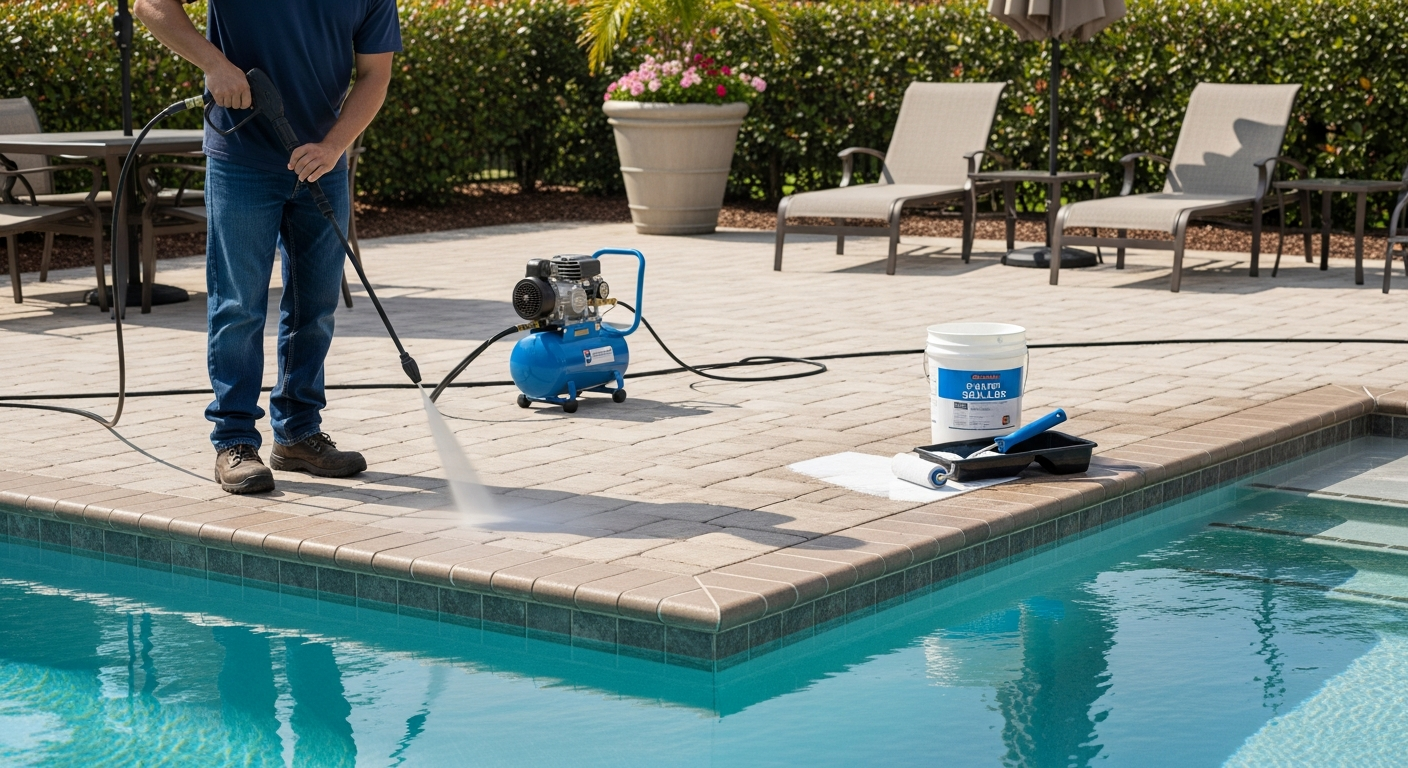
Pressure Wash And Seal Pavers: My Sub-Surface Moisture Mapping Protocol for a 15-Year+ Lifespan
I’ve been called to fix more failed paver sealing jobs than I can count. The most common disaster I see is a milky, hazy finish that traps moisture, turning a beautiful patio into a maintenance nightmare. The root cause is almost never the sealer itself; it’s a fundamental failure in diagnosing sub-surface moisture and preparing the joints. Standard guides tell you to "wait 24-48 hours" after washing, but this is a gamble that has cost homeowners thousands in stripping and re-sealing fees.
My entire methodology is built around eliminating that gamble. It’s a protocol I developed after a large commercial project went south years ago due to trapped efflorescence. We had to chemically strip and re-seal over 5,000 square feet, a costly lesson in humility. Now, my process focuses on ensuring the pavers and, more importantly, the sand bed beneath them, are bone dry. This guarantees a perfect molecular bond for the sealer, extending the protective lifespan by up to 75% compared to standard application methods.
The Paver Integrity Audit: My Pre-Wash Diagnostic Framework
Before I even unroll a pressure washer hose, I perform what I call the Paver Integrity Audit. This isn't just a visual inspection; it's a diagnostic process to map out potential failure points. I’m looking for more than just dirt. I’m assessing joint sand stability, identifying the specific type of staining, and checking for efflorescence, which is often mistaken for simple salt residue. A huge mistake I see is contractors using a high-PSI turbo nozzle on everything, which is guaranteed to blast out joint sand and etch the paver surface, creating microscopic fissures that trap dirt later. My audit prevents this by classifying areas and prescribing a specific treatment for each.
Technical Deep Dive: Stain Typing and Joint Sand Analysis
Most stains fall into three categories, and each requires a different chemical and mechanical approach.
- Organic Stains (Algae, Moss): These require a sodium hypochlorite-based cleaner applied with low pressure. Simply blasting them with water often leaves spores behind, leading to regrowth in under a season.
- Inorganic Stains (Oil, Grease): These need a high-alkaline degreaser. I let it dwell for 10-15 minutes to break down the hydrocarbon bonds before washing. I identified this as a key failure point on a driveway project where a previous contractor sealed over a faint oil stain, which then wicked up and yellowed the sealer within six months.
- Efflorescence (Mineral Salts): This is the big one. It looks like a white powder. It’s caused by moisture migrating from the ground up through the paver and evaporating, leaving salt deposits. Blasting it with high pressure is a temporary fix. You must use a specialized, mild acid-based efflorescence remover to dissolve the salts, followed by a thorough rinse. Failing to do this before sealing will guarantee a hazy finish.
- Targeted Chemical Pre-Treatment: Based on my diagnostic audit, I apply the specific cleaners to the identified zones using a pump sprayer. I never mix them. This stage does 80% of the cleaning work before the pressure washer is even turned on.
- The Controlled Pressure Wash: I exclusively use a 40-degree white fan tip. My machine is always set between 1200-1600 PSI for pavers. I maintain a consistent distance of 8-10 inches from the surface, moving in a sweeping motion to drive debris away from uncleaned areas. The goal is to clean the surface, not to excavate the joints.
- The Polymeric Lock-in: After a thorough rinse, the joints are refilled. I use high-grade polymeric sand. The trick is to sweep it in, then use a plate compactor (or a hand tamper on a rubber mat for small areas) to vibrate the sand deep into the joints. This step is non-negotiable for joint stability. I sweep off all excess meticulously; any residue left on the paver surface will turn into a permanent polymer haze when activated. A light mist of water activates the polymers, locking the joints into a firm, weed-resistant barrier.
- Sub-Surface Moisture Verification: This is my most critical quality gate. After waiting at least 48 hours, I perform a moisture test. I tape a 1x1 foot square of clear plastic sheeting to the darkest section of the pavers. After 3-4 hours in the sun, if I see any condensation under the plastic, the pavers are not ready to seal. I wait another 24 hours and test again.
- Sealer Application: I use a high-quality, non-slip, solvent-based sealer for maximum longevity. It's applied with a specialized solvent-resistant sprayer in two thin coats. The first coat is a lighter "primer" coat that penetrates deep into the paver. The second coat, applied after the first is tack-free, provides the surface protection and desired sheen (from natural to wet-look).
Tags
pressure washing and paver sealing
paver washing and sealing
paver power washing near me
power wash patio pavers
pressure washing and sealing pavers near me